




- Exprezo
What it is
What is a digital signage player?
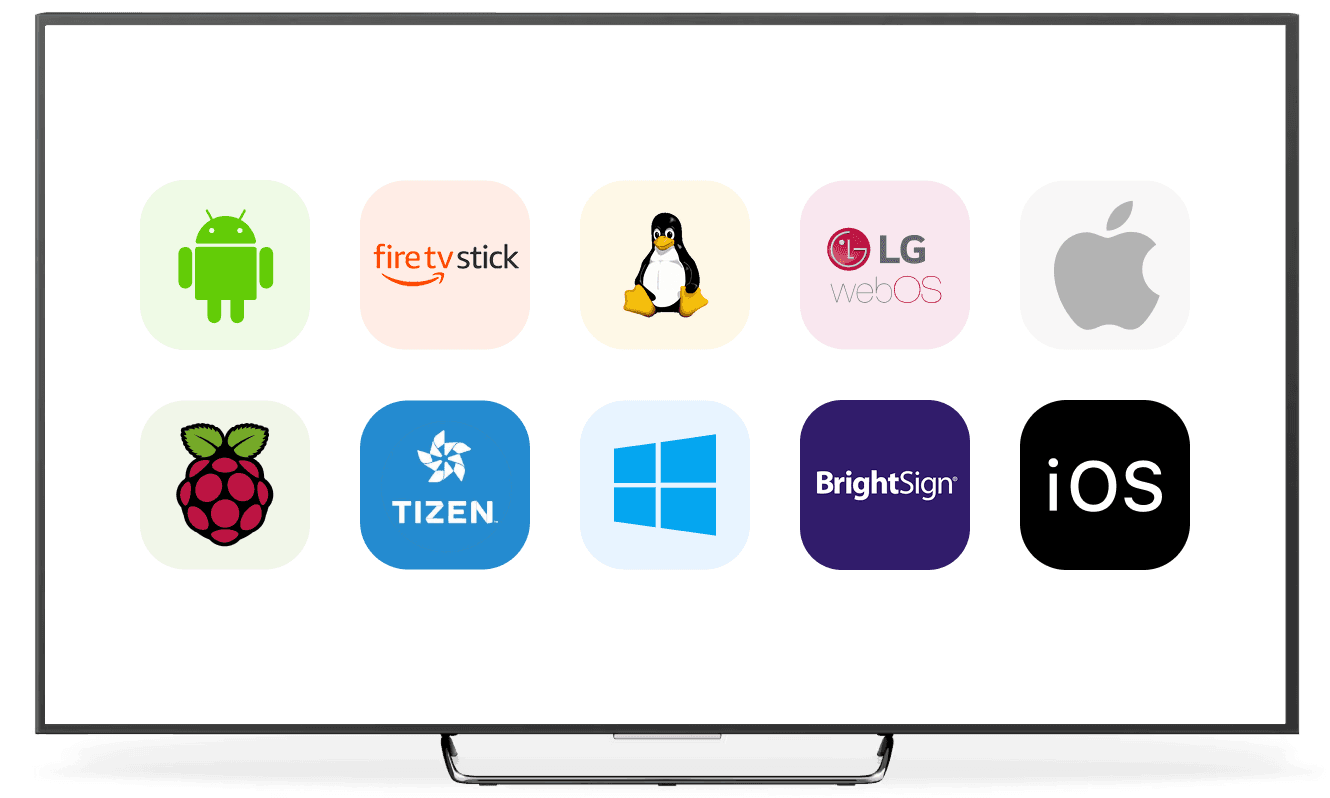
A digital signage player is the software that pulls content schedules from a cloud CMS and plays them on a screen, running either on the display itself or on a small device plugged into it. Pickcel's player app runs on 10 operating systems and 50+ device types, so Samsung and LG commercial displays, Android boxes, Windows PCs and BrightSign players sit side by side in one dashboard.
Supported platforms
Which devices run the Pickcel signage player
Pickcel's player app supports these 11 platforms. Each row links to that platform's setup page, downloads and installation guide.
Android
Supported versions: Android 7.1 to 14
Runs on: Android TVs, HDMI sticks, media player boxes, Pickcel CE420 and PX300
Android player
Windows
Supported versions: Windows 10 and 11
Runs on: PCs, mini PCs, thin clients, Intel NUC
Windows player
Samsung Tizen (SSSP)
Supported versions: Tizen 4.0 and above
Runs on: Samsung SMART Signage commercial displays, no separate player
Samsung Tizen player
LG webOS Signage
Supported versions: webOS 3.0 and above
Runs on: LG webOS Signage commercial displays, no separate player
LG webOS player
BrightSign
Supported versions: All BrightSign players
Runs on: Series 4 (e.g. LS425, XT1144) and series 5 (LS5, HD5, XD5, XT5, XC5, AU5)
BrightSign player
Amazon Fire OS
Supported versions: Fire TV Gen 2 and above
Runs on: Fire TV Stick
Fire TV player
Chrome OS
Supported versions: Chrome OS Flex
Runs on: Chromebooks, Chromeboxes
Chrome OS player
Raspberry Pi OS
Supported versions: Pi 4 Model B, Pi 5 Model B
Runs on: Raspberry Pi boards
Raspberry Pi player
Linux
Supported versions: Ubuntu 18 and above
Runs on: Mini PCs and thin clients such as Intel NUC
Linux install guide
iOS
Supported versions: iOS 12 and above
Runs on: iPad, iPhone
iOS player
Amazon Signage Stick
Supported versions: All Amazon Signage Stick models
Runs on: Any HDMI display with Amazon Signage Stick
Amazon Signage Stick
Compare features by platform
Feature support by platform is in the player comparison chart.
Need a digital signage media player?
Pickcel sells two Android players, the CE420 and the PX300, or you can compare hardware options for your screens.
Comparing vendors as well as devices?
Our roundup of the best digital signage software shows where other platforms beat Pickcel.
Amazon Signage Stick
Amazon Signage Stick: a plug-in player that opens Pickcel
The Amazon Signage Stick is a player built for signage. It plugs into a screen's HDMI port and launches Pickcel in kiosk mode, so the screen runs unattended with no app to install.
- 1. Plug in. Connect the stick to the screen's HDMI port and to power.
- 2. Choose Pickcel. Select Pickcel from the stick's setup menu with the remote, or with the Amazon Signage mobile app, which sets up several sticks without a remote.
- 3. Pair. Pair it with its on-screen code, as in the steps below.
The stick plays 4K video, connects over Wi-Fi 6E, and has a secure boot loader, encrypted storage and regular firmware updates from Amazon. It is sold on Amazon.com and Amazon Business, and it runs on a Pickcel subscription.
Set up Pickcel on the Amazon Signage Stick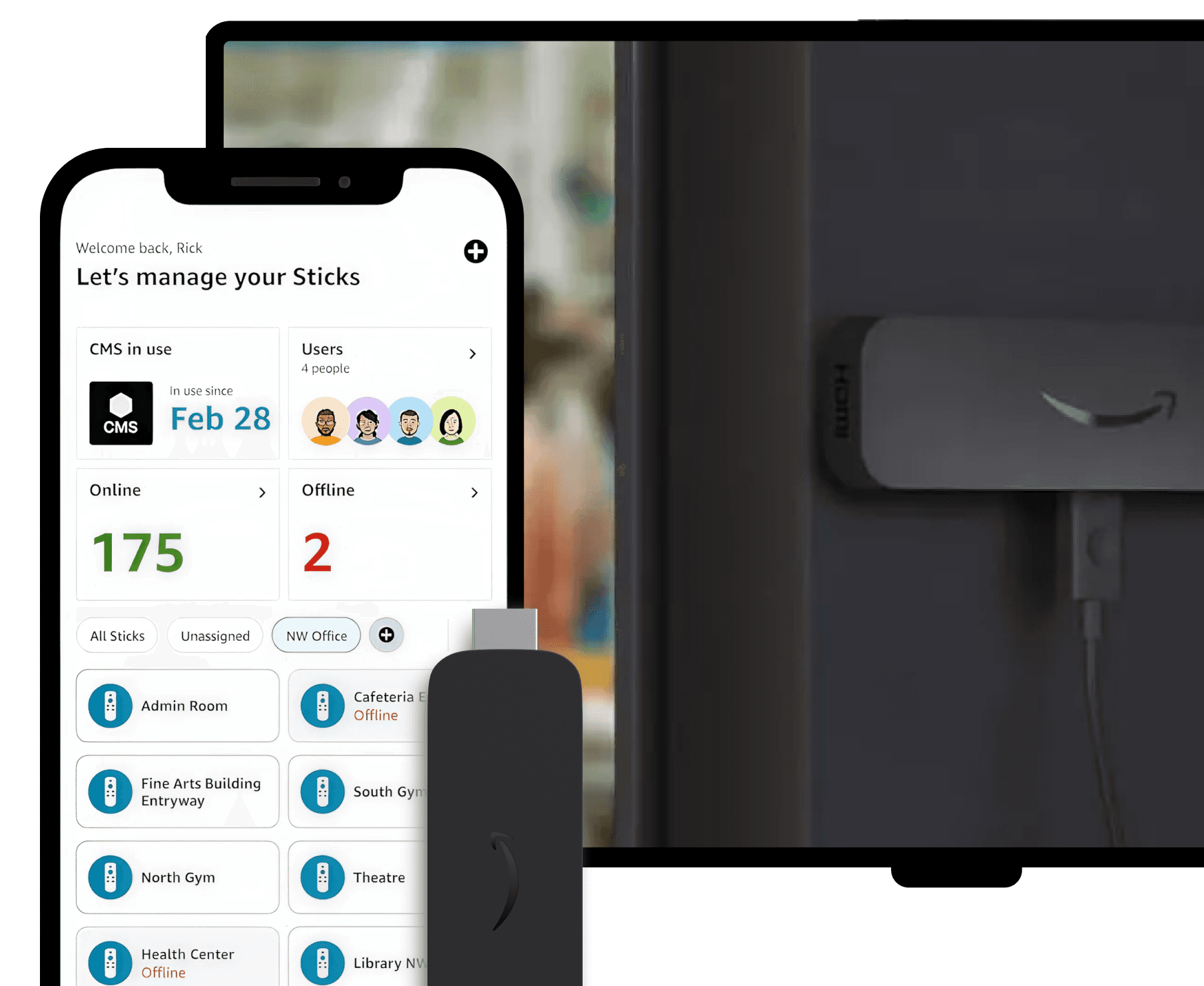
Player architecture
What the player app does on each screen
Three jobs happen on the device itself, whichever platform runs the player.
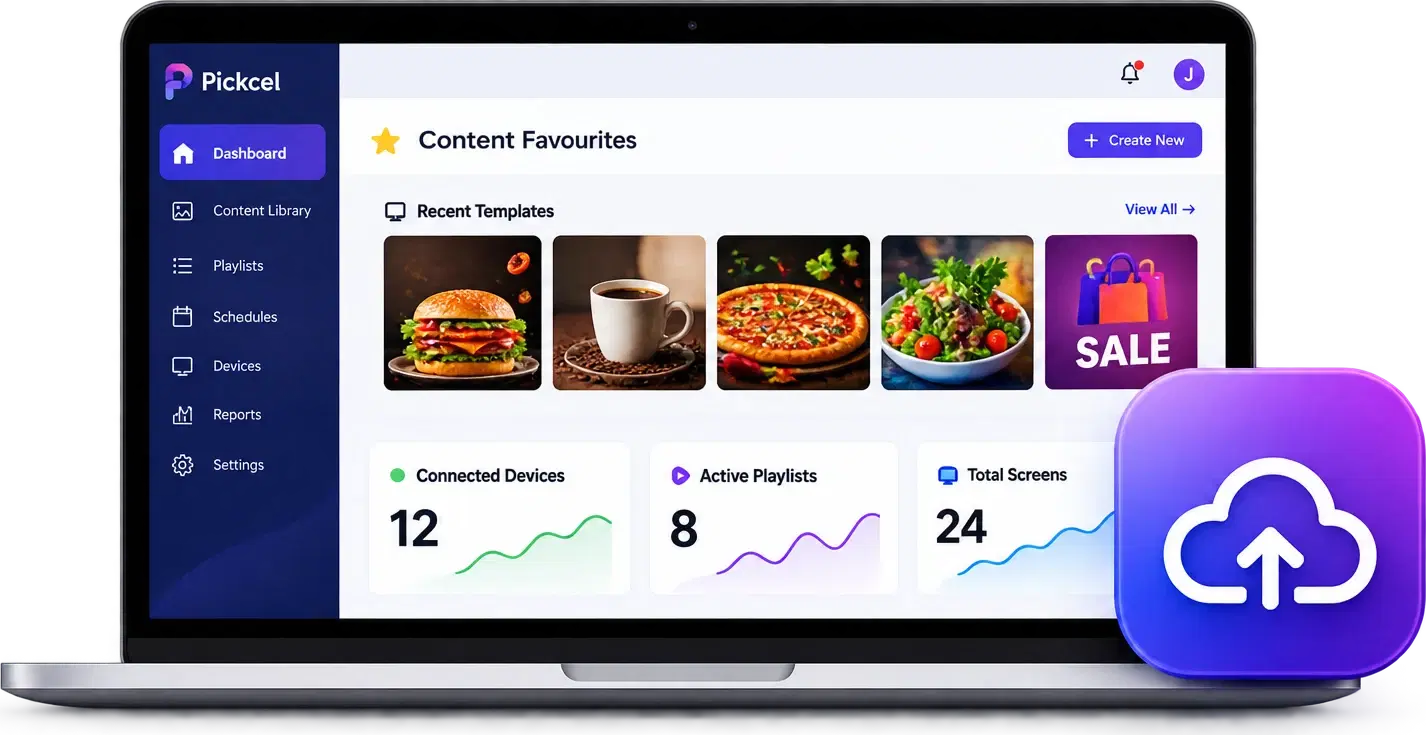
Pickcel CMS
Schedules, playlists, apps and approvals
Player app on the device
Stores content and keeps the schedule
Screen
Plays what the player sends
- 1
Takes changes without a site visit.
A price change or an emergency notice published in the dashboard reaches the screen within seconds.
- 2
Keeps playing when the network drops.
Scheduled images and video are stored on the device, so the screen plays on without a connection and catches up when it returns. Live feeds such as dashboards need the connection to refresh.
- 3
Reports its own health.
Each screen shows its online status and playback in the dashboard, and IT gets an alert when a device goes offline, stops playing or misses a scheduled update.
Scheduling, the content editor, apps and approvals sit in Pickcel's digital signage software, the CMS every player connects to.
Customer stories
- Mixed fleet · QSR
McDonald's India
1,300+ menu boards across Android players and LG webOS displays, with zero on-site installation visits.
McDonald's India case study - Retail kiosks
Amazon
850+ screens in 400+ mall kiosks, rolled out in about a week.
Amazon case study - ExprezoExisting screens · US retail
Exprezo
50+ existing screens in 20+ US gas-station stores, now centrally managed.
Exprezo case study - Transit
NEC
Live bus arrivals on 150 bus-stop screens in under 2 seconds.
NEC case study
Add a screen
How to add a new screen in three steps
Adding a screen takes an install, a code and a playlist.
- 1
Install the Pickcel player app. On Android and Fire OS, install from the app store or the Pickcel Console. Windows and Linux use a standard installer. On Samsung Tizen SSSP and LG webOS Signage displays, someone installs the app on the display once; after that, app updates are pushed remotely.
- 2
Enter the pairing code. The app shows a unique code at first launch. Type it into your Pickcel dashboard and the screen joins your device list.
- 3
Assign content. Put the screen in a group for its site, then give it a playlist, layout or schedule.
One cloud screen is typically live in under 15 minutes. Large rollouts take longer, because IT pairs devices through its own process.
Free trial
Try it on a screen you already own
Pair one screen you already own and watch it report in. All Professional features for 14 days.
Security
Security and reliability for your IT review
Pickcel is SOC 2 Type II and ISO 27001 certified.


DataContent and account data encrypted in transit and at rest
AccessRole-based access controls; single sign-on on the Enterprise plan
Availability99.9% uptime SLA
FAQ
Frequently asked questions
Can I use the TVs we already have?
Usually, yes. Android TV and Fire OS televisions install the Pickcel app directly. For Samsung and LG, the app runs only on their commercial signage lines, Samsung Tizen SSSP and LG webOS Signage displays, not on their consumer TVs. Any other screen with an HDMI port, including a consumer Samsung or LG TV, becomes a managed display once you plug in an Android stick or a Windows mini PC, so older screens rarely need replacing.
Do Samsung and LG commercial displays need a separate media player?
No. The player runs on the display, which removes a box, a power socket and a failure point per screen. A separate player still makes sense in two cases: screens older than Tizen 4.0 or webOS 3.0, and always-on public screens such as transit departure boards, where many operators standardise on BrightSign hardware.
Which player should we choose: Android, Windows or BrightSign?
Pick by the job. Android suits large, cost-sensitive rollouts such as menu boards, where one inexpensive box per screen adds up. Windows fits kiosks, touchscreens and video walls, and sites where IT already manages Windows endpoints. BrightSign suits unattended screens that run 24 hours a day and rarely get a visit.
Can one account run different players at different sites?
Yes. A Samsung display at head office, Android boxes in the stores and a BrightSign player in the warehouse all appear in one device list. Group them by site, and a playlist assigned to a group plays on every screen in it, whatever hardware each one runs.
How do we roll out hundreds of screens?
Start with one region. Settle the group structure and approval rules there, then pair the remaining sites in batches through IT's usual device process. Business and Enterprise plans include chat and phone support, and Enterprise adds a dedicated customer success manager and remote assistance during screen rollout.
How much does it cost?
The software is priced per screen. Professional costs USD 13.50 per screen per month, billed annually. Hardware cost depends on what you own: a Samsung or LG commercial display needs nothing extra, while a screen without an operating system needs a player device. There is a 14-day free trial and no free-forever plan. See plans and pricing
Can we host it on our own servers?
Yes. On the Enterprise plan, Pickcel installs on your own infrastructure, including air-gapped networks, so content and playback logs stay inside your environment. Applied Physical Sciences, a General Dynamics subsidiary, runs its screens this way. Compare on-premise and cloud deployment