No fast path for daily changes
A seasonal drink or a daily pastry special needs to go live and come back down on a schedule that print menus can't keep up with, and a generic template has no fast path for that beyond manually editing a slide.
A cafe menu changes more than almost any other food-service format: seasonal drinks rotate monthly, daily specials rotate every morning, and every one of those changes has to carry accurate allergen and nutrition information the moment it goes live. Pickcel's cafe digital menu board updates all three at once, from one dashboard, without a reprint or a laminated insert taped to the counter.

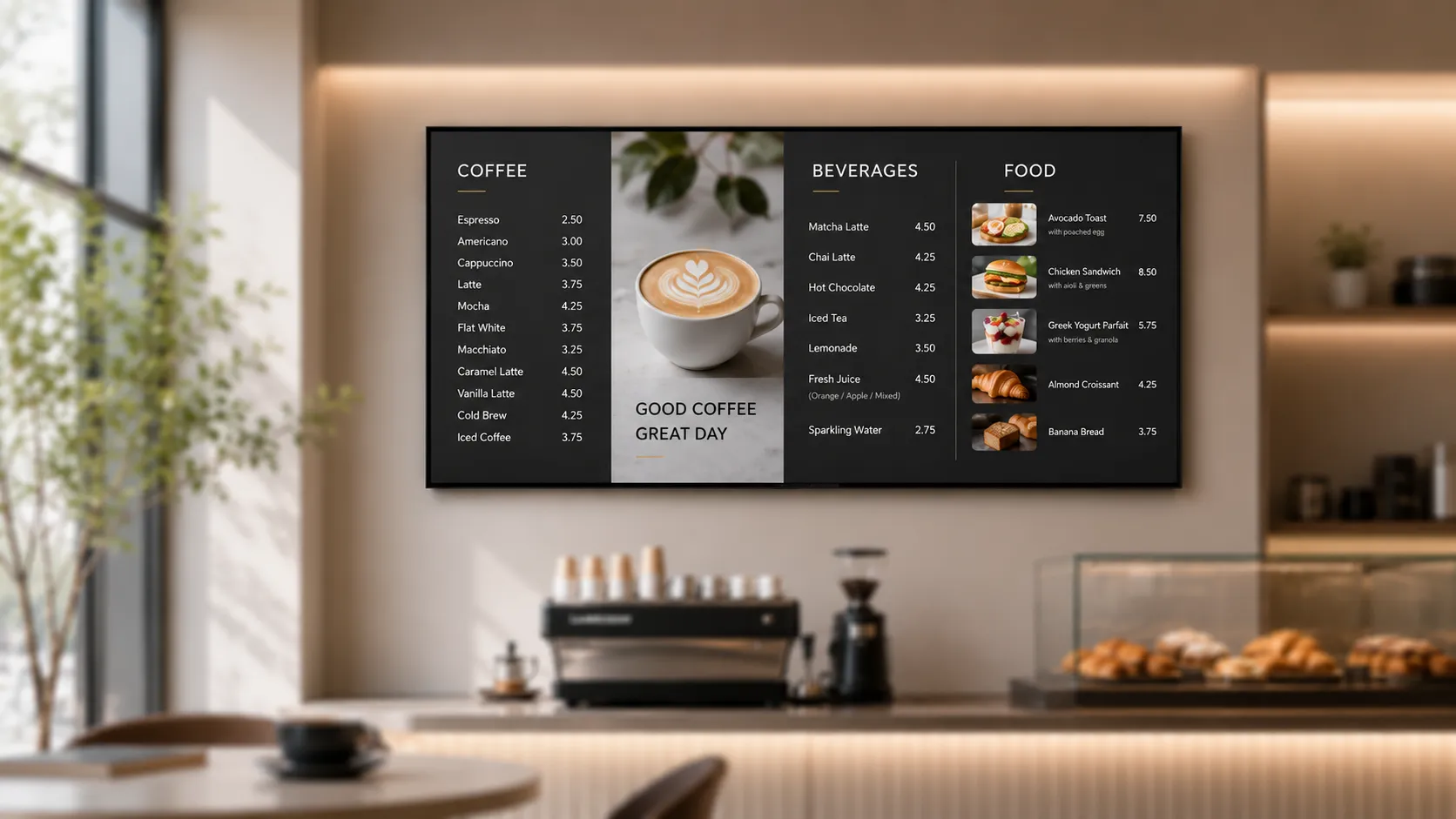
Most digital menu board software is built for a fixed QSR menu that changes a handful of times a year, then sold to cafes as-is. That mismatch shows up fast once a cafe actually runs it.
A seasonal drink or a daily pastry special needs to go live and come back down on a schedule that print menus can't keep up with, and a generic template has no fast path for that beyond manually editing a slide.
Allergen and nutrition disclosure isn't optional in most markets today, and a menu board with no structured way to attach that information to each item pushes the compliance work back onto a manager updating a spreadsheet by hand.
Loyalty programs are core to how cafes retain regulars, but a template built for one-off QSR transactions has nowhere to surface a rewards balance or a member-only offer on screen.
A single-location cafe absorbs this as a daily annoyance: someone manually retypes the oat-milk surcharge or the seasonal latte price before opening. A multi-location cafe group feels it as a compliance and brand-consistency problem, where one store's board still shows last month's holiday drink while another has already switched, and nobody at head office can see the mismatch until a customer points it out.
One dashboard connects menu data, the cloud platform, and every screen a cafe runs.
Pricing, allergen tags, loyalty content on one record
One publish-and-schedule workflow for every update
Counter, drive-up, and multi-location displays
See accurate pricing, allergens, and rewards in real time
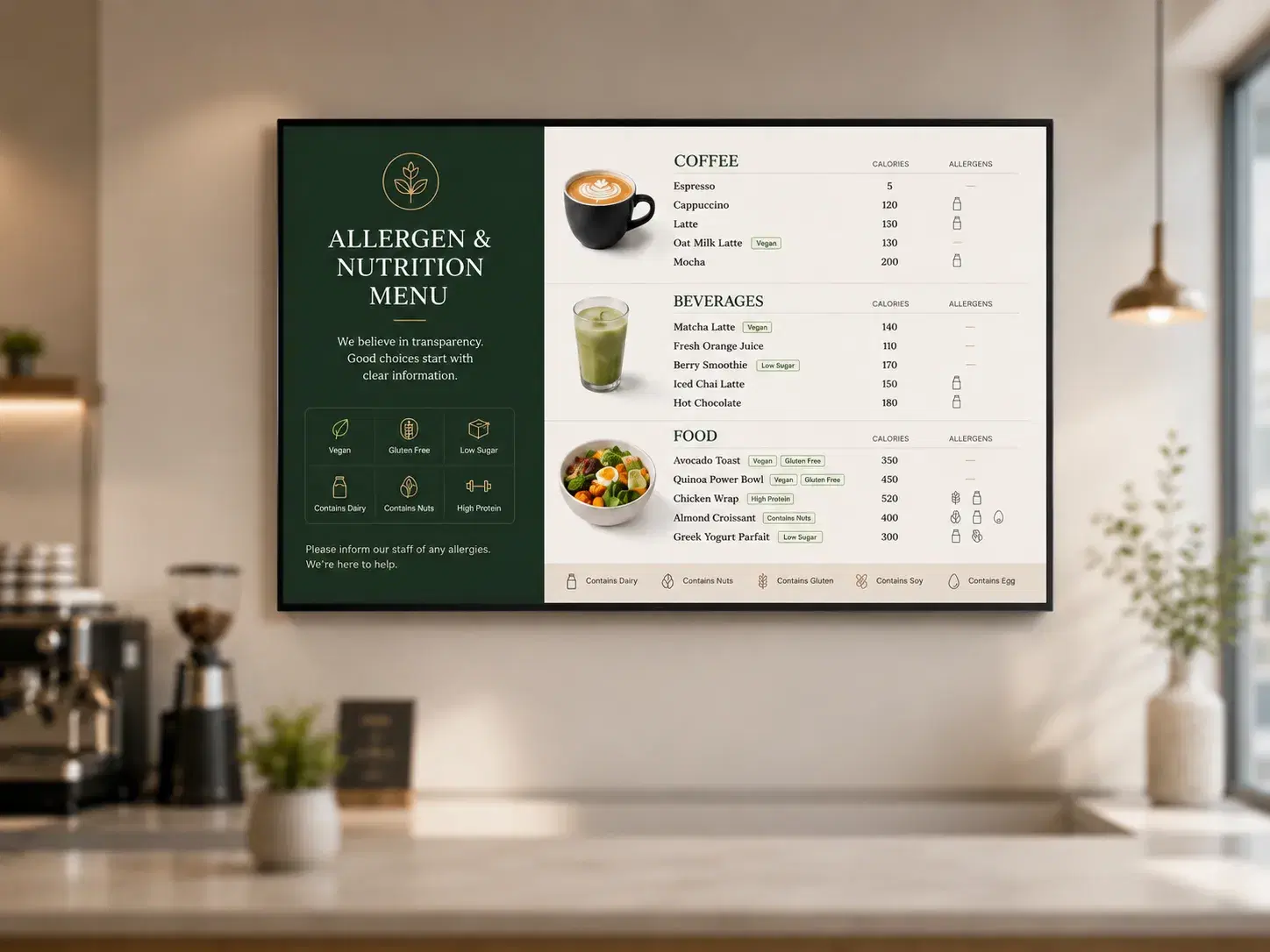
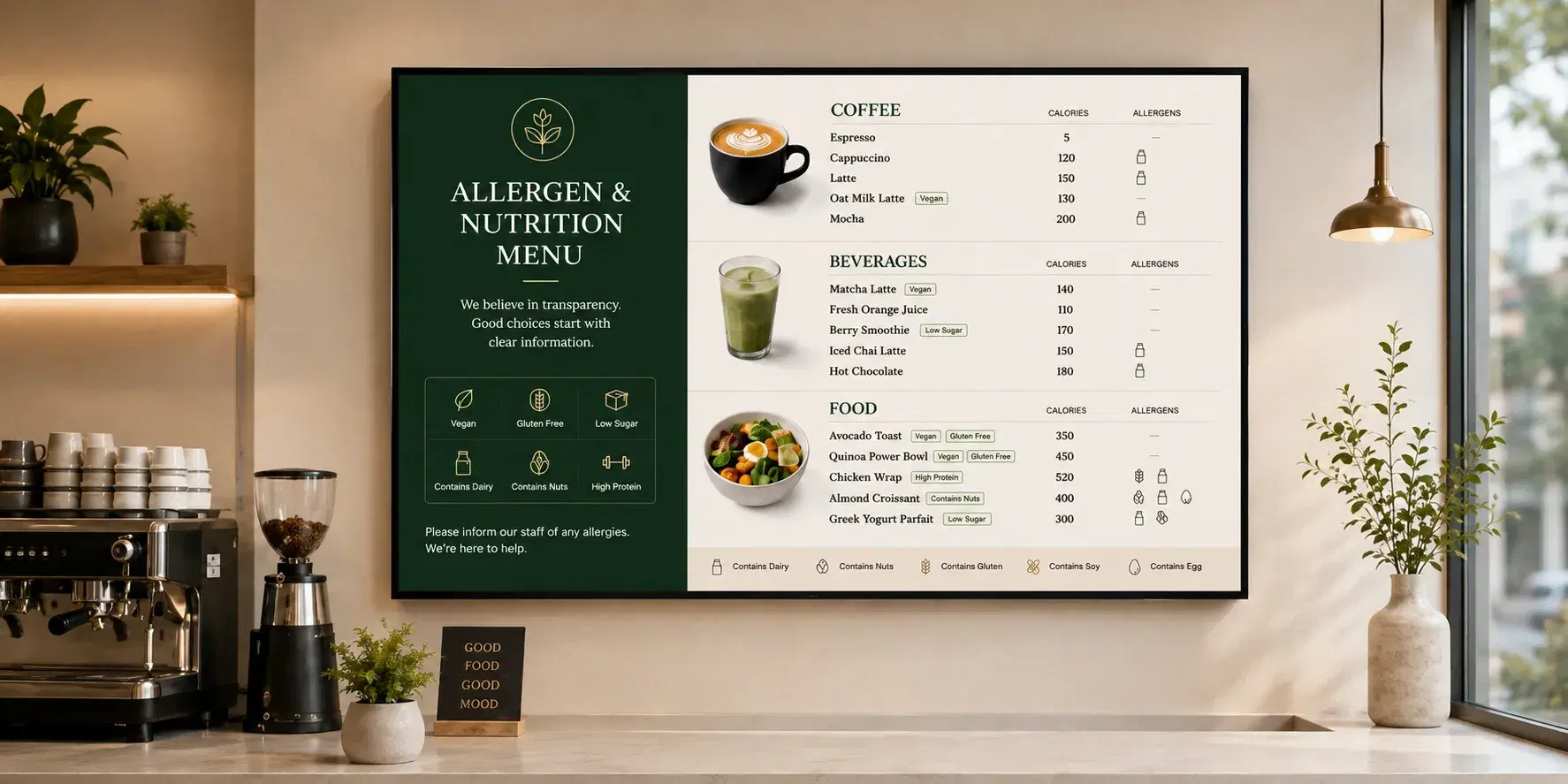
Every cafe item carrying dairy, nuts, gluten, or other regulated allergens needs that information attached and visible, not buried in a binder behind the counter. Pickcel lets each menu item carry structured allergen tags and calorie counts that display alongside the price, so a customer checking for a dairy-free option sees it on the board itself, not after asking a barista to check.
Because the tags live on the item record rather than on a separate printed card, an ingredient change (say, switching an oat-milk supplier) updates the allergen display everywhere that item appears, across every connected screen, in the same push that changes the price. For markets with specific disclosure requirements, such as the UK's Natasha's Law or the EU's Food Information for Consumers regulation, that consistency matters more than the design of the callout itself. See the full regulatory breakdown in Pickcel's allergen digital menu board compliance guide for the disclosure rules by region.
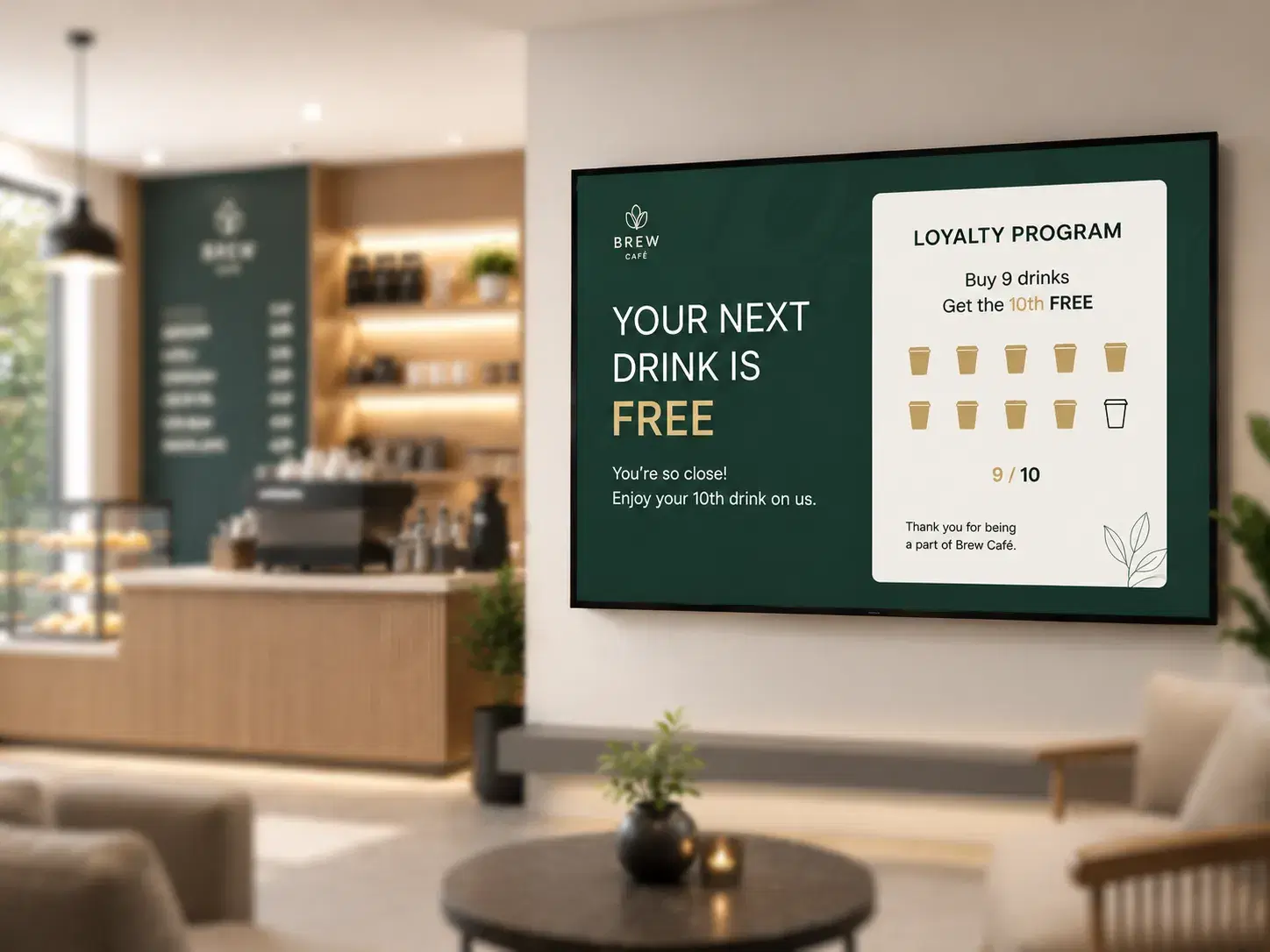
A loyalty program only works if the customer sees it at the point of decision, and a static or print menu has no way to show a rewards balance or a member-only price. Pickcel's cafe menu board can surface loyalty content zones alongside the core menu, showing a "your next drink is free" nudge or a limited-time member offer without a separate screen or a staff member remembering to mention it.
This runs through the same content management system that handles pricing and specials, so a loyalty promotion follows the same publish-and-schedule workflow as a seasonal drink launch. A regional marketing manager sets a loyalty tie-in once at the account level, and it appears at every connected location the moment it's scheduled to start, not whenever each store manager gets around to it.
Rewards on screen
Balance and member pricing visible where customers decide.
No extra display
Loyalty zones run alongside the core menu on one board.
One publish flow
Account-level tie-ins roll out to every location on schedule.
Seasonal drinks and limited-time specials are a cafe's biggest marketing lever, and the biggest operational risk if the board doesn't keep pace. Pickcel lets a cafe schedule an item to go live and expire on exact dates set in advance, so a pumpkin-spice launch or a summer cold-brew special starts and ends on schedule across every location without someone manually swapping content that morning.
That same scheduling layer handles daily specials and dayparting: a breakfast pastry case can switch to a lunch sandwich board at a set time every day, and a limited-run item can be pulled from every screen the moment it sells out, using item-level availability rather than waiting for the next scheduled update. The general content management layer behind this, Pickcel's digital signage software, is the same platform used for pricing, allergen tags, and loyalty content, so none of these run as separate systems that need to be kept in sync with each other.
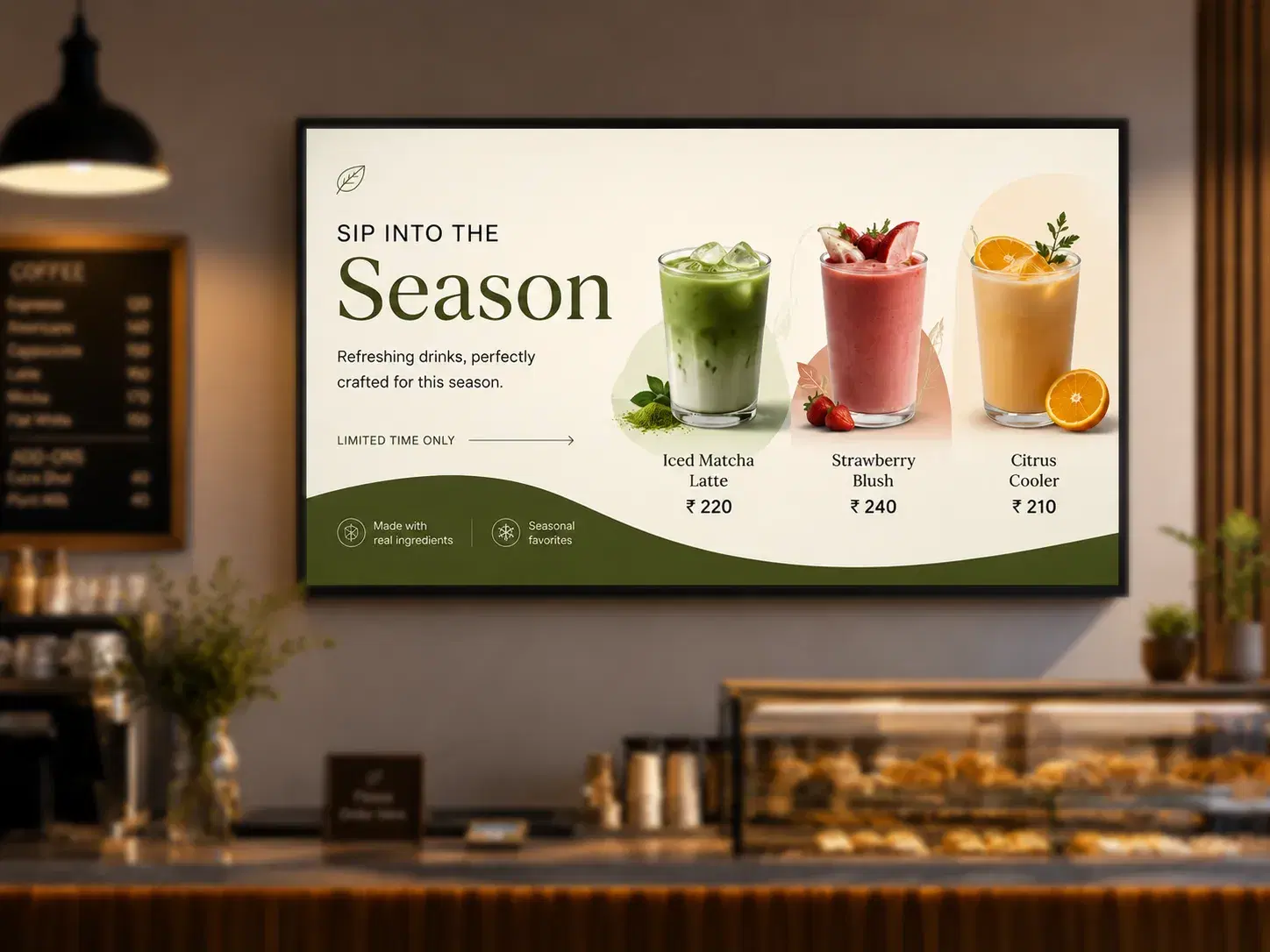
See seasonal rotation, allergen tags, and loyalty content running together on one board, not three separate systems.
See allergen tags, loyalty tie-ins, and seasonal rotation running on a real cafe menu board in 20 minutes.
How Pickcel maps each cafe operations problem to a capability and a measurable outcome.
Allergen and nutrition info lives in a binder, not on the board

How Pickcel handles it
Structured allergen tags and calorie counts attached to each item record
What you get
Disclosure updates everywhere the item appears, in the same push as a price change
Loyalty offers have nowhere to show at the point of decision
How Pickcel handles it
Loyalty content zones alongside the core menu
What you get
Rewards balance and member offers visible without a separate screen
Seasonal drinks and specials go live or expire on a manual schedule
How Pickcel handles it
Scheduled item activation and expiry, set in advance
What you get
Seasonal launches start and end on time across every location, no manual swap
Multiple cafe locations run from separate, disconnected boards
How Pickcel handles it
One dashboard managing pricing, allergens, loyalty, and rotation for every site
What you get
Head office sees and controls every location's menu from a single account
| Problem you have today | How Pickcel handles it | What you get |
|---|---|---|
| Allergen and nutrition info lives in a binder, not on the board | Structured allergen tags and calorie counts attached to each item record | Disclosure updates everywhere the item appears, in the same push as a price change |
| Loyalty offers have nowhere to show at the point of decision | Loyalty content zones alongside the core menu | Rewards balance and member offers visible without a separate screen |
| Seasonal drinks and specials go live or expire on a manual schedule | Scheduled item activation and expiry, set in advance | Seasonal launches start and end on time across every location, no manual swap |
| Multiple cafe locations run from separate, disconnected boards | One dashboard managing pricing, allergens, loyalty, and rotation for every site | Head office sees and controls every location's menu from a single account |
Supported device and display models, so a cafe isn't locked into a single hardware vendor for counter or drive-up screens.
Pickcel platform data
Uptime. Content keeps playing from cached local storage even if the connection to a store drops, so a network blip during the morning rush doesn't leave a blank board.
Pickcel platform data
Businesses across 70+ countries, including multi-location cafe and coffee groups managing allergen, loyalty, and seasonal content across every store from one dashboard.
Pickcel platform data
See allergen tags, loyalty tie-ins, and seasonal rotation running together on one board.
Attached at the item level, so a change to one item's ingredients updates the disclosure everywhere that item is shown.

Rewards balances and member offers run alongside the core menu, on the same publish schedule as pricing and specials.

Items go live and expire on preset dates, so a seasonal launch doesn't depend on someone remembering to swap content that morning.
Cafe-specific layouts for a coffee-and-pastry counter, a full-menu cafe, or a grab-and-go format, so a new location launches from a starting template instead of a blank screen.

If a network drop happens during a scheduled change, the board catches up to the correct content the moment connectivity returns.

A store manager can update today's specials without touching loyalty rules or pricing structure, so location-level and head-office changes don't collide.

Menu, allergen, and loyalty data move through infrastructure independently audited for security, which matters once loyalty accounts are tied to the same system.

Third Wave Coffee deployed Pickcel's digital menu boards across more than 700 screens nationwide.
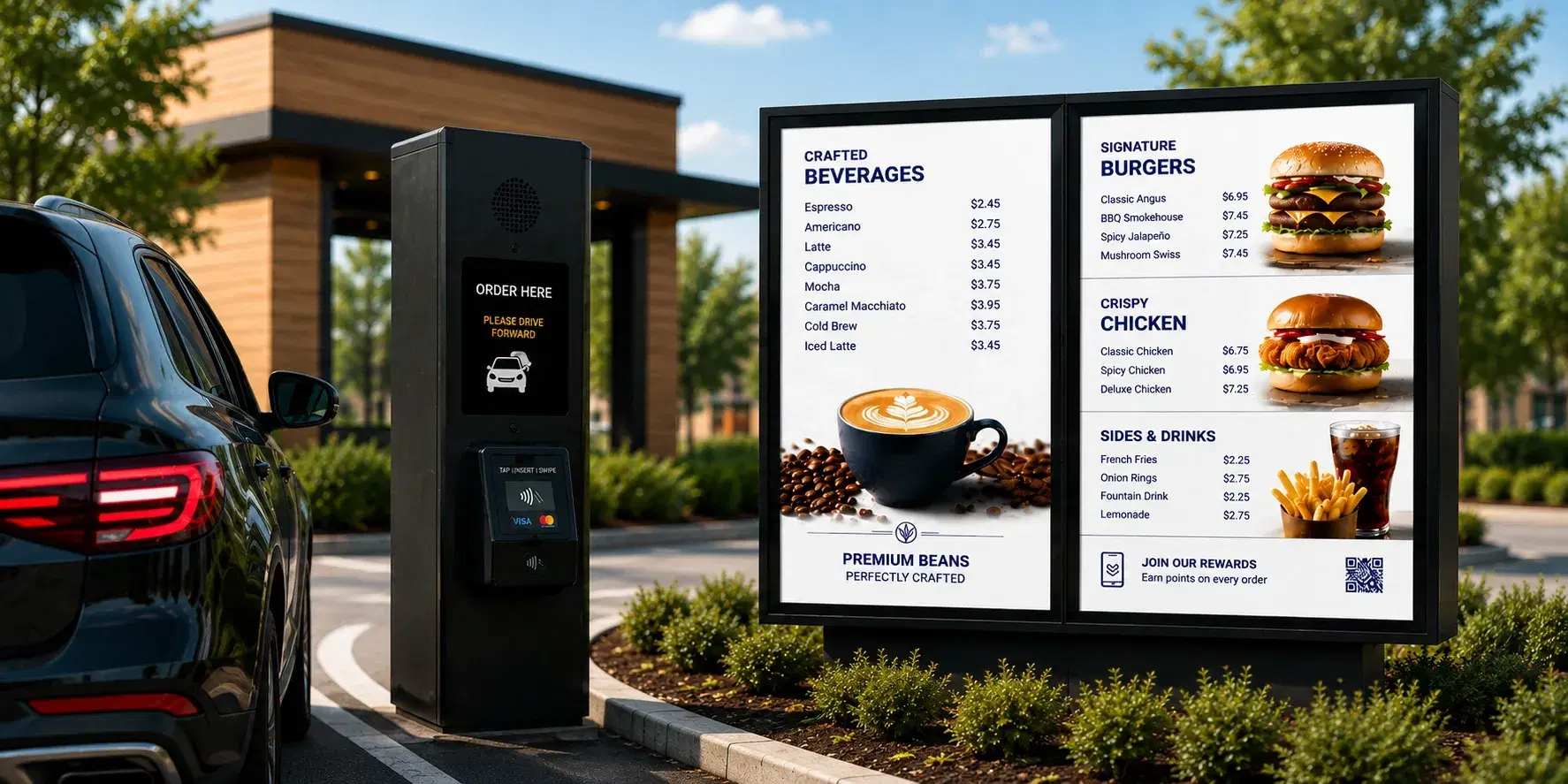
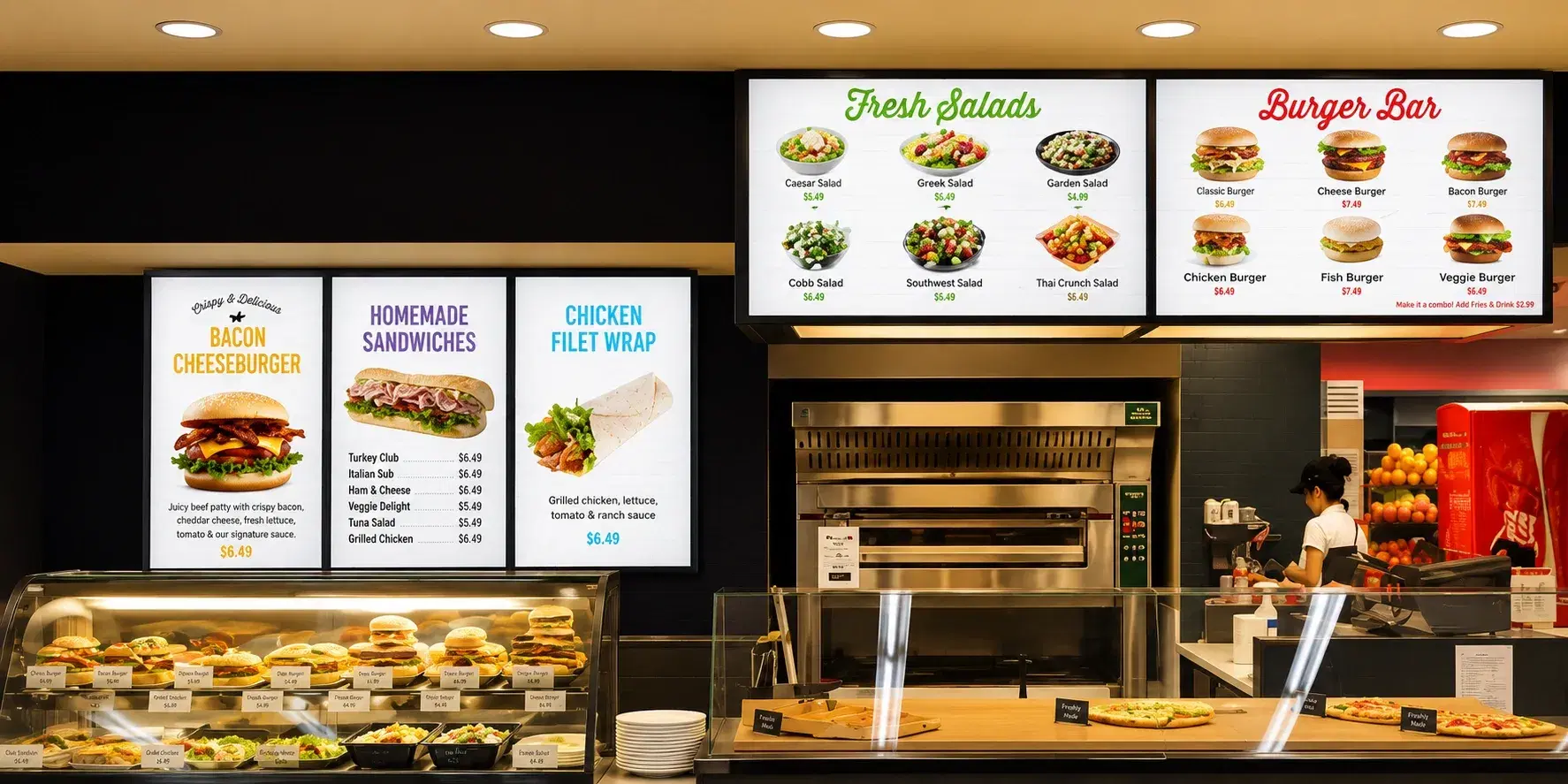
Disclosure rules by region for cafe menu boards.
Read the compliance guide →Cafe owners running seasonal drink launches and daily specials who are still updating allergen callouts by hand or relying on a laminated card behind the register.
Multi-location cafe operations managers who need every store showing the same accurate menu, loyalty offer, and allergen disclosure without checking each site individually.
Marketing managers coordinating a seasonal campaign or a loyalty promotion who need it live at every location on the same day, not rolled out store by store over a week.