
Train Station Digital Signage: Real-Time Schedules, Advertising, and Passenger Communication
Manage departure boards, advertising, wayfinding, and emergency alerts across your entire rail network from a single cloud platform, with no proprietary hardware lock-in.Trusted by transit operators in 70+ countries. SOC 2 Type II and ISO 27001 certified.

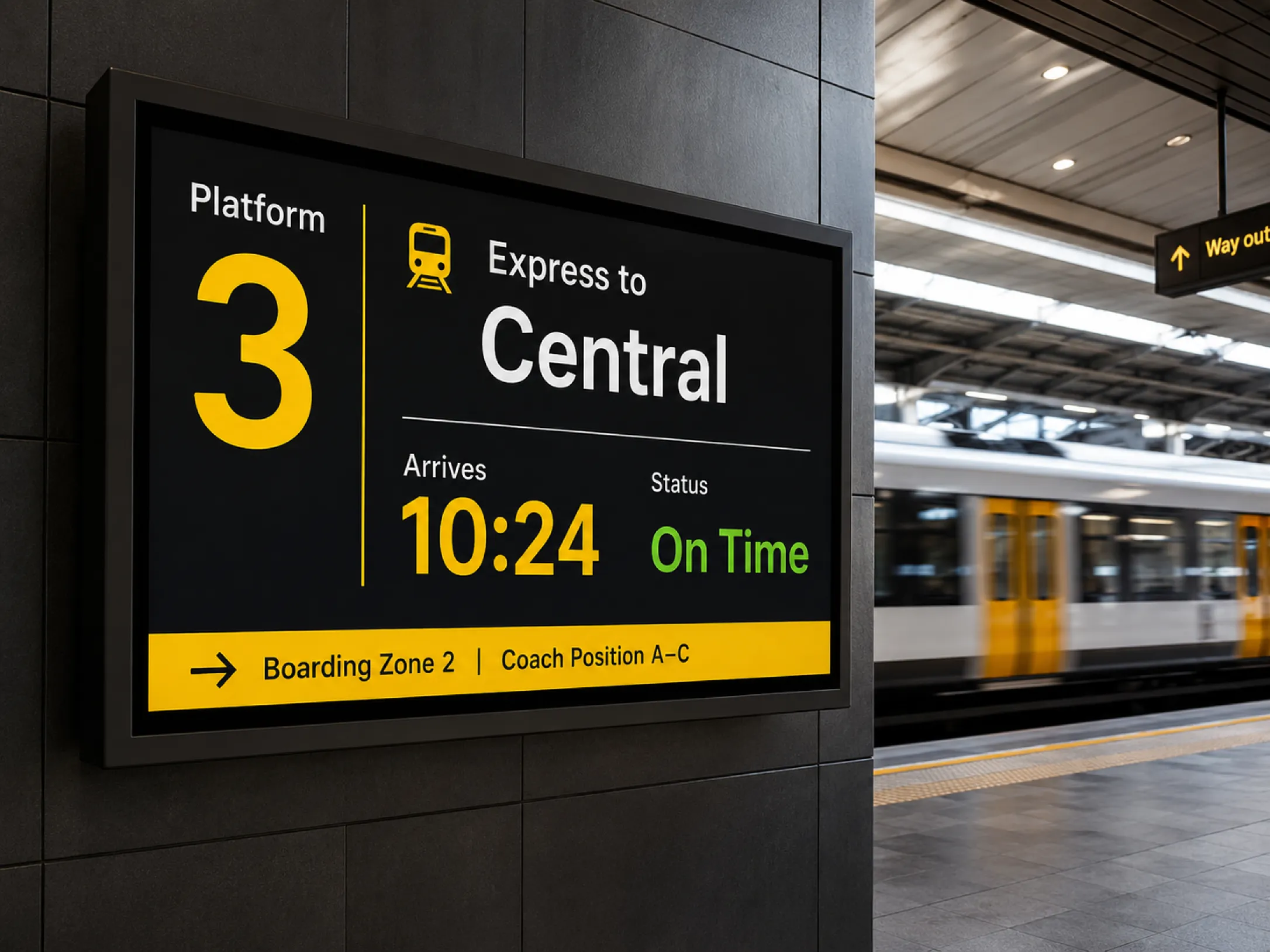
Trusted by transit operators in 70+ countries






SOC 2 Type II
ISO Certified
What Is Train Station Digital Signage?
Train station digital signage is a network of screens deployed across station concourses, platforms, ticketing halls, and waiting areas to deliver real-time passenger information, wayfinding, advertising, and emergency alerts. It enables rail operators and metro authorities to replace static departure boards with dynamic, cloud-managed content that updates automatically as timetables change. Pickcel's platform manages all content types from a single CMS, serving live schedule data, zone-based advertising, and multilingual wayfinding simultaneously across the same screen network. Transit authorities, metro operators, and out-of-home advertising companies use it to reduce information delays, improve passenger flow, and generate advertising revenue at their stations.
Certified for Public Infrastructure
- ISO 27001: Information security management, audited data by independent third-party assessors
- SOC 2 Type II: Operational security controls, independently verified
- RBAC: Role-based access control separates content, network admin, and emergency broadcast permissions across multi-operator deployments
- Rail operators and government transit authorities commonly require these certifications as a procurement condition. Audit reports available under NDA.
Best for
The Communication Challenge at Train Stations
Train stations are operationally demanding environments. Schedules change constantly, audiences are diverse, and a single information failure can create station-wide confusion for thousands of passengers at once. Three structural challenges define the communication problem at modern rail stations.
Information velocity
Train schedules are dynamic. Delays cascade across platforms, cancellations require immediate rebooking guidance, and platform reassignments must reach passengers within seconds. Manual board updates and static display systems cannot match this pace. Each minute of delayed information adds queue pressure at customer service desks and reduces passenger confidence in the operator.
Multi-audience complexity
Station screens must serve at least four distinct audiences simultaneously: commuters who need departure data, tourists who need wayfinding, advertisers who need dwell-time exposure, and operators who need to broadcast emergency messages. A single-purpose display serves one audience at the expense of the others. Rail operators need a platform that handles all four from one content management interface, with clear priority rules that govern what appears when.
Multi-location management
A regional rail operator may manage 20, 50, or 200 stations across a network. Staffing a content team at each station is not operationally viable. The only scalable model is remote content management from a central platform, where schedule changes, advertising campaigns, and emergency messages push to every station simultaneously without requiring on-site staff at each location.
What Train Station Digital Signage Can Do
Six functions define an effective train station signage deployment. Each addresses a specific operational need, and Pickcel's cloud-based digital signage software handles all six from a single platform.
Real-Time Schedule and Departure Boards
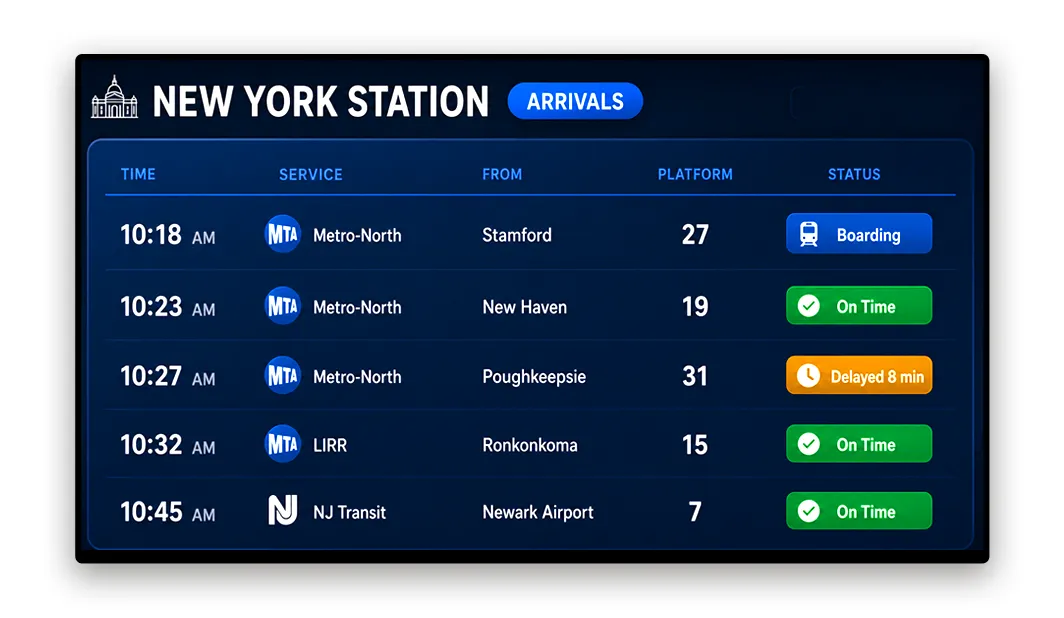
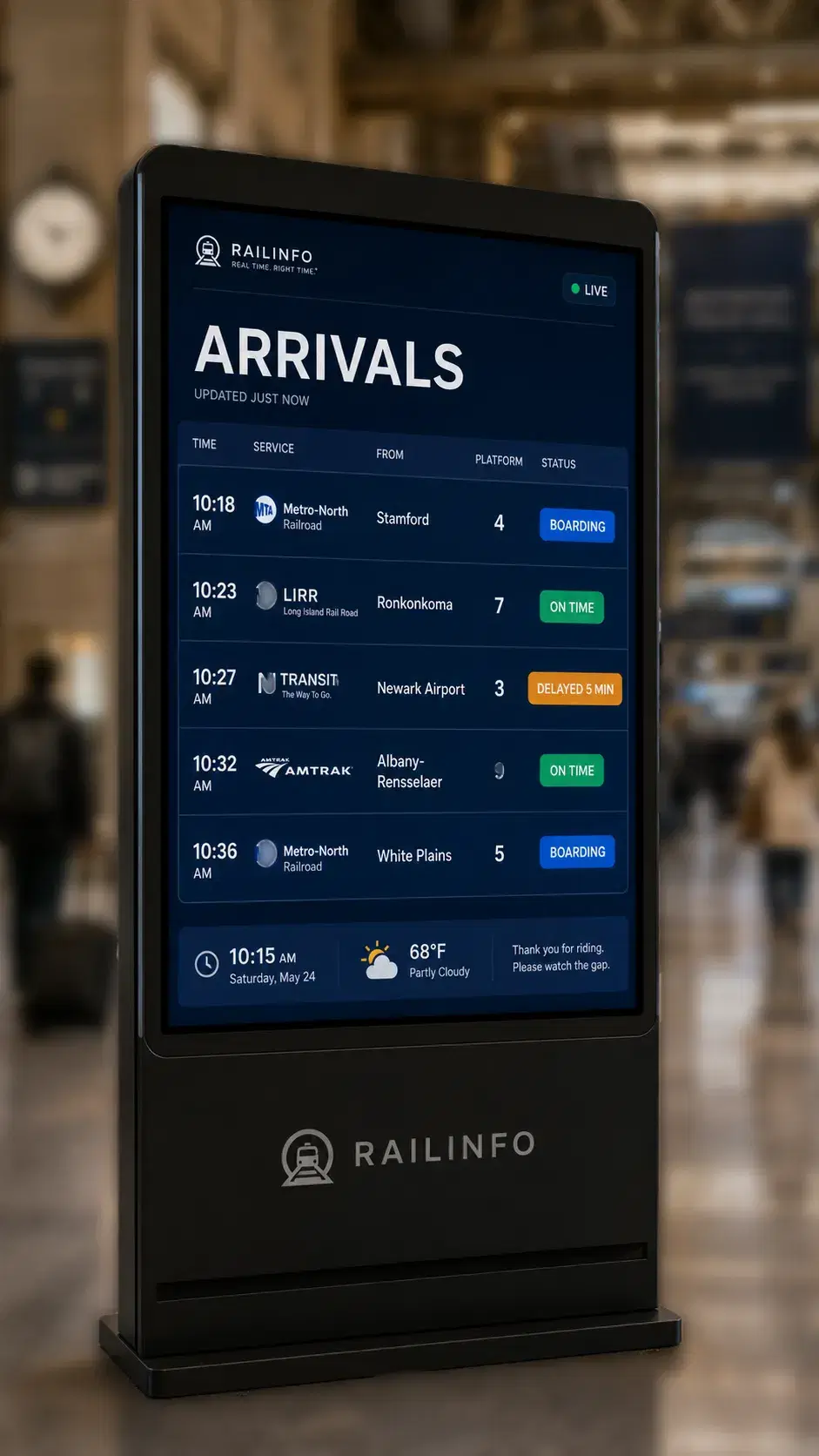
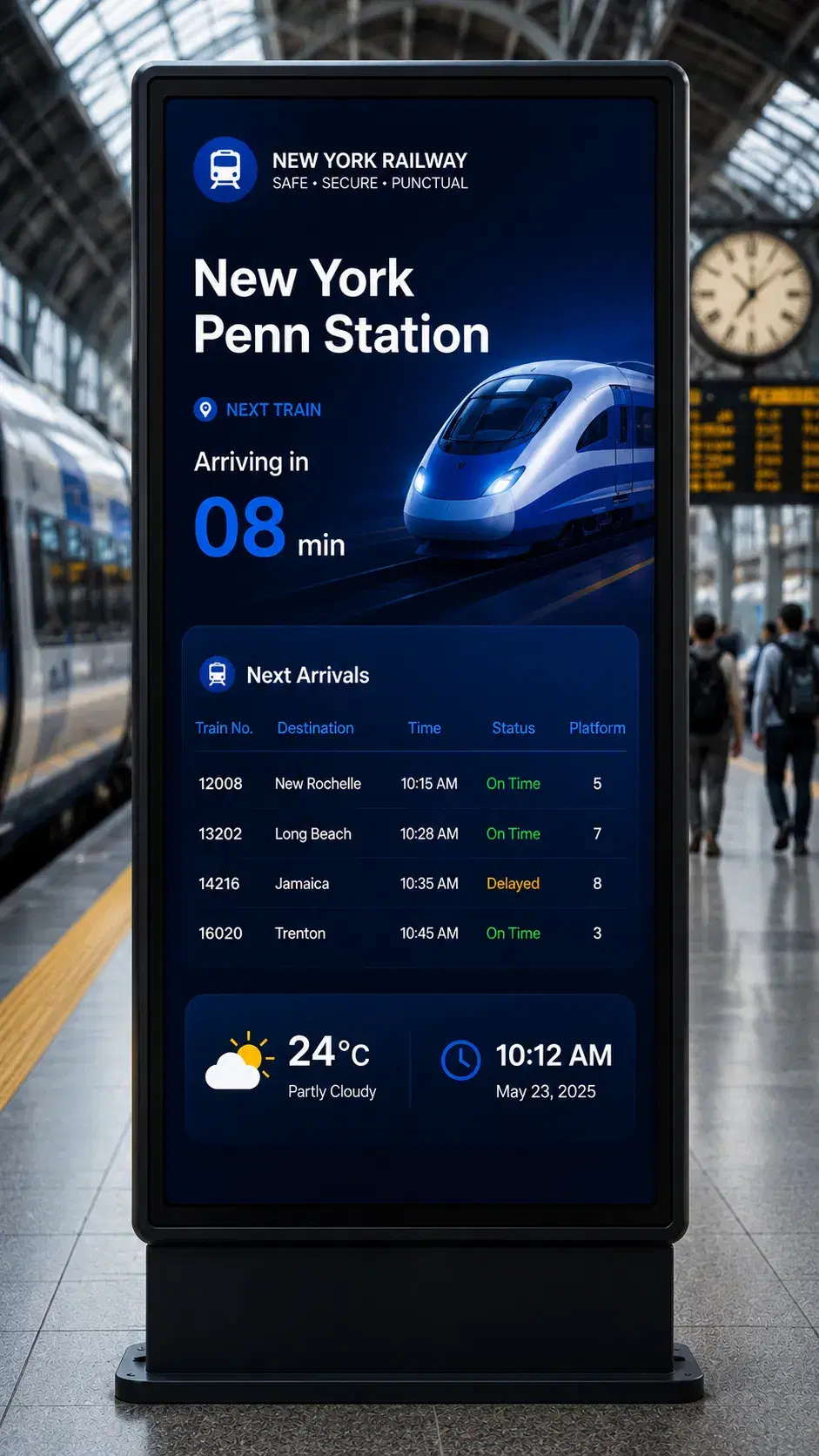
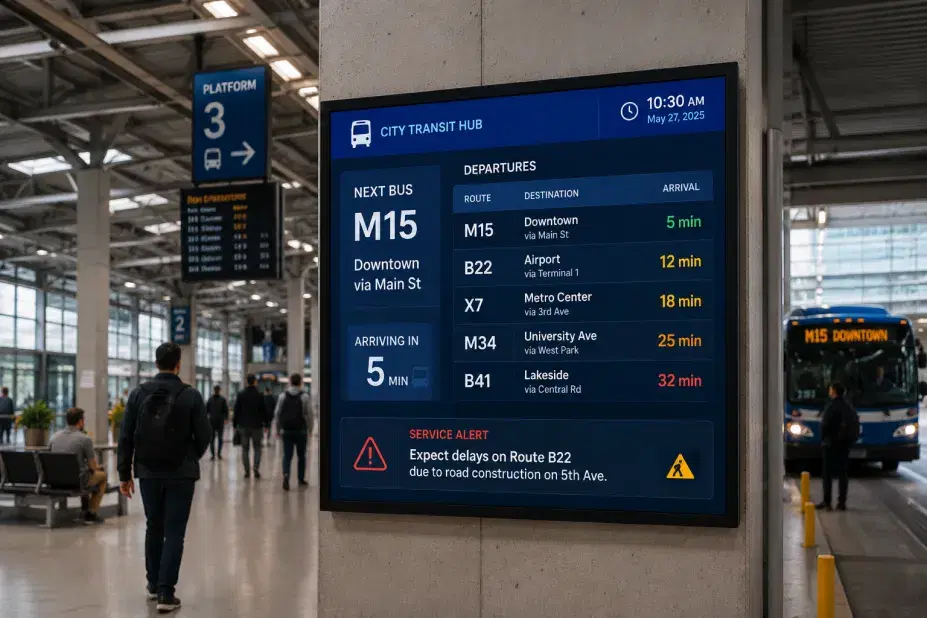
Display live train arrivals, departures, platform numbers, delays, and cancellations across all station screens from a single content feed. Schedule data updates automatically from your timetable management system. Platform changes and service disruptions push to every screen on the network in real time, without manual input at individual screens. Zone priority rules ensure schedule data remains visible even when advertising occupies other areas of the same display.
Station Advertising and Revenue Generation
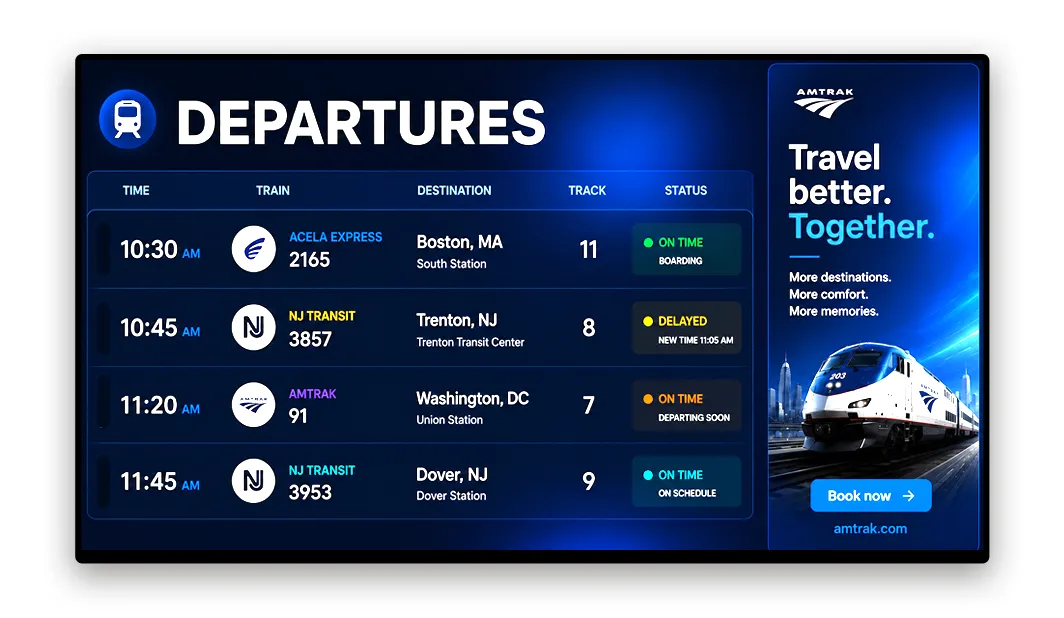
Allocate defined screen zones for paid advertising by local businesses, retail concessions, event promoters, or national brands. Transit operators generate revenue on existing passenger dwell time without deploying a separate advertising platform. Pickcel's zone layout engine runs advertising and passenger information simultaneously on the same screen, with time-based rules that override advertising zones with schedule data during peak departure windows or triggered service alerts.
Entertainment and Wait-Time Content
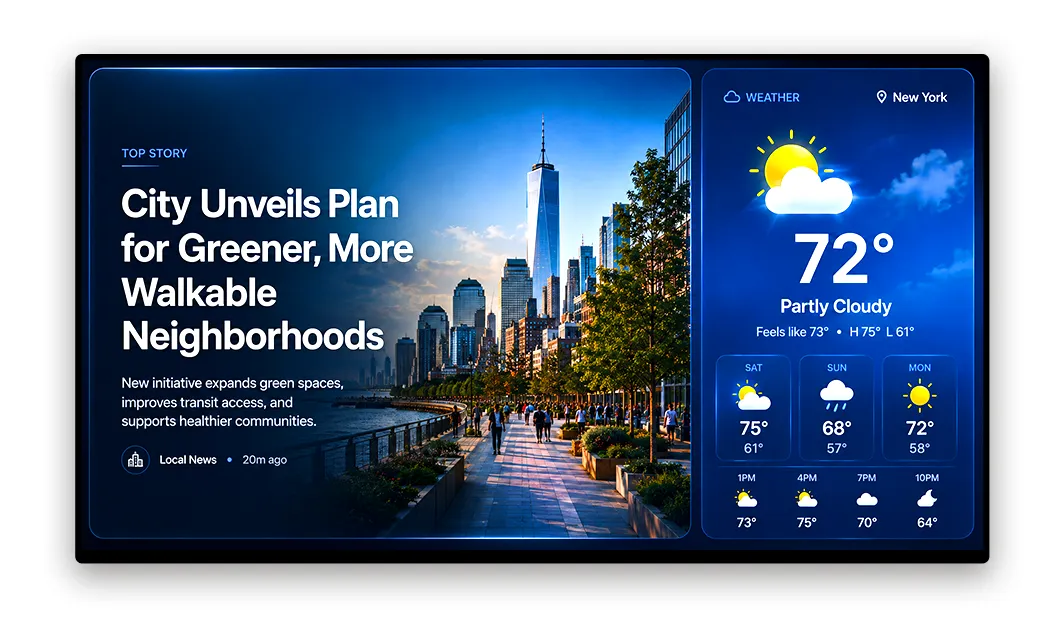
Schedule news, weather, and curated content during off-peak periods when passengers have extended dwell time. Non-intrusive programming occupies screen real estate productively between advertising slots and reduces perceived wait times at high-footfall interchange stations. Content libraries cycle automatically on defined schedules, with no manual refresh required.
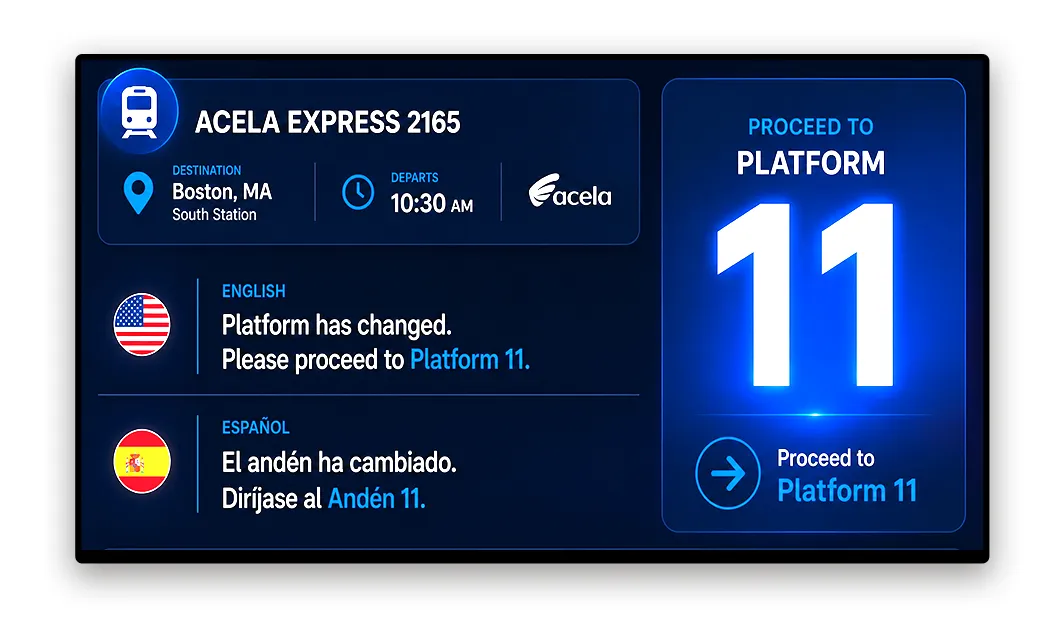
Multi-lingual and Accessible Displays
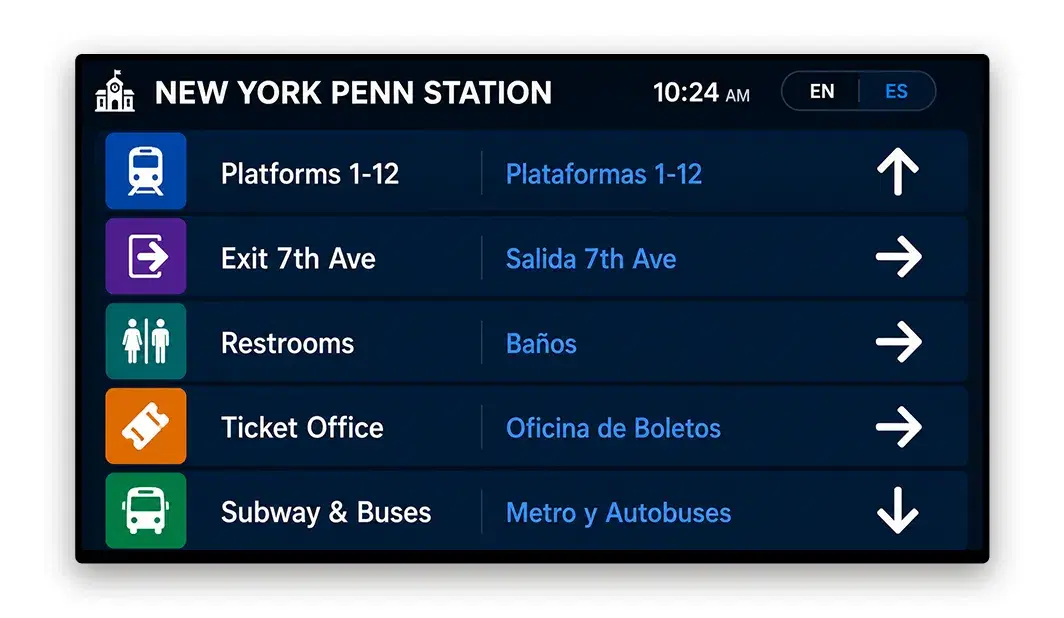
Schedule content in multiple languages to serve international travellers and linguistically diverse commuter populations. Language sets switch automatically by time of day, screen zone, or network-wide trigger, without manual intervention at individual screens. High-contrast display modes and legibility-optimised font configurations support accessibility requirements across the station network.
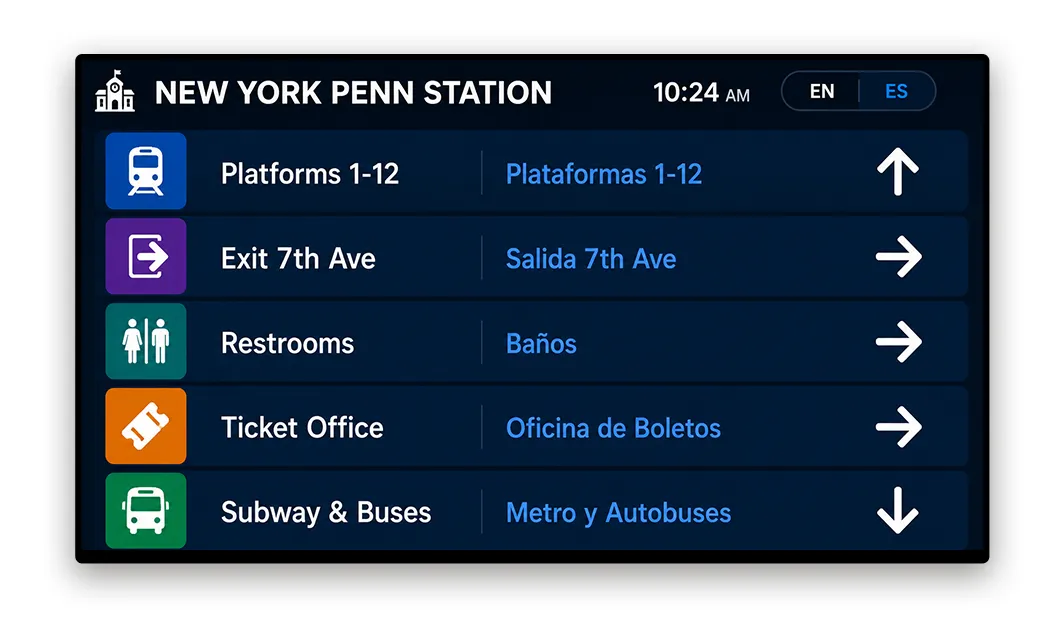
Navigation and Station Guidance
Guide passengers to platforms, exits, restrooms, ticket offices, and connecting services using dynamic wayfinding maps and directional overlays. Touch-enabled kiosk configurations allow on-demand route queries at high-footfall interchange areas. Wayfinding content updates centrally when temporary closures, construction diversions, or platform reconfigurations change passenger routes through the station. See Wayfinding Signage for the full navigation capability.
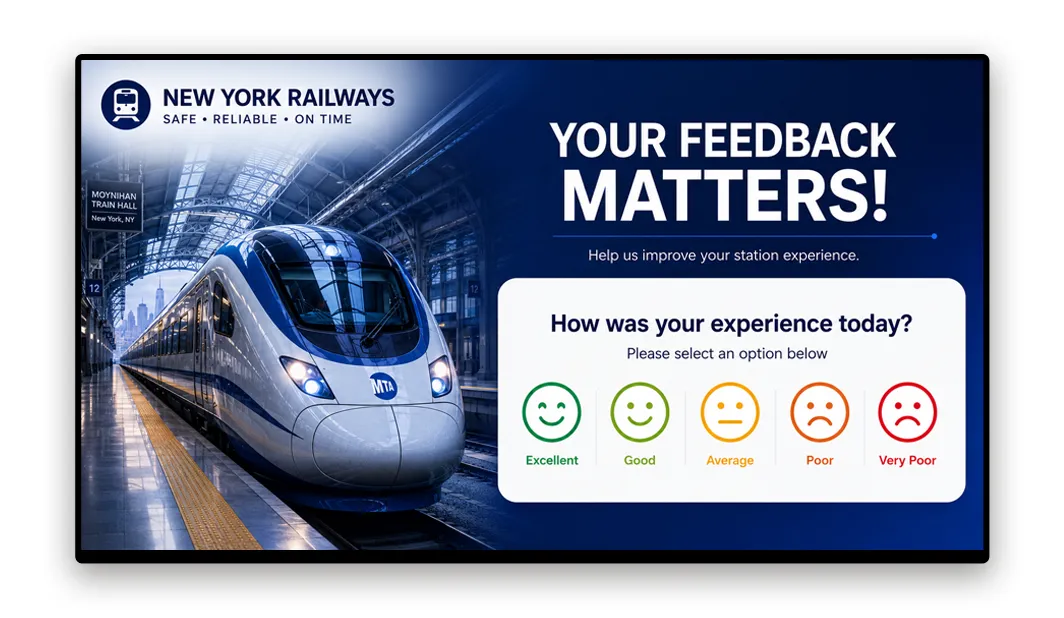
Service Kiosks and Passenger Feedback
Configure touch-enabled displays for ticketing queries, lost-and-found reporting, and passenger feedback collection. Self-service kiosk content reduces walk-up volume at staffed customer service desks during peak periods. Feedback data and interaction logs feed directly to your central operations dashboard, giving the customer service team a real-time view of query volumes without waiting for shift-end reports.
Digital Signage as a Rail Passenger Information System
A passenger information display system (PIDS) for rail delivers real-time schedule data to screens across station platforms and concourses. Traditional PIDS implementations are built on proprietary hardware bundled with specific schedule-feed integrations, which ties rail operators to a single vendor and limits content flexibility across the network.
Pickcel operates as a software-led PIDS layer for rail environments. The pipeline runs from your schedule data feed through Pickcel's content engine to the screen, formatting departure and arrival data as display-ready content, pushing updates as timetable events trigger them, and monitoring screen health across the network remotely. The platform is hardware-agnostic: it runs on commercial displays, outdoor-rated screens, and in-carriage panels from 50+ manufacturers, so operators retain full choice over the physical hardware at each station.
This approach separates the software intelligence from the hardware layer. Real-time schedule data and advertising content share the same screen using zone layouts, and the same CMS that manages departure boards also handles promotional content, emergency alerts, and accessibility messaging. Operators gain content control without being locked into a proprietary screen ecosystem.
For the complete technical specification of Pickcel's passenger information display capabilities, see Passenger Information Display System Software.
Case Study: UBN Enterprise, Intercity Train Advertising on Shatabdi and Tejas Express
Rail / Intercity Advertising
UBN Enterprise on Shatabdi and Tejas Express
The Challenge
UBN Enterprise, a traditional outdoor advertising company, deployed Pickcel to launch their first digital out-of-home advertising operation on government-run intercity routes, including Shatabdi and Tejas Express trains. The deployment operated in a demanding environment: intermittent power supply and variable connectivity across long-distance rail routes.
The Outcome
Pickcel delivered consistent ad display through these conditions, maintaining scheduled content delivery across routes without depending on continuous network uptime. UBN Enterprise used dual-purpose screen configurations to deliver both paid advertising and passenger information simultaneously, with news tickers and weather updates running alongside promoted content.
"The unique environment with a huge audience onboard the trains made the screens an extremely coveted spot for premium advertising."UBN Enterprise Team
Pickcel Capabilities for Train Station Deployments
Real-Time Data Integration
Connect schedule management systems, timetable APIs, and third-party data feeds to Pickcel's content engine. Departure and arrival data formats automatically as display-ready content across all screen zones. Schedule disruptions trigger content updates across the network without manual publishing steps.
Multi-Zone Screen Layout
A single screen displays schedule data, advertising, wayfinding, and emergency alerts simultaneously in defined layout zones. Zone priority rules ensure safety-critical and schedule content override advertising during triggered events. Operators configure priority logic once; the system enforces it automatically at every screen in the network.
Cloud-Based Remote Content Management
Manage content across every station in the network from one interface. Schedule campaigns, push updates, and broadcast emergency messages network-wide from any device with browser access. Routine content operations require no on-site staff at individual station locations.
Multi-Lingual Content Scheduling
Create and publish content in multiple languages. Language sets trigger by time of day, screen zone, or operator command. Switching language configurations does not require manual actions at individual screens or screen-by-screen republishing.
50+ Device Compatibility
Pickcel runs on commercial displays, outdoor-rated screens, in-carriage display panels, touch kiosks, and LED boards from Samsung, LG, BrightSign, Android media players, and 50+ other device families. Existing station hardware is often compatible, avoiding full hardware replacement at stations being upgraded from static or legacy digital boards.
Automated System Health Monitoring
Receive real-time alerts when a screen goes offline, a content feed fails, or a layout zone drifts from specification. The monitoring dashboard shows screen status across the full network with remote diagnostic access, enabling operations teams to identify and resolve issues before on-site intervention is required.
Security for Public Infrastructure
ISO 27001
Information security management, independently audited
SOC 2 Type II
Operational security controls, independently verified
Role-based access control (RBAC) separates permissions across operator roles within a single deployment. For rail operators managing multi-operator concessions or public-private content arrangements, RBAC is the control layer that keeps content governance clean across teams without requiring separate platform instances.
Both certifications meet the documentation requirements common in government tender processes and system integrator procurement engagements.
Role-based access control across operator roles
Role-based access control (RBAC) separates permissions across operator roles within a single deployment:
Content managers
can publish and schedule content only within their assigned screen zones
Network administrators
control system configuration, screen groupings, and feed integrations without access to campaign billing data
Emergency broadcast operators
can push network-wide safety alerts without access to advertising content or financial data
Station-level managers
can publish to their assigned station but cannot modify content at other stations in the network
Advertising partners
can upload and schedule content within their contracted zones only, with no visibility into operational or safety content streams
For rail operators managing multi-operator concessions or public-private content arrangements, RBAC is the control layer that keeps content governance clean across teams without requiring separate platform instances.
Explore Transportation Digital Signage
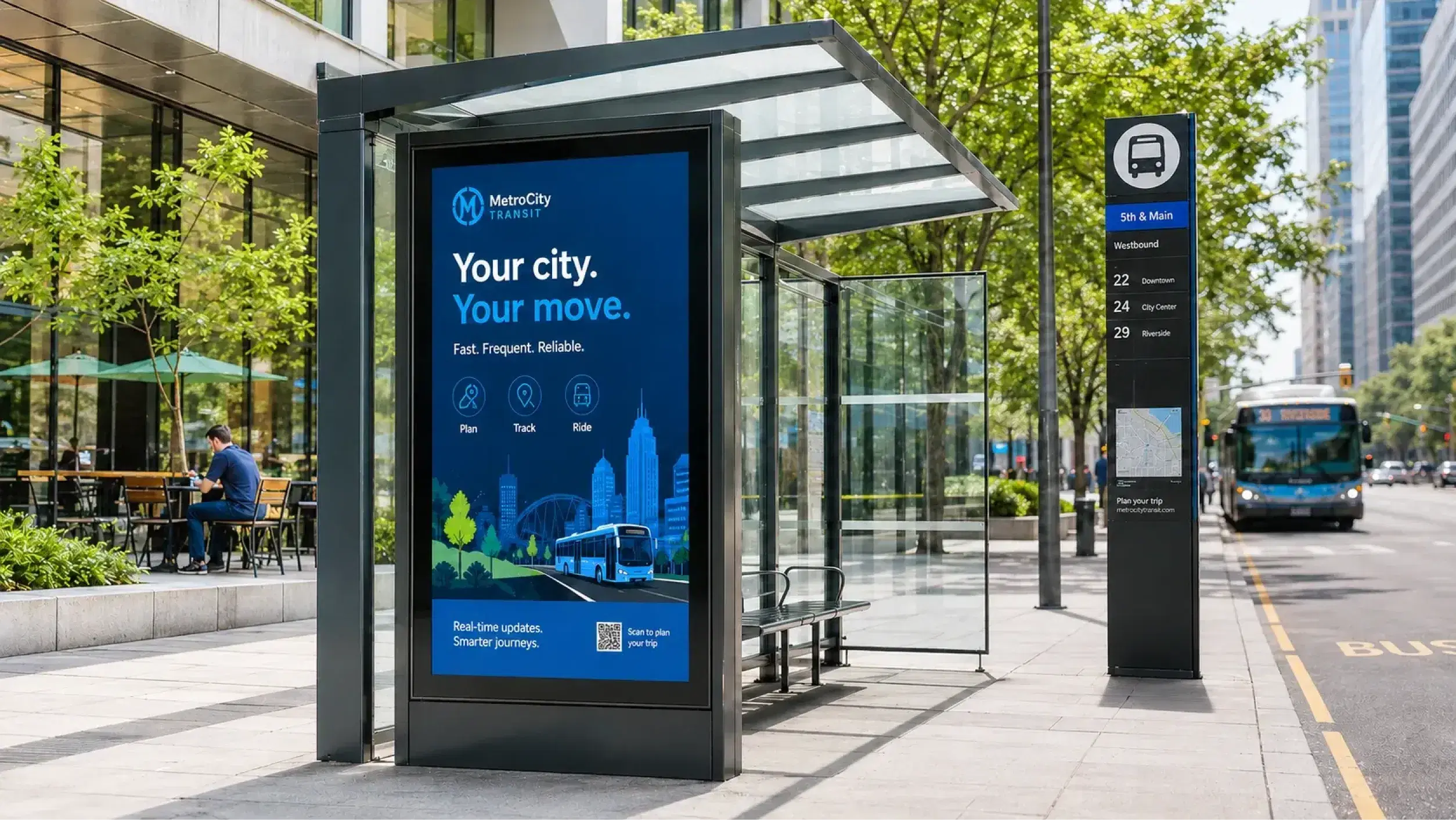
Bus Stop Digital Signage
Transit content for bus networks and stops
Explore →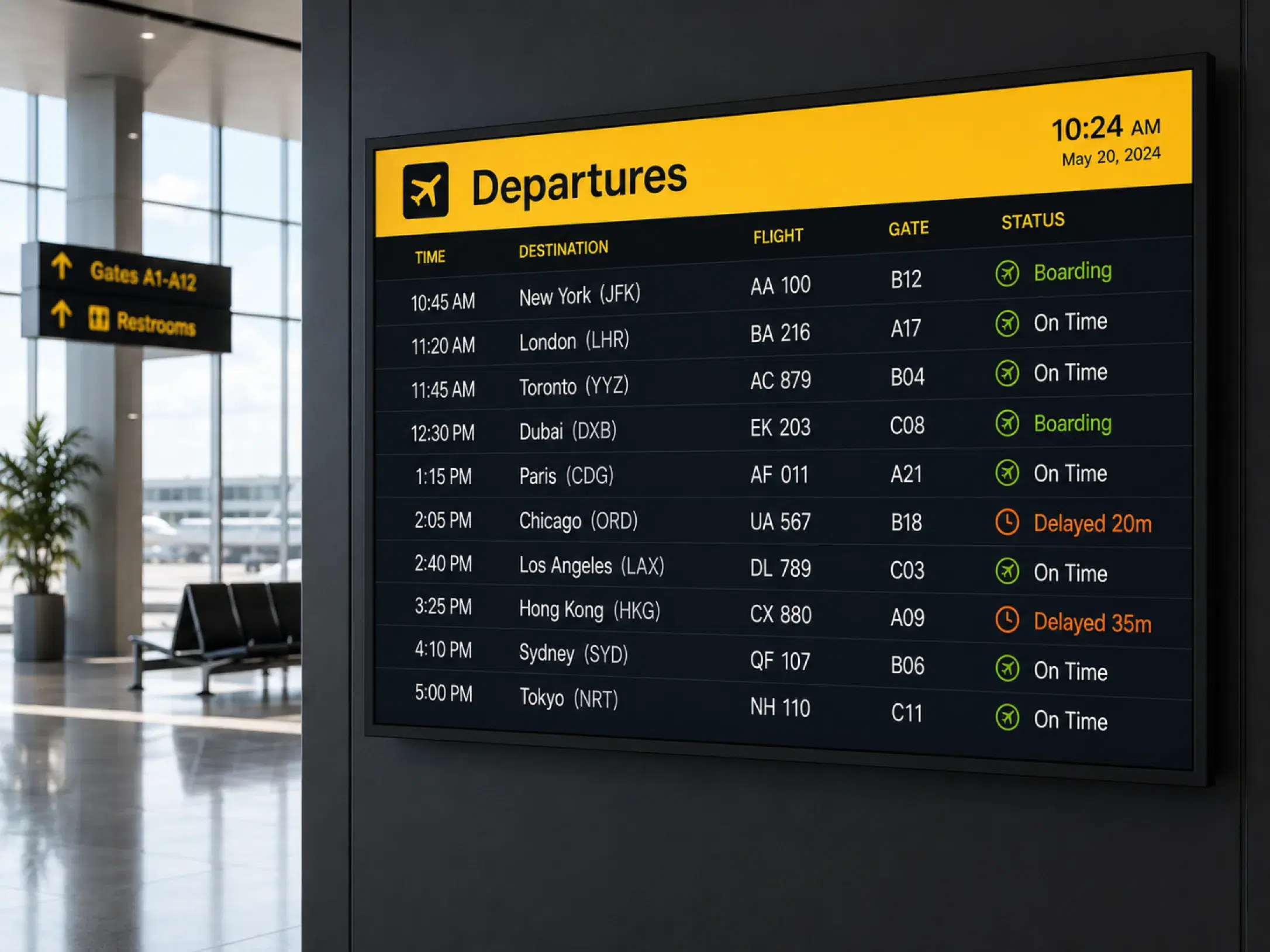
Airport Digital Signage
FIDS, wayfinding, and retail for airports
Explore →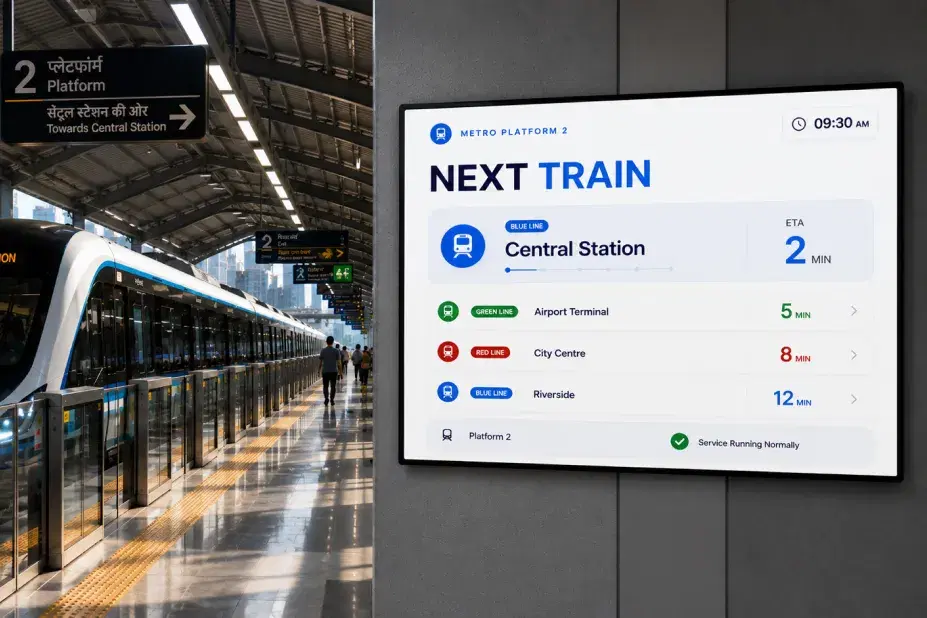
Passenger Information Display System (PIDS)
Full Passenger Information Display System solution
Explore →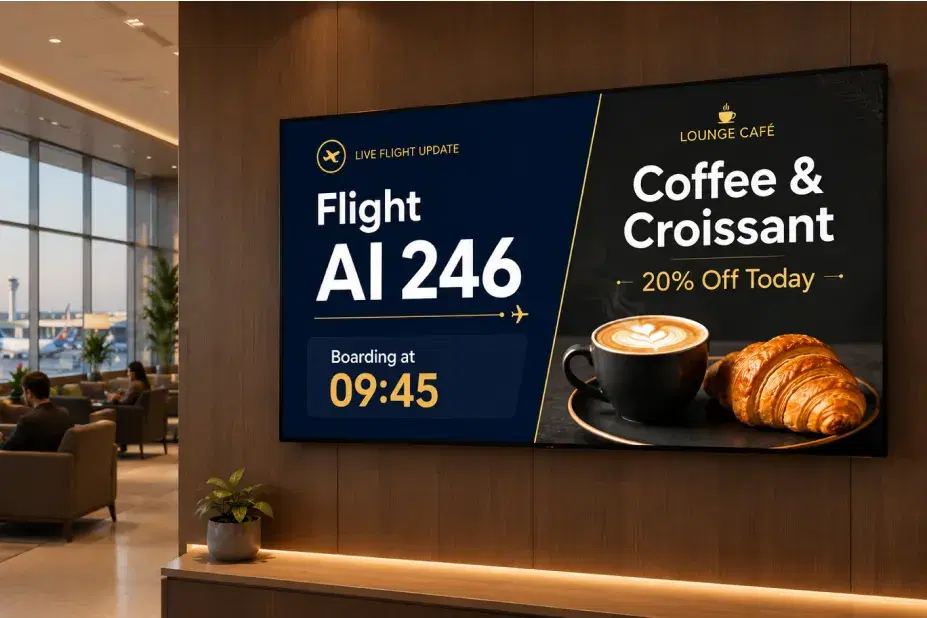
Flight Information Display System (FIDS)
Real-time gate and departure displays
Explore →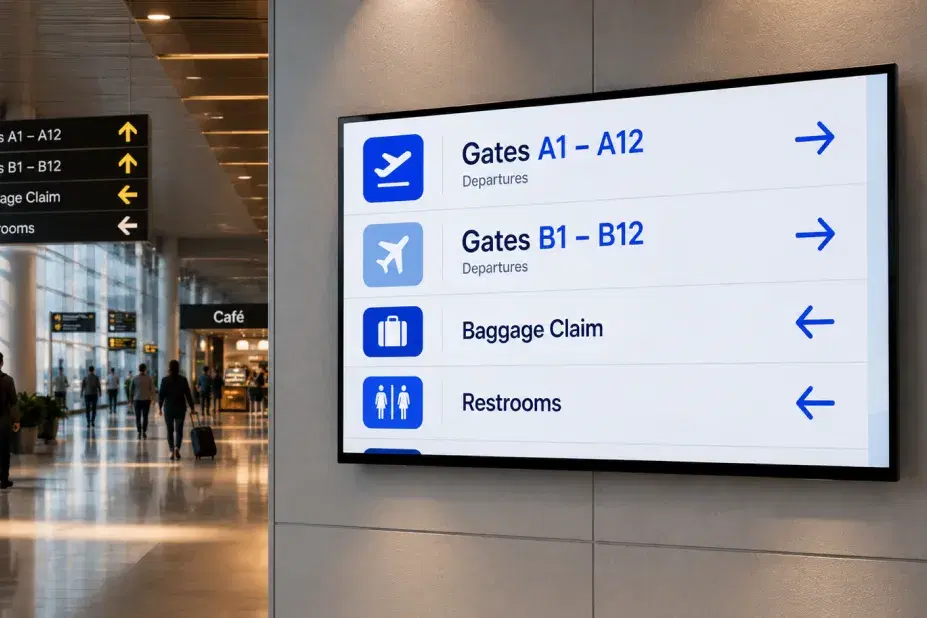
Wayfinding Signage
Navigation solution for train stations and high-footfall interchanges
Explore →Frequently Asked Questions
Related Content
Transportation Digital Signage Software
Full transportation vertical overview
Bus Stop Digital Signage
Transit content for bus networks and stops
Passenger Information Display System Software
Full PIDS capability specification
Wayfinding Signage
Navigation solution for train stations and high-footfall interchanges
Digital Signage Software
Pickcel core platform overview