See how Pickcel reaches every screen in your organisation →
- WhatsApp is widely adopted for employee communication in APAC and MEA, but it was not designed for professional workplace use.
- Four key risks: GDPR non-compliance, no audit trail, personal-professional boundary erosion, and no broadcast capability at scale.
- In May 2025, the Italian DPA fined an employer €420,000 for using employees' private WhatsApp messages in disciplinary proceedings.
- For broadcast communication to large or deskless workforces, digital signage is the most effective and compliant alternative.
- Best approach: dedicated chat platform (Teams, Slack) for conversation + digital signage for broadcast.
- 85.8% of the UAE population aged 16-64 uses WhatsApp, making it the default messaging layer for many Gulf-based workforces (Datareportal, Digital 2024: UAE)
- WhatsApp group chats are capped at 1,024 members and have no central audit trail or data export capability
- In May 2025, the Italian DPA fined an employer €420,000 for using employees' WhatsApp messages in disciplinary proceedings (Garante Measure no. 288, 21 May 2025)
- GDPR-compliant alternatives exist that provide audit trails, data control, and broadcast capability without personal devices
In markets where WhatsApp dominates personal messaging, using it for work feels like the obvious shortcut. It is already on every employee’s phone, costs nothing, and takes minutes to set up. For small businesses and distributed teams, particularly across South Asia, Southeast Asia, the Gulf, and sub-Saharan Africa, it has become the default internal communication channel before any formal tool is deployed.
The problem is not that WhatsApp does not work. The problem is that it works well enough to mask the risks until something goes wrong. Those risks are legal, operational, and structural, and they grow as the organisation scales. This article covers what makes WhatsApp appealing, where it creates real problems, what GDPR enforcement now looks like in this area, and what a better communication stack looks like for organisations that have outgrown it.
Why do companies use WhatsApp for employee communication?
WhatsApp becomes the default employee communication tool in regions where it already dominates personal messaging. Ease of adoption, zero cost, and universal device compatibility make it a natural starting point, especially for deskless and shift-based workforces.
The adoption logic is straightforward. In the UAE, 85.8% of the population aged 16 to 64 uses WhatsApp, according to Datareportal’s Digital 2024: UAE report. Penetration rates above 80% are consistent across the Gulf, much of South and Southeast Asia, and several African markets. In these regions, routing employee communication through WhatsApp is not a deliberate policy choice; it is accepting what is already happening.
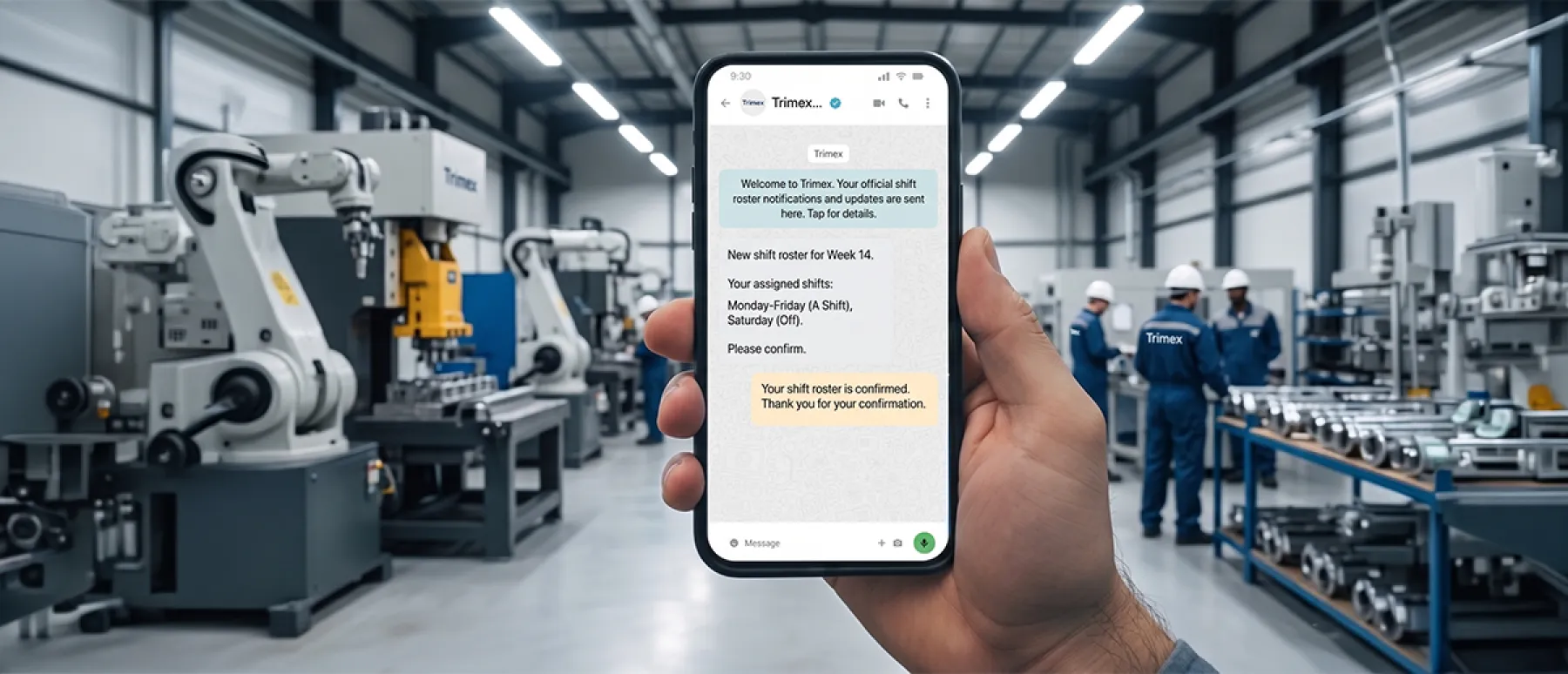
For managers, the appeal is practical. Group chats can be created in under a minute, files and voice notes can be shared without a separate system, read receipts provide rough confirmation of delivery, and there is no licence cost to justify. For frontline workers who do not have a corporate email account or desktop access, a WhatsApp group is often the only channel that actually reaches them during a shift.
What starts as a workaround becomes infrastructure. Teams build shift schedules, share safety briefings, run operational updates, and coordinate handovers through the same groups. The convenience is real, which is precisely why the risks tend to accumulate unnoticed.
What are the risks of using WhatsApp for workplace communication?
WhatsApp creates four significant risks when used as a primary employee communication tool: GDPR and data protection exposure, no audit trail, blurring of personal and professional boundaries, and no broadcast capability at scale.
Regulatory and GDPR exposure
The most concrete risk is active legal enforcement. In May 2025, the Italian Data Protection Authority (Garante) fined Autostrade per l’Italia S.p.A. €420,000 for processing an employee’s personal data unlawfully. The company had used screenshots from the employee’s private WhatsApp, Facebook, and Messenger conversations as evidence in disciplinary proceedings. Even though the material was forwarded by colleagues rather than directly obtained, the Garante confirmed that any subsequent use of that data constitutes processing under GDPR.
The ruling found violations of Articles 5(1)(a), (b) and (c) and Article 6 of the Regulation, and is documented on the European Data Protection Board’s official site as Garante Measure no. 288, dated 21 May 2025.
No audit trail or data control
GDPR and most corporate data retention policies require organisations to retrieve, export, and delete employee communication records on request. WhatsApp provides none of these capabilities. Messages can be deleted by any participant at any time. There is no central log. Data sits on personal devices and on Meta’s servers, outside the organisation’s control or reach.
For organisations in regulated industries, including banking, healthcare, and legal services, this is not a compliance gap. It is a compliance failure with direct liability consequences.
Personal-professional boundary erosion
WhatsApp runs on employees’ personal accounts and devices. When an employee leaves the company, they take the group chats with them. There is no formal off-boarding process, no mechanism to revoke access, and no way to ensure that operational discussions or business-sensitive information are deleted from that individual’s personal phone.
Employees also receive work messages in the same environment as personal conversations, at any hour. There is no quiet-hours enforcement, no separation from personal contacts, and no clear signal that work time has ended. This contributes to burnout and makes any meaningful boundary difficult to maintain.
No broadcast capability at scale
WhatsApp group chats have a 1,024-member limit and function as two-way conversations. There is no mechanism to push a message to every employee across a large organisation, display a time-sensitive update on a factory floor screen, or guarantee that a safety alert reaches every shift worker before they start. The one-to-many broadcast communication that large organisations need is not something WhatsApp was designed to deliver.
What are the best alternatives to WhatsApp for employee communication?
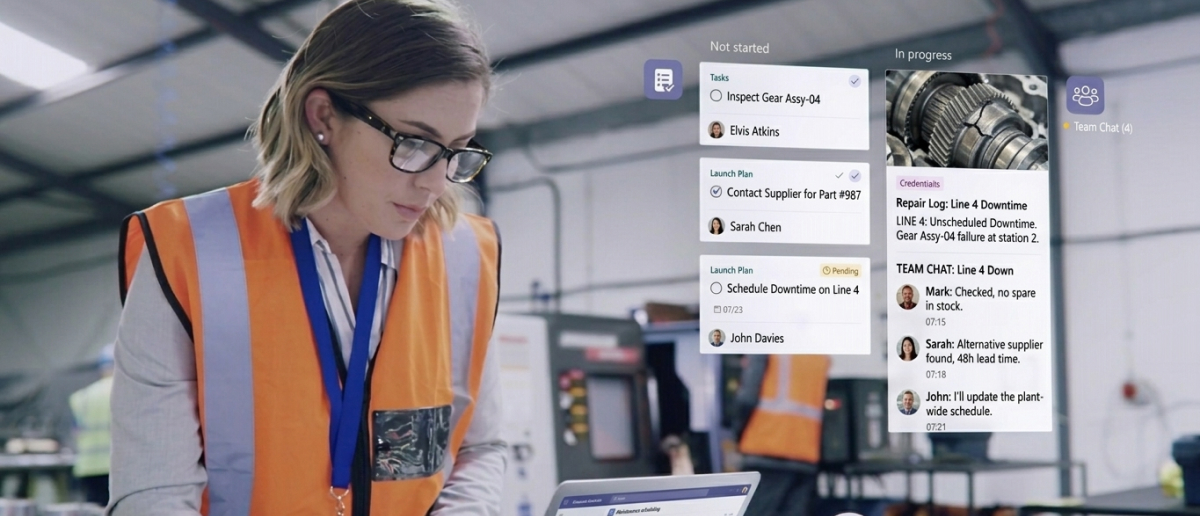
The right alternative depends on the communication type. For conversational messaging, Microsoft Teams and Slack provide GDPR-compliant chat with full audit trails. For broadcast communication to large or deskless workforces, digital signage is the most effective channel. Most organisations need both.
| Use Case | Teams / Slack | Pickcel Digital Signage | |
|---|---|---|---|
| One-to-one messaging | ✓ | ✓ | ✕ |
| Group chat (under 200 people) | ✓ | ✓ | ✕ |
| Broadcast (1,000+ employees) | ✕ | Limited | ✓ |
| Common-area screen display | ✕ | ✕ | ✓ |
| Audit trail | ✕ | ✓ | ✓ |
| GDPR-compliant data handling | ✕ | ✓ | ✓ |
| Works without a personal device | ✕ | ✕ | ✓ |
| Real-time operational data display | ✕ | Partial | ✓ |
| Analytics and proof-of-play | ✕ | Partial | ✓ |
For most organisations, the practical answer is a layered approach: a dedicated chat platform for conversational communication and digital signage for broadcast, passive display, and reaching employees who do not have a desk or a corporate device.
Pickcel is used by 9,000+ businesses across 70+ countries to manage employee communication across all channels.
How does digital signage compare to WhatsApp for broadcast communication?
For broadcast communication, digital signage outperforms WhatsApp on every meaningful measure: reach, compliance, passive consumption, and operational integration. It requires no employee opt-in and no personal device.
WhatsApp requires every recipient to have the app on their phone, belong to the relevant group, and actively check the notification. An employee on a factory floor, a hospital ward, or a retail shop floor may not look at their phone for several hours during a shift. A critical safety update, a production KPI change, or an emergency alert may never be seen in time.
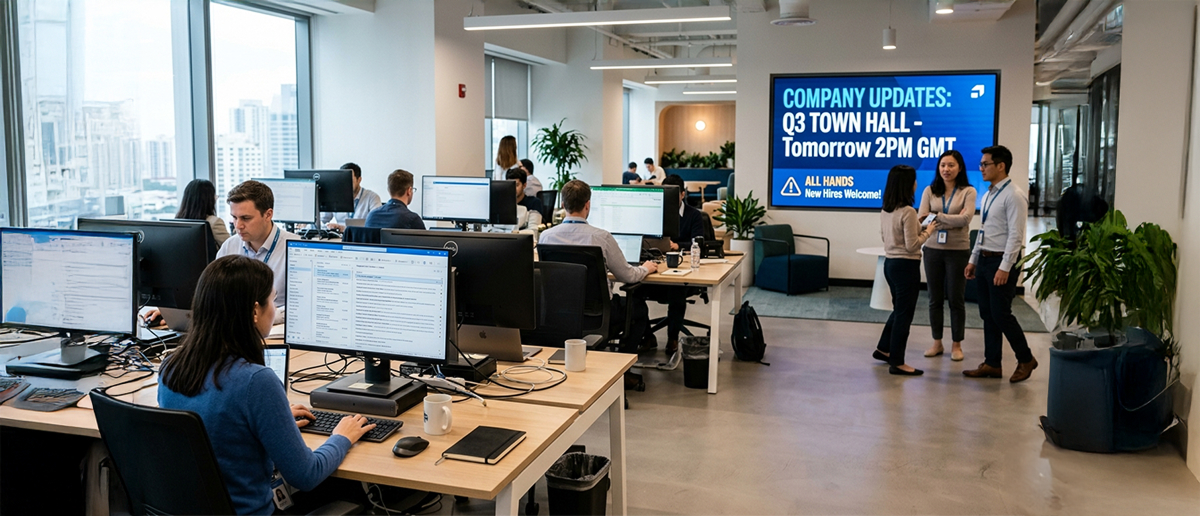
Digital signage works differently. Screens in common areas, canteens, production floors, and break rooms display information continuously, without requiring any action from the viewer. The same content update reaches 50 screens across three sites in under 30 seconds, with proof-of-play logs confirming what was displayed, on which screen, and for how long.
For deskless workers, who represent the majority of employees in manufacturing, retail, logistics, and healthcare, digital signage is often the only communication channel that reliably reaches them during a working shift. No personal phone required, no group membership to manage, no GDPR liability over personal data processing.
For a broader comparison of employee communication tools, Top 12 Internal Communication Tools for Modern Workplaces covers how each channel performs across different workforce types and communication needs.
Frequently Asked Questions
Is WhatsApp safe for employee communication?
What are the GDPR risks of using WhatsApp at work?
What is the best alternative to WhatsApp for workplace communication?
How do you communicate with employees who do not use corporate email or apps?
Can WhatsApp be used for emergency communication at work?
Ready to replace WhatsApp with a communication system that actually scales?
Pickcel reaches 94% of employees within 2 hours across 8 channels. SOC 2 Type II and ISO 27001 certified.