
Dec 24 2025

10 min read
August 22, 2025
11 min read


ALL
GENERAL

Event venues in the USA are incredibly diverse, ranging from small meeting rooms to massive 100,000-seat stadiums, convention centres, exhibition halls, performing arts venues, hotels, resorts, and university campuses.
Each of these venues comes with its own operational demands, audience expectations, and logistical complexity.
From packed stadiums hosting sports and concerts to high-stakes business expos and university open days, no two events are the same.
But what they all share is the need to communicate clearly, move people efficiently, and deliver a memorable experience. And that means meeting the expectations of everyone involved, attendees who want to navigate with ease, organizers who need things to run smoothly, sponsors looking for visibility, and staff trying to stay ahead of real-time updates.
Digital signage has become an essential part of modern event venue infrastructure, delivering real-time updates, reducing staff workload, and keeping everything running smoothly from wayfinding and schedules to promotions.
In fact, studies show digital signage can reduce logistical issues by nearly 30% and cut attendee confusion by a third. For conferences, especially, digital signage software in the USA is playing a central role in helping venues stay organized, flexible, and guest-friendly.
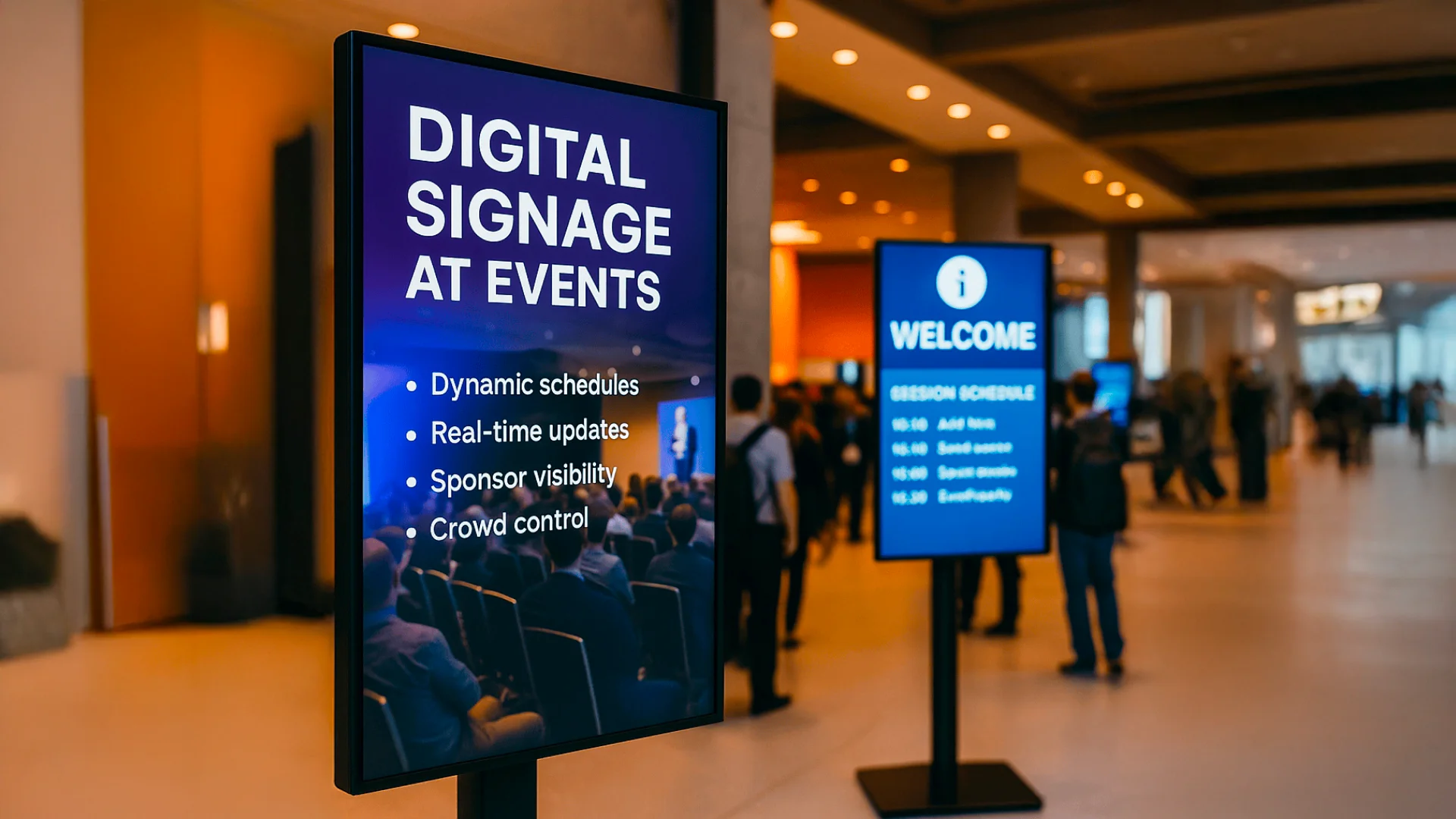
Digital signage is a smart system of networked screens and software that delivers real-time content updates, directions, promotions, and alerts.
It replaces static signs with dynamic visuals, videos, text, and data that can be changed instantly from anywhere. This flexibility makes it perfect for busy venues managing shifting schedules, changing crowd flows, and the needs of organizers, attendees, and sponsors alike.
In venues where every square inch matters, digital signage turns high-traffic areas into high-impact opportunities. With thousands of eyes moving through dynamic spaces, sponsors get better visibility, promotions stay relevant to shifting crowds, and organizers unlock new revenue streams.
It also acts as a critical infrastructure layer that keeps everything running smoothly. It informs, engages, and moves people.
The screen is what people see, but behind it is a full setup of hardware that makes everything work smoothly.
Displays: From compact touchscreens to massive LED walls, displays vary by use case. Stadiums use ribbon boards and jumbotrons, while conference centers might rely on kiosks or wall-mounted LCDs. Projection mapping is another creative option, turning physical spaces into immersive visuals.
Media Players: These devices push the content from the cloud or local storage to each screen. Some are external boxes, others are integrated into the screens (System-on-Chip or SoC). Choosing the right digital signage player in USA ensures smooth playback and system reliability.
Devices like Amazon Firestick digital signage, Brightsign Digital Signage, Raspberry Pi digital signage offer varied capabilities based on needs and scale.
Mounting Systems: Wall mounts, floor stands, ceiling rigs, each tailored to visibility, safety, and aesthetics for the space.
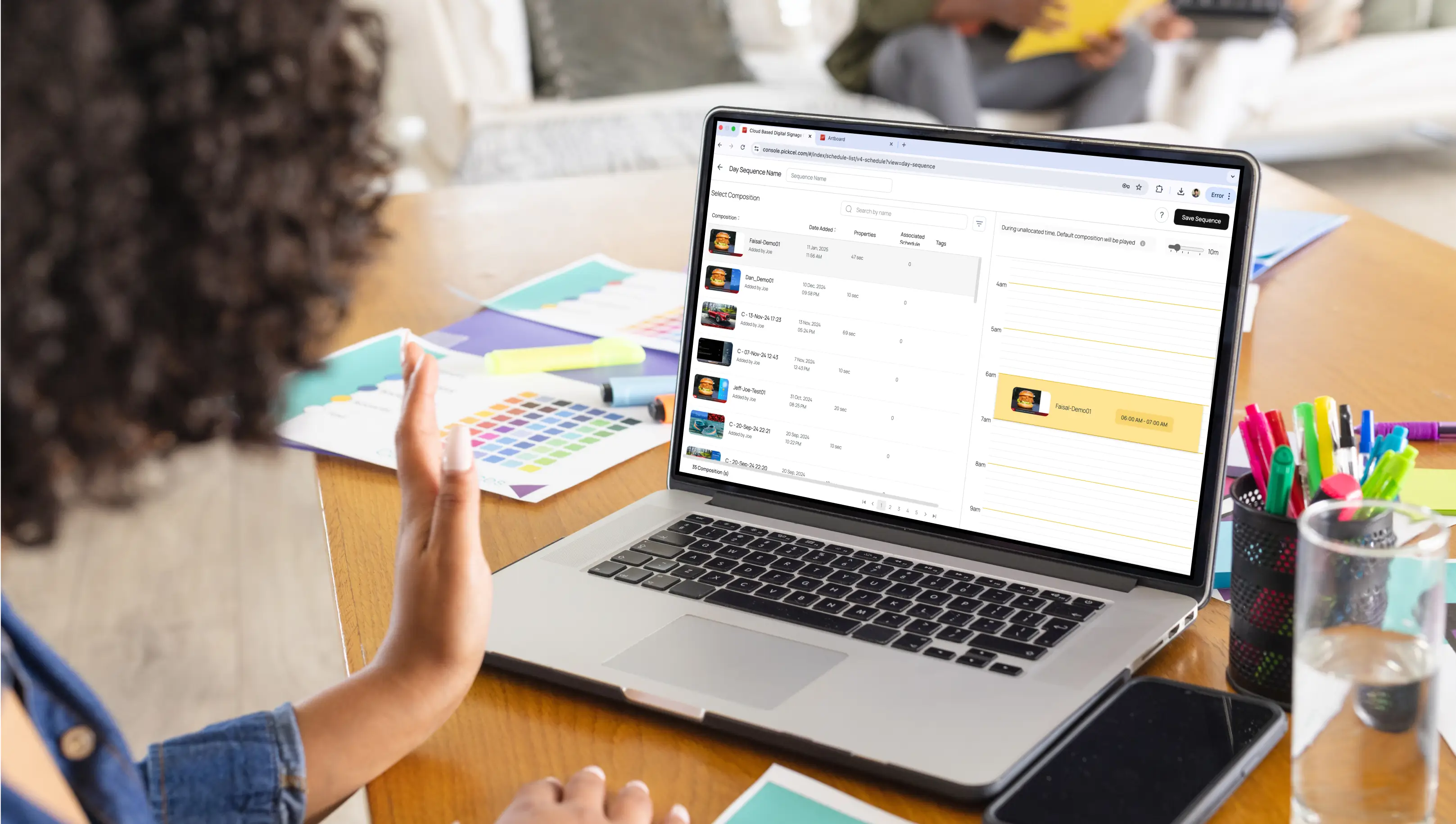
The content management system (CMS) is the control center. Whether cloud-based or on-premise, the CMS makes content agile and the system scalable. It allows staff to:
Schedule content by time, date, or event.
Divide screens into zones (e.g., video + ticker + weather).
Push updates across one or many locations instantly.
Monitor device health and automate actions like rebooting a frozen display.
Smart content design boosts engagement and recall. Bright visuals, motion, and clear messaging cut through noise and keep people informed. Real-time updates reduce confusion and let venues react to changes instantly.
Sponsor ads in restrooms show 84% message recall, proving that the right content in the right place matters. Utilize well-made digital signage templates to streamline the process.
Cloud-based digital signage solution offers remote management, easy scaling, and minimal maintenance. Ideal for multi-site operations or fast-paced environments.
On-premise digital signage in USA offers full control and better security, making it ideal for venues with strict data policies. It requires more internal IT resources but also reduces reliance on internet connectivity, which is a key advantage for organizations focused on digital signage security in USA.
Check out: Major benefits of on premise digital signage for your business
Event venues operate in fast-paced, high-traffic environments where there’s little room for error. Digital signage serves as the backbone that keeps these spaces agile, organized, and focused on delivering a better guest experience.
The Problem: Venues are often unfamiliar, and large crowds add another layer of confusion. This can quickly lead to a poor experience, frustration, long queues, and missed session,s especially for international guests who need multi-language support.
Digital Signage Solution: Screens can display multilingual maps, arrows, hall labels, and indoor wayfinding instructions to help attendees navigate easily. Interactive kiosks allow guests to search for specific rooms or sessions. These clear visual cues reduce confusion by up to 33%, improving crowd flow and minimizing bottlenecks.
The Problem: Unexpected schedule changes, room switches, or delayed speakers are common at events and often lead to confusion and frustration among attendees.
Digital Signage Solution: With centralized control, staff can instantly update all screens to broadcast alerts, room changes, or cancellations. Digital signage ensures timely, accurate communication across the entire venue.
The Problem: In busy event environments, static signage often blends into the background. Attendees, glued to mobile phones, rarely engage with purely informational signs.
Digital Signage Solution: Digital displays use motion, bright colors, and animations to catch the eye getting up to 400% more views than static signs. Interactive features like social media walls, live polls, games, and AR photo booths drive higher engagement.
The Problem: Events draw huge crowds, and sponsors pay a premium to grab attention. But relying on static banners in such dynamic spaces often backfires as they get ignored, blend into the background, and fail to deliver real ROI.
Digital Signage Solution: Dynamic displays let venues rotate multiple sponsor ads throughout the day, targeting peak traffic moments. Screens near lounges, entry points, or session halls can show context-aware messages, while interactive formats create direct touchpoints between sponsors and attendees, boosting recall and opening new revenue streams.
The Problem: Event staff spend too much time answering repetitive questions, updating printed signs, or making manual announcements.
Digital Signage Solution: Automated displays can show FAQs, schedules, or timed alerts without staff involvement. This frees up teams for higher-value tasks and reduces print and labor costs. Some venues have cut staffing needs by up to 35%.
The Problem: In noisy venues, public address systems may be ineffective. Static signs lack flexibility for dynamic emergency communication.
Digital Signage Solution: Digital screens can instantly switch to emergency content like evacuation maps or safety protocols displayed in bold, high-contrast visuals with optional audio for extra clarity.
Platforms like Pickcel offer Quick Play, a feature that lets staff override scheduled content and instantly push emergency alerts to selected screens for quick, clear communication.
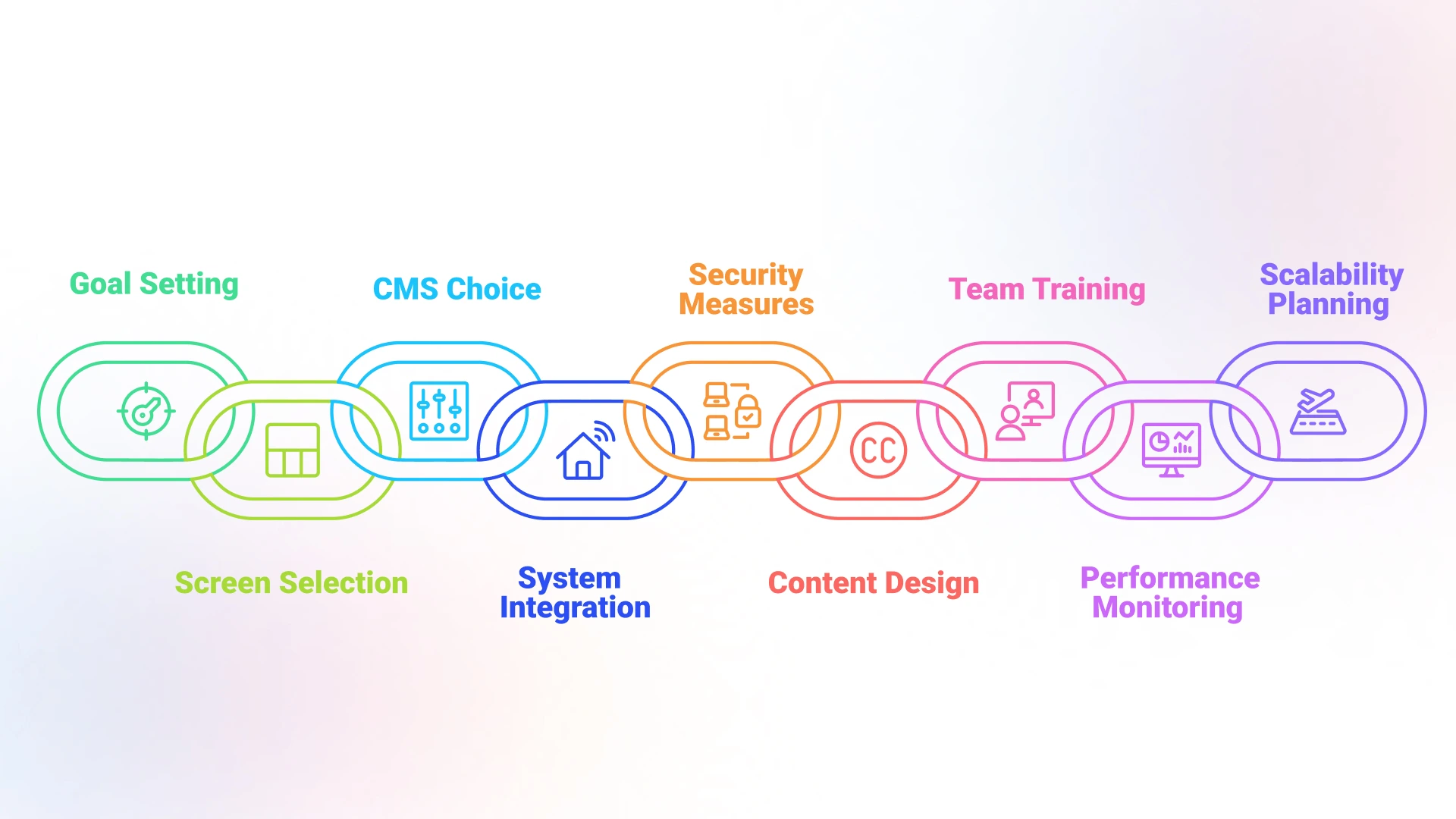
Deploying digital signage for events is a strategic process that demands careful planning, smart configuration, and ongoing optimization.
Define what you want to achieve navigation, real-time updates, sponsor visibility, or engagement. Identify high-traffic areas and decide where screens will have the most impact.
Match screen types to their purpose LED walls for visibility, kiosks for interaction. Use reliable digital signage players to control and stream content efficiently.
Select a digital signage platform with centralized control. Look for CMS features like scheduling, screen zoning, and live updates across multiple locations.
Integrate your signage with event software, ticketing, POS, and CRMs to automate updates, trigger personalized content, and sync data in real time.
Whether using cloud-based digital signage or on-premise digital signage, applying encryption, access controls, and secure firmware updates is essential for maintaining strong digital signage security and ensuring system reliability.
Use high-contrast visuals, large fonts, and minimal text. Rotate messages based on audience flow. Support multiple languages and meet ADA accessibility guidelines.
Make sure staff can manage schedules, update messages, and monitor screens. Run full tests before doors open to catch issues early.
Track screen activity and viewer engagement with built-in analytics or tools like Power BI digital signage dashboards. Use the data to improve performance and content effectiveness.
Use flexible hardware and scalable software to expand across venues or event types. Stay ready for future upgrades like AR, sensors, and smart automation.
WAM Global Events is a Dubai-based event management firm that handles everything from corporate conferences to exhibitions and large-scale activations. They also build custom event apps and offer business insights, giving clients a full package for running smooth, high-quality events.
Their goal was to move beyond basic signage and adopt a flexible digital signage platform that could handle everything from real-time updates and session schedules to high-resolution 4K video and detailed venue maps. They needed a system that was scalable, dynamic, and easy to manage, without overwhelming event staff.
Pickcel built a cloud-based digital signage system for WAM that enabled real-time content updates, remote management, and seamless deployment across multiple venues. It supported 4K videos, maps, and schedules, all controlled through an easy-to-use dashboard.
The result was a polished signage setup that kept WAM’s events clear, timely, and visually sharp. Attendees stayed informed, organizers stayed in control, and the system gave WAM a smart edge in a competitive event space.
Digital signage has swiftly become a foundational part of modern event infrastructure. Audience expects services that are clear, fast, and tailored, and digital signage delivers exactly that.
As technology evolves, signage is getting smarter, greener, and more interactive. AI and automation are beginning to let screens sense crowd movement, generate relevant content on the fly, and even adjust ad rotations in real time. IoT sensors enable displays to respond dynamically to foot traffic, ensuring messaging is timely and location sensitive.
At the same time, sustainable hardware like LED and e-paper screens dramatically reduces energy consumption without compromising clarity. AR overlays, QR codes, and NFC integrations turn static displays into interactive portals, enabling tickets, schedules, offers, and personalized content with a simple phone scan.
Digital signage is a complex system made up of hardware, software, data, and content. But that complexity can be overwhelming without the right support.
Pickcel a global leader in cloud-based digital signage, makes it simple and give you the tools to build a reliable, scalable, and cost-effective digital signage system without needing deep tech expertise.
Organizers evaluate digital signage ROI through direct revenue (like sales uplift and sponsorship ad income), operational savings from reduced printing and labor, and improved attendee engagement and navigation. Data from system analytics, such as dwell time, interaction rates, and marketing conversion, helps quantify the impact on the event lifecycle.
Yes, modern digital signage platforms can pull live posts from social media using event-specific hashtags. Social walls display attendee content in real time, encouraging participation and amplifying event reach. These features are often combined with sponsor branding for added visibility and interactive engagement.
Security is critical, best practices include network segmentation to isolate signage from sensitive systems, encryption for content delivery, strict user access controls, and regular firmware updates. Physical security for media players and signage hardware is also essential, along with monitoring tools to detect unauthorized access attempts.
Yes, sponsors can tailor messaging by session time, audience demographic, or location using ad rotations triggered by schedules or attendee profiles. Features like touch-based promotions, interactive content, and CRM integration allow sponsors to deliver targeted, high-impact campaigns without compromising attendee experience.

Dec 24 2025
10 min read

Dec 9 2025
14 min read

Nov 26 2025
7 min read
Nov 7 2025
11 min read
Take complete control of what you show on your digital signage & how you show it.
Start Free Trial Schedule My Demo