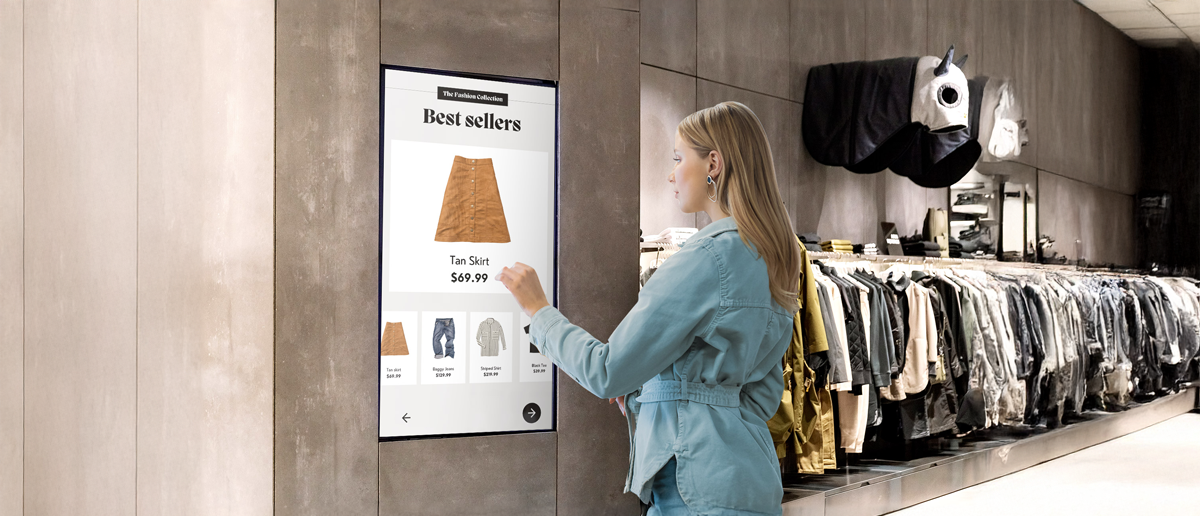
Retail media digital signage turns your existing in-store screens into a paid advertising channel — generating revenue from brand partners while reaching shoppers at the point of purchase. Retailers managing this at scale typically use purpose-built retail digital signage software that supports zone scheduling, proof-of-play reporting, and real-time content updates from a single dashboard.
See Pickcel’s Retail Solution →
What is it?
Retail media digital signage is the practice of using in-store digital screens to display paid brand advertising, generating revenue for the retailer while reaching shoppers at the moment of purchase decision.
- Retail media ad spend is projected to reach $166B globally by 2025 (eMarketer)
- 70% of purchase decisions happen in-store (POPAI) — that's where retail media reaches buyers
- In-store digital signage increases brand recall by 83% vs. static displays (Nielsen)
- Only 10–15% of retail media spend goes to in-store channels today — the gap is the opportunity (BCG, 2023)
$166B
Retail media ad spend by 2025
70%
Purchase decisions made in-store
83%
Higher brand recall vs. static displays
Retail media has become one of the fastest-growing segments in advertising. But most of that growth has happened online: search ads, sponsored product listings, and display ads on retailer websites.
In-store retail media is catching up fast.
For retailers with physical locations, digital signage has become the infrastructure that makes in-store retail media networks possible. The screens already showing promotions and wayfinding content can become a monetised advertising channel. This article explains what retail media digital signage is, why it is growing, and how to build an in-store media network using cloud-based digital signage software .
Pickcel is a cloud-based digital signage platform trusted by 9,000+ businesses in 70+ countries, and it provides the scheduling, zoning, and proof-of-play capabilities that in-store retail media networks require.
What is retail media digital signage?
Retail media digital signage is the use of in-store digital screens to display paid advertising from brands, CPG companies, or third parties — generating revenue for the retailer. It turns existing screen infrastructure into a media network, similar to how websites sell ad inventory, but in the physical store environment.
Unlike traditional in-store advertising (printed shelf talkers, cardboard standees), retail media digital signage is:
Scheduled and targeted: specific ads at specific times, by zone or location
Measurable: proof-of-play logs confirm what ran, when, and where
Dynamic: creative can be updated remotely in real time
Data-connected: campaigns can be tied to sales lift, footfall data, or loyalty program insights
Why is retail media growing so fast?
Retail media ad spend is projected to reach $166B globally by 2025, according to eMarketer — making it one of the fastest-growing advertising segments in the industry.
Several forces are driving this growth:
1. The deprecation of third-party cookies
As browsers phase out tracking cookies, brands are seeking alternatives to target consumers with precision. Retailers hold first-party data — purchase history, loyalty program data, shopping behaviour — that brands are eager to access. This makes the retailer a media owner with unique audience reach.
2. In-store is where most purchases happen
According to POPAI, 70% of purchase decisions are made in-store. Despite the rise of e-commerce, most consumer spending still happens at the shelf. Brands want to reach shoppers at that moment, not before or after.
3. Amazon proved the model works at scale
Amazon's retail media revenue exceeded $46B in 2023. Walmart, Target, Kroger, and Tesco have all built retail media networks generating hundreds of millions in annual advertising revenue. Mid-size and regional retailers are now looking at this playbook and asking: how do we replicate it in physical stores?
4. In-store media is significantly underinvested
Only 10–15% of retail media spend currently goes to in-store channels, according to BCG (2023). That gap represents a significant opportunity for retailers who invest in in-store digital infrastructure now, before competitors do.
How does digital signage power in-store retail media networks?
An in-store retail media network needs four technology capabilities to work at commercial scale. Digital signage software provides all four from a single platform.
| Capability | What it enables | Why it matters for retail media |
|---|---|---|
| Centralised cloud CMS | Manage ad content across all locations from one dashboard | No on-site visits or manual updates per store |
| Zone and time scheduling | Assign specific ads to specific zones and dayparts | Contextual placement that brands want to buy |
| Proof-of-play reporting | Automated logs of what ran, when, and on which screen | Audit-grade evidence brands require before paying |
| Real-time content updates | Live creative pushes with scheduled expiry | Time-sensitive campaigns run and stop precisely |
Centralised content management
A cloud-based CMS lets you manage ad content across hundreds of screens and dozens of locations from one dashboard. You can upload brand-supplied creative, assign it to specific screens, and schedule it for specific time slots — without on-site visits or manual USB updates.
Zone and location targeting
Retail media works best when ads are contextually placed. Pickcel’s zone-based scheduling lets you define content zones within a store and assign different campaigns to each zone, so every placement is contextually relevant and valuable to the brand buying it.
Proof-of-play reporting
Brands buying media time need evidence that their ads ran as contracted. Pickcel’s automated playback reports log every piece of content played, when it ran, and on which screen — giving you audit-grade proof-of-play to share with brand partners.
Real-time update capability
Retail promotions are time-sensitive. Pickcel enables live content pushes across all screens in seconds, with scheduled expiry so campaigns end precisely on time.
What are the benefits for retailers?
New, scalable revenue stream
Instead of paying to maintain screens, retailers can generate income from them. A 50-location retailer with five screens per store has 250 potential media placements to sell.
Stronger vendor relationships
Offering brand partners a measurable in-store media channel creates a new dimension in commercial relationships. Media revenue becomes part of vendor negotiation alongside trade terms and listing fees.
Enhanced shopper experience
Contextually placed, well-timed promotions help shoppers discover products. According to Nielsen research, in-store digital signage increases brand recall by 83% compared to static displays.
83% higher brand recall vs. static (Nielsen)
Data-driven promotions
Where you have loyalty or footfall data, you can offer brands time-targeted, zone-targeted placements that perform better than broad-reach alternatives. This is a core advantage of modern retail marketing powered by digital signage.
What are the benefits for brands and CPG companies?
Point-of-purchase influence
Since 70% of purchase decisions happen in-store (POPAI), in-store media placement reaches shoppers when they are most receptive and most likely to act. This is fundamentally different from awareness-stage advertising — it is influence at the moment of choice. Learn more about how retail digital signage drives in-store sales.
Measurable in-store advertising
Brands have historically struggled to measure in-store media effectiveness. With digital signage, proof-of-play logs confirm ad delivery. Cross-referenced with sales data, brands can calculate impression-to-sale conversion at the store level.
Location and time targeting
Unlike broad OOH or TV buys, in-store retail media allows granular targeting: run a product launch campaign only in stores in specific cities, only during morning hours when your target shopper is most likely to be present. This precision makes every media dollar work harder.
Reduced dependency on rising digital ad costs
As ad costs on Google, Meta, and Amazon continue to rise, in-store retail media offers an alternative channel that reaches consumers in a high-intent environment — typically at a lower CPM than premium digital inventory.
Ready to turn your screens into a media network?
See how Pickcel's cloud CMS handles scheduling, zoning, and proof-of-play reporting for retail media campaigns.
How to build a retail media network with digital signage
Building an in-store retail media network does not require enterprise infrastructure from day one. Here is a practical six-step approach:
Audit your existing screen estate
Count your screens, map their locations (entrance, queue, aisle, checkout), and assess their technical condition. Screens near high-dwell and high-purchase-decision zones are your most valuable media inventory.
Deploy cloud-based digital signage software
You need a CMS that can manage content at scale, schedule by zone and time, and generate proof-of-play reports. Pickcel's digital signage software supports all three — with a single dashboard for managing content across unlimited locations.
Define your media inventory
Create a simple document: screen ID, location, zone (entrance/aisle/checkout), estimated daily impressions, and operating hours. This becomes your media kit. Brands need to understand what they are buying before they commit budgets.
Set your pricing model
Common models include cost per play (charged per ad impression), share of voice (a fixed percentage of screen time over a campaign period), or flat-rate weekly/monthly packages. Start simple — flat-rate works well for first brand partnerships.
Build a content submission workflow
Define the creative spec (file format, aspect ratio, max duration, file size) and a submission process for brand partners. Pickcel accepts standard formats and lets you upload brand content directly into a managed campaign without giving external parties access to your CMS admin.
Run, report, and grow
Use Pickcel's proof-of-play reports to produce end-of-campaign performance summaries for brand partners. Start with three to five brand relationships, prove the model, then expand.
How leading retailers are building retail media networks
The retail media opportunity is not new for tier-one retailers. Walmart Connect, Kroger Precision Marketing, and Tesco Clubcard Media have all built large-scale retail media businesses worth hundreds of millions in annual revenue. These started with digital screen infrastructure in stores and layered audience data and reporting on top.
For mid-size regional retailers, the same model is now accessible. The difference is scale and starting point. You do not need a custom-built media platform. You need a digital signage CMS with scheduling, zoning, and reporting — which is what cloud-based platforms like Pickcel provide.
A supermarket chain with 30 locations, for example, can start by selling seasonal campaign slots to three to five FMCG brands, using proof-of-play reports to validate delivery. That is a functional retail media network — without a dedicated engineering team. See in-store retail digital signage examples to understand how other retailers have activated their screen estate.
If you are already running in-store digital signage for promotions and wayfinding, you are closer to a retail media network than you might think. The infrastructure is already there. What you need is the software and the commercial framework to activate it.
Frequently Asked Questions
What is retail media digital signage?
How do retailers make money from in-store digital signage?
What software do I need to run a retail media network?
How much revenue can in-store digital signage generate?
Can small retailers use retail media digital signage?
6 Real-life Examples of Retailers Using In-Store Signage
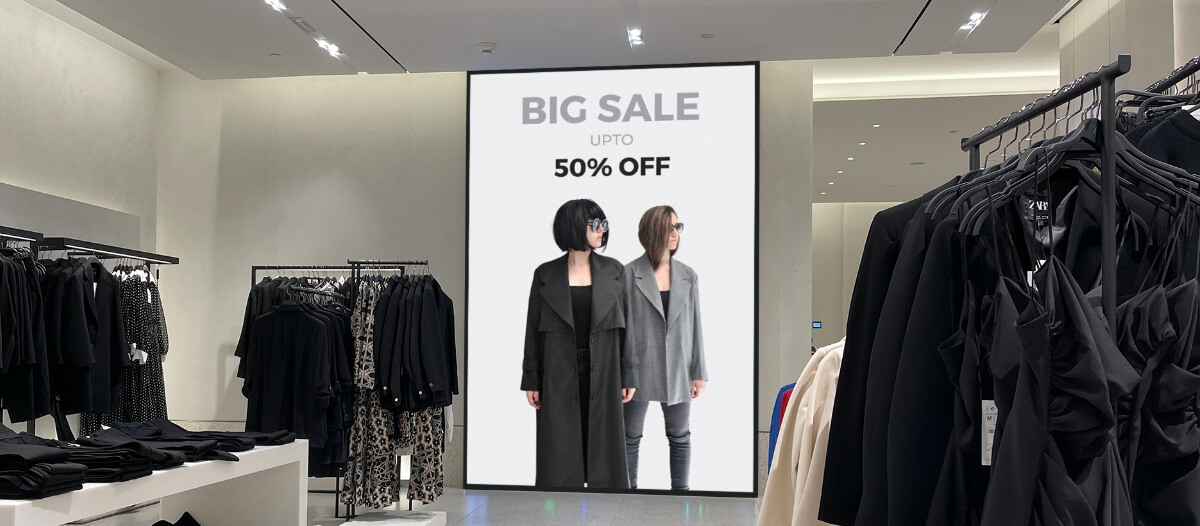
From smallest mom & pop stores to global retail chains, how retail digital signage brings more business
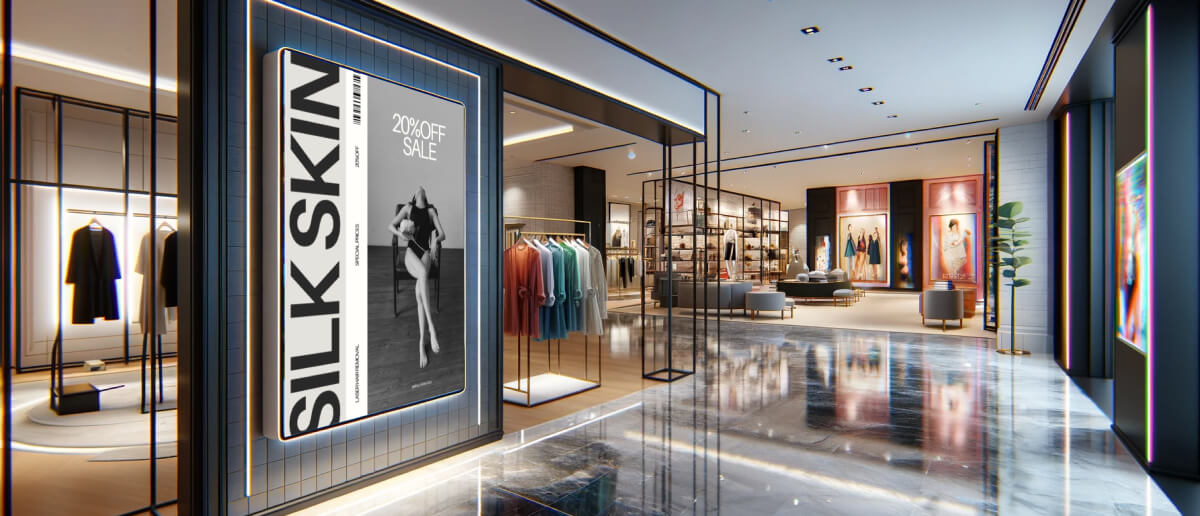
13 Reasons Why Digital Signage Can Bring Out the Best in Retail Marketing
Digital Signage for Retail
Start your free 14-day trial and turn your screens into revenue
Pickcel gives you everything you need to run, schedule, and report on in-store media campaigns — across any number of locations and screens.