TL;DR
- Communication silos trace to structural gaps, not personal failures.
- Digital displays in shared spaces create ambient, passive cross-team information access.
- Pickcel lets teams publish screen content to all locations from a single cloud dashboard.
In most organisations, information travels vertically. Leadership sends updates down the chain; teams report upward. What happens in between, across departments, is where the gaps form.
Production teams don’t know what sales is targeting this quarter. HR announcements go out by email but never reach the factory floor. Clinical staff in one ward aren’t aware of the guidelines posted for another. This is the practical reality of poor interdepartmental communication: not dramatic conflict between teams, but the quiet failure of information to cross organisational boundaries.
Most of these failures are structural, not personal. They can be resolved with the right combination of processes, shared visibility tools, and communication channels that work in the spaces where people actually spend their time.
At a Glance
Interdepartmental communication is the exchange of information, updates, and decisions between different departments within an organisation. Effective interdepartmental communication ensures teams are aligned on shared goals, aware of each other’s priorities, and able to coordinate without relying solely on meetings or email chains.
What Is Interdepartmental Communication?
Interdepartmental communication covers both formal and informal exchanges: cross-team meetings, shared dashboards, and company-wide announcements on the formal side; shared physical spaces, visual displays, and peer conversations on the informal side. What makes it distinct from communication within a single team is that it must cross structural boundaries: different reporting lines, different toolsets, and different working rhythms. Those boundaries are precisely why interdepartmental communication breaks down more easily than team-level communication, and why it needs more deliberate design to function reliably.
What Causes Poor Interdepartmental Communication?
Organisations consistently report that poor interdepartmental communication increases rework, delays handoffs, and reduces employee morale, particularly in multi-shift or multi-location environments. Most breakdowns trace back to the same four structural problems that create communication silos across otherwise well-functioning organisations.
Tool fragmentation
Each team builds its own communication stack. Sales operates in a CRM. Operations runs a project management tool. HR sends announcements by email. Finance shares reports through shared drives. Without a common layer that every department can access, information stays inside the system where it originated and rarely crosses organisational lines.
Physical separation
Departments on different floors, in different buildings, or across multiple sites don’t share the same ambient information environment. An announcement posted in one area doesn’t reach another. Workers on the night shift don’t attend the all-hands meeting. Physical distance amplifies communication gaps in ways that digital tools alone don’t fully address.
No shared visibility surface
The most overlooked cause is structural: there’s no single place where all employees can see the same information at the same time. Most organisations have tools for communication but no screen, feed, or board that creates a shared information environment for cross-team awareness.
Information gatekeeping
Managers sometimes filter what crosses departmental lines, not always intentionally. A production target that leadership sets may never reach the manufacturing floor in a usable form. A safety update from HR may sit in an inbox rather than reaching the people who need to act on it.
6 Strategies to Improve Interdepartmental Communication
Strategy 1: Create shared visibility with digital displays in common areas
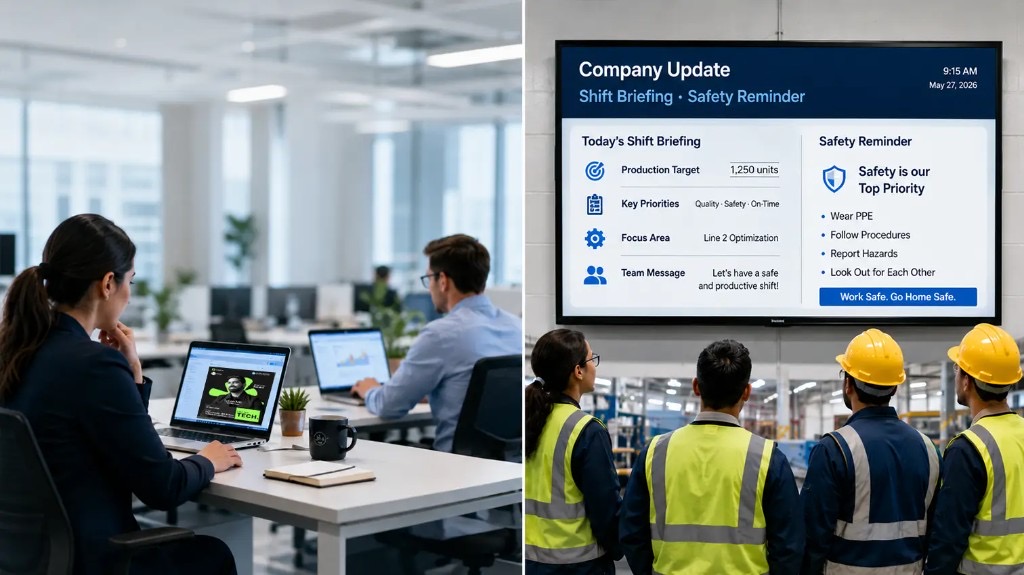
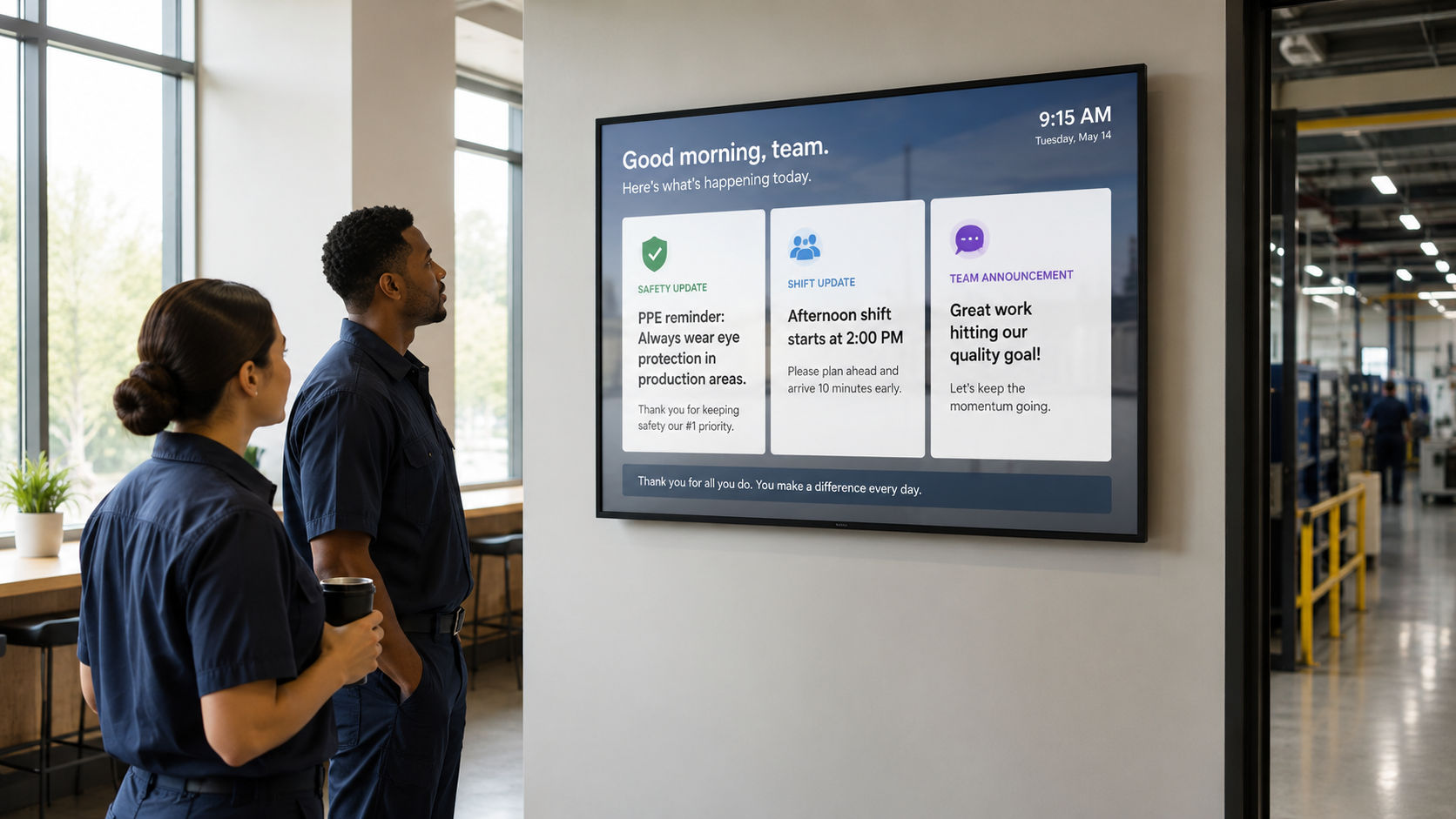
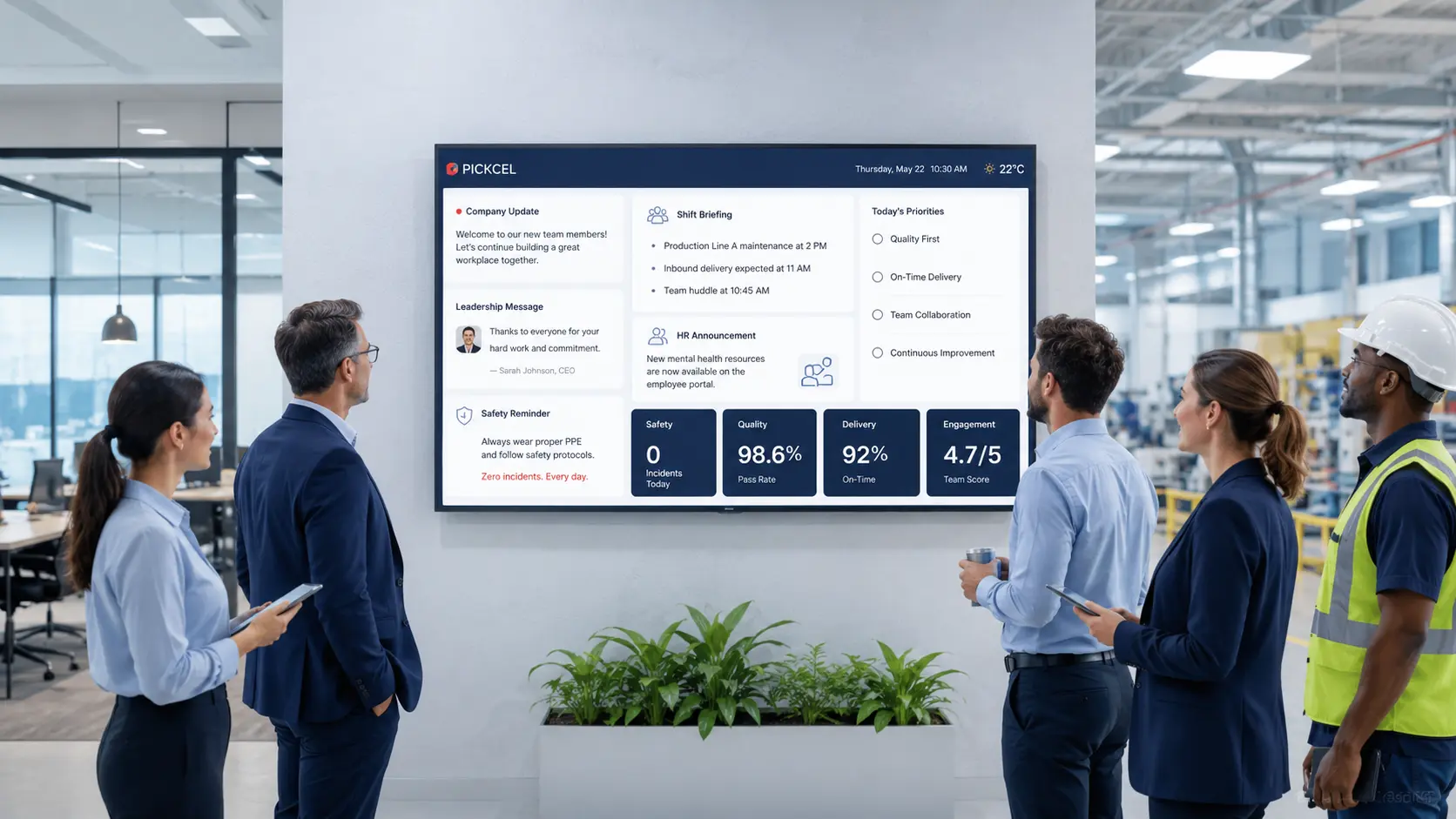
Digital displays in common areas create a shared information layer that spans departmental boundaries. Production targets, HR announcements, shift schedules, safety updates, and company-wide KPIs can all appear on the same screen in a space that multiple departments pass through daily. Unlike email or internal chat, the information is ambient: it doesn’t require the recipient to open anything or take an action to receive it.
Pickcel’s cloud-based digital signage software lets operations and communications teams publish content to any screen across any location from a single dashboard. Content can be segmented by department, floor, or site, so the right information reaches the right teams without broadcasting everything to everyone.
Strategy 2: Establish regular cross-department standups or briefings
Cross-team briefings create a scheduled moment for information to travel across organisational lines. The key is keeping them short (15 minutes or less), focused on what each team needs from others, and outcome-oriented. If the goal is simply sharing updates, a rotating brief report circulated asynchronously can work just as well without requiring everyone to attend at the same time.
Strategy 3: Use a shared internal newsletter or digest for cross-team updates
This doesn’t need to be elaborate. Three to five updates per department covering key wins, priorities for the week, and handoffs needed gives people a reliable rhythm for cross-team awareness. A consistent sending schedule matters more than content volume: employees build the habit of checking it when they know it arrives on the same day each week. For more on building communication systems across teams, see team communication tools for distributed and multi-location setups.
Strategy 4: Define communication protocols — who sends what, to whom, how often
Protocols don’t need to be complex. A simple, documented agreement on what types of updates get shared cross-team, who is responsible for sending them, which channel they go through, and at what frequency gives teams a repeatable structure. Once the protocol exists, adherence becomes measurable, and gaps become visible.
Strategy 5: Make leadership communication visible and consistent
Senior leaders set the tone for cross-department alignment, but their messages often pass through intermediaries who filter or delay them. A consistent cadence of weekly updates on shared screens plus a brief leadership address at the start of each month creates a shared reference point for everyone in the organisation, not just those who read every email
Strategy 6: Create feedback channels that cross department boundaries
Feedback channels might include a shared anonymous inbox that routes to department heads, a quarterly cross-team survey on coordination pain points, or a slot in cross-team standups where any department can flag a gap. The goal is to make misalignment visible before it causes rework or delayed handoffs.
How Pickcel Breaks Down Departmental Silos
The hardest part of interdepartmental communication isn’t what gets said in meetings. It’s what happens between meetings: on the factory floor, in the hospital ward, in the retail back office, at the service counter.
Email threads don’t reach workers without desk access. Chat tools stay within team channels. Scheduled meetings require attendance that shift workers and frontline staff often can’t provide. None of these channels reach every employee in every location, across every shift.
Screen-based communication fills that gap by creating a shared information surface in the physical spaces where work actually happens.
Manipal Hospitals deployed Pickcel across 250 displays in Bengaluru and New Delhi. Staff-facing screens in departmental areas broadcast medical training updates, hospital guidelines, safety procedures, and clinical protocols, ensuring operational information crosses from administration to clinical teams without depending on email chains or scheduled briefings. Patient-facing screens in waiting areas display health education and facility information. A single cloud dashboard manages both, from one central team. View the full case study at pickcel.com/case-studies/manipal .
For multi-location operations, Pickcel’s platform lets central communications teams update content across all sites simultaneously, while department heads manage their own content zones independently. Pickcel is SOC 2 Type II and ISO 27001 certified.
For a deeper look at screen-based internal communication, see digital signage for internal communication .
If you want to see screen-based communication working for cross-team visibility, the employee communication solution page covers the full feature set.