
Mar 10 2025

8 min read
August 18, 2025
8 min read


ALL
RESTAURANT
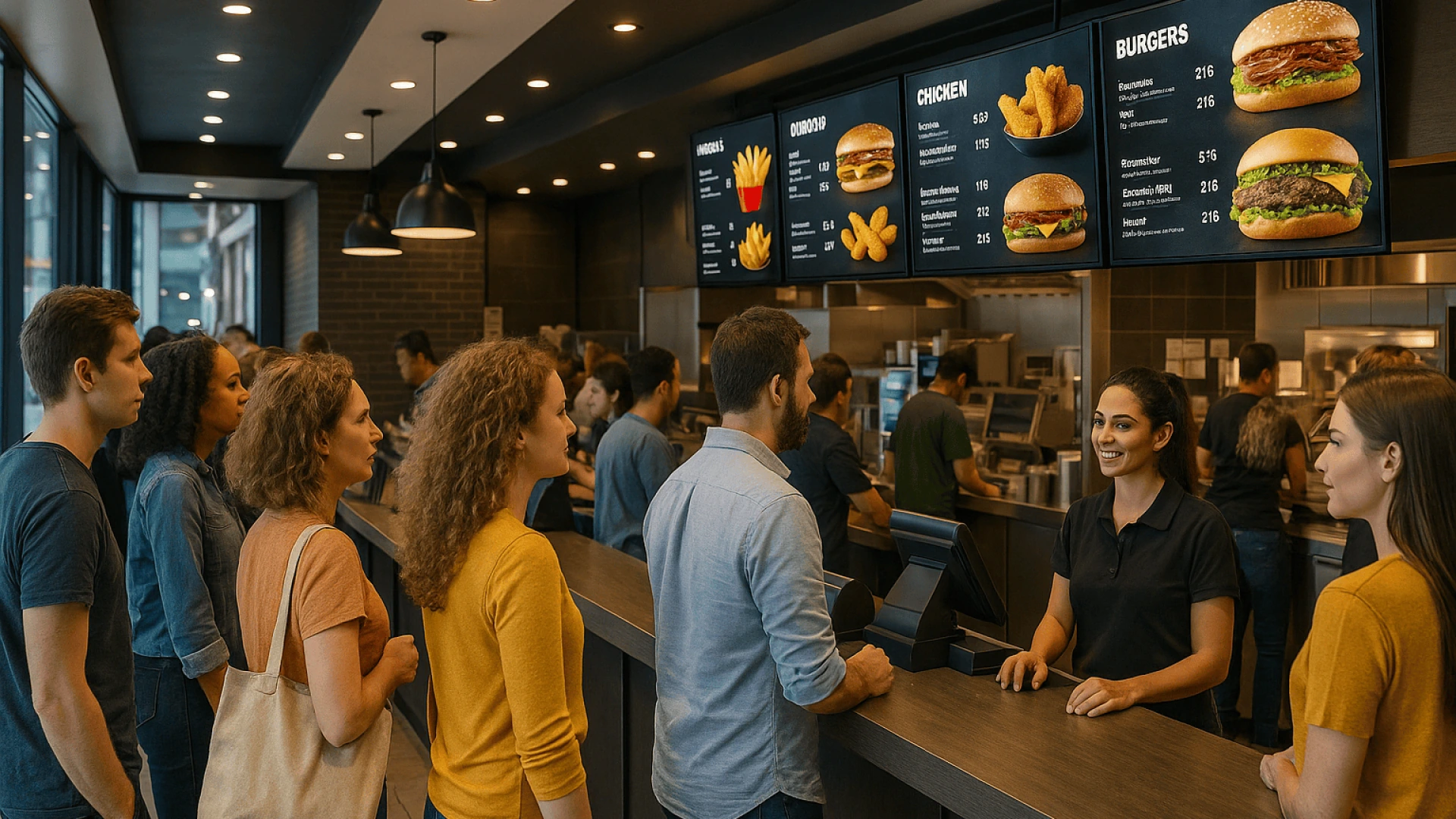
Quick-Service Restaurants (QSRs) in the United States operate in a pressure-cooker environment, where speed, efficiency, and customer satisfaction are non-negotiable.
But with rising customer expectations, long wait times, outdated static menus, complex inventory management, the added complexity of managing compliance across multiple locations, and the burden of frequent manual updates, it’s clear traditional methods just can’t keep up.
For a highly competitive sector, these aren’t just inefficiencies; they’re revenue leaks.
Every minute of customer confusion or operational delay, every wasted staff hour on tasks that should be automated, chips away at efficiency, satisfaction, and profit.
Implementing digital signage is no longer just a trend; it’s a strategic imperative that’s rapidly changing how QSRs operate.
Brands using restaurant digital signage in the USA are seeing measurable results; over 80% of restaurant business owners reported an increase in orders after adopting digital signage technology.
So what exactly is digital signage, why does it work, and why is it becoming essential for the modern QSR?
Let’s break it down.
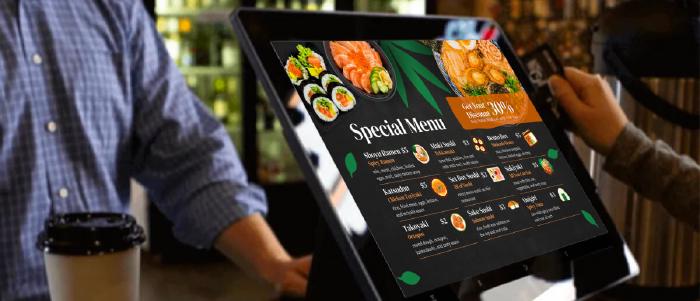
At its core, digital signage is the use of electronic displays controlled by specialized digital signage software and media players to present dynamic content such as menus, promotions, order statuses, or real-time data.
It operates through a combination of hardware (including displays and digital signage players), software (typically content management systems), and often cloud or AI integration, enabling scheduled or real-time content updates across single or multiple locations.
In the QSR industry, this includes:
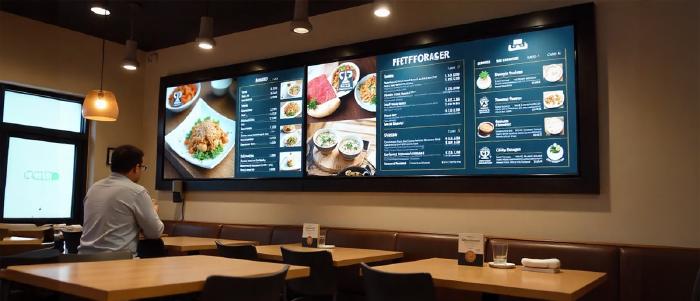
Digital menu boards (indoor and drive-thru)
Interactive ordering stations
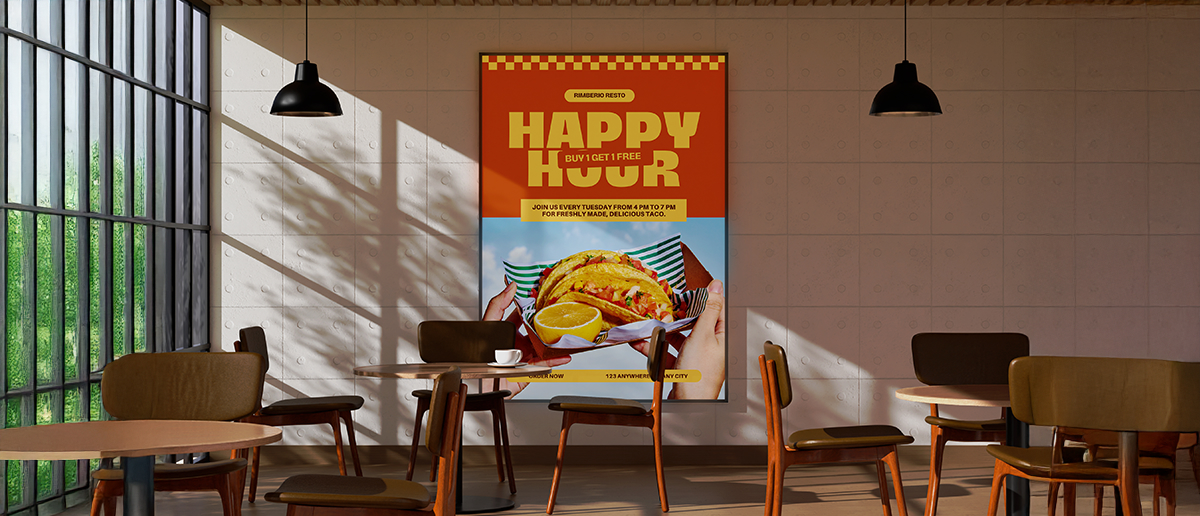
Promotional and upsell displays
Real-time order status boards
But what makes digital signage effective isn’t just its technology; it’s the way it taps into human psychology.
Know more about what is a qsr experience
Digital signage is effective because it’s designed to align with how people think, make decisions, and recall information.
Humans are visual creatures. Our brains are hardwired to notice motion, brightness, and color contrast, which makes digital signage inherently more engaging than static signs
Digital signage draws 4x more attention than traditional static displays, making it far more effective at grabbing customer focus.
The average dwell time on digital screens is 2.6x longer.
Adding video content to screens can lead to a 47% boost in engagement, compared to still images alone.
Check out: The psychology behind good digital signage experiences
Visually engaging displays featuring motion, high-resolution imagery, and storytelling trigger visual memory pathways in the brain, leading to better recall. In-store digital displays can drive a 30% increase in content recall and a 20% boost in conversions.
QSR menus can be dense and overwhelming, often leading to choice paralysis that slows down ordering and frustrates customers. Digital signage addresses this by using visual hierarchy, modular layouts, and highlighted items like “Most Popular” to simplify decision-making.
As a result, restaurants have seen a 25% reduction in order processing time, an 8% improvement in drive-thru order accuracy, and 15% fewer order errors through real-time, visual confirmations.
Restaurants using digital signage report up to a 35% drop in perceived wait times, improving the overall guest experience, making it feel faster, even when it isn’t.
Also read: The rise of fast food digital signage in the QSR industry

1. Real-Time content updates without printing costs
QSRs can change menu items, promotions, or pricing across all locations instantly from a central dashboard. Switching to digital updates instead of print materials can cut related costs by as much as 70%, while also allowing for fast A/B testing and quicker campaign changes.
Also read: A complete guide on digital menu board cost in 2026
2. Streamlined Compliance and Brand Consistency
Digital signage lets you update regulated content like calorie counts or allergen warnings across all locations in seconds. It also helps maintain brand consistency and regulatory compliance, even as content is customized at the local level.
3. On-Premise Digital Signage in the USA
For operators with strict IT governance or low-bandwidth locations, [on-premises digital signage in USA](https://www.pickcel.com/solutions/on-premise-digital-signage) offers full autonomy. These systems provide offline functionality, enhanced security, and local content control, ideal for franchisees or locations with limited cloud infrastructure.
4. AI-Powered Personalization at Scale
With AI integration, dynamic content adapts to time, weather, audience, and inventory, highlighting best-sellers or hiding sold-out items to boost order values.
5. Deep Integration with Loyalty Programs
Connected to loyalty platforms, [digital signage displays](https://www.pickcel.com/blog/digital-signage-display/) personalized rewards, greets returning customers, and suggests favorites, resulting in a 32.8% increase in repeat buyers.
6. Social Media and Customer Feedback Integration
Screens can feature live social media feeds, influencer endorsements, or positive reviews from Google and Yelp. This public validation creates instant credibility and encourages trial from new visitors.
Also read: Why QSRs need to follow McDonald's digital menu board strategy to improve customer engagement
7. Limited-Time Offers and Countdown Timers
Real-time countdowns or “Only X left” alerts trigger FOMO, a strong psychological driver that lifts conversions, especially on exclusive or high-margin items.
8. Showcasing the Local Community
Photos of local guests, staff shoutouts, or event promos foster authenticity and neighborhood loyalty, helping franchise locations feel distinct and personal.
9. Context-Aware Menu Optimization
Menus adjust in real time based on triggers like weather, traffic, or time of day, promoting hot drinks during rain or snacks before closing, to improve conversions.
Check out: A complete guide on restaurant dayparting menus to optimize special menu based on weather and time of the day
10. Enterprise-Level Access and Governance Controls
Role-based permissions, audit trails, and approval workflows give central teams oversight while allowing local flexibility for fast, brand-safe updates.
11. System Segmentation and Redundancy
Network segmentation isolates signage systems from POS or payment systems, reducing exposure to potential breaches. Offline functionality and redundant backups ensure screens stay live even during outages.
12. Security
With rising cyber threats, [digital signage security in US](https://www.pickcel.com/digital-signage-security/) is a growing priority. Enterprise solutions include encryption, secure workflows, and firewall protections to protect content integrity and customer data, especially for QSRs operating across franchises or public networks.
13. Localized A/B Testing and Campaign Iteration
Operators can test content variations by audience or location, using fast feedback to improve campaigns and drive smarter, more responsive marketing.
14. Integrated Analytics Across Locations
Centralized analytics let QSRs track performance across locations, identify top-performing content, and scale winning strategies chain-wide for maximum impact.
Check out: Best digital menu board companies for your QSR and restaurants
Today, digital signage in USA QSRs is less about adoption and more about optimization. With most restaurants already using some form of digital display, the real advantage lies in how well it’s integrated, personalized, and managed across every location.
A high-impact system does more than show menus. It adapts in real time to weather, inventory, and customer behavior. It drives upsells, shortens wait times, cuts errors, and ensures compliance, all while keeping content fresh and consistent.
To get the most benefits out of digital signage, you need to set it up with a clear plan.
Align with core business goals like speed, accuracy, and loyalty.
Choose a solution that supports POS integration with digital menu board, inventory, and CRM.
Prioritize flexibility, security, and ease of management across locations.
When selecting a partner, look for:
Transparent software pricing with no hidden fees.
All-in-one tools for media management, scheduling, and remote screen control.
Enterprise-grade security, including SOC2 & ISO 27001 certifications.
24/7 support via chat and phone on Business and Enterprise plans.
Pickcel delivers exactly that, and more. From easy content control to enterprise-grade security, it’s everything QSRs need to manage digital signage at scale, with flexible Pickcel pricing options to fit every business size.
QSRs use digital signage to run dynamic menus, automate dayparting, highlight best-sellers, promote LTOs, and feature real-time order status. Many also display customer reviews, local events, and social media feeds. Video, motion graphics, and AI-personalized content help boost engagement, upselling, and brand loyalty.
Yes. Digital signage can streamline training, communicate shift updates, display KPIs, and reinforce safety protocols. Back-of-house screens help reduce onboarding time, support daily operations, and keep staff aligned without disrupting service.
Common mistakes include poor screen placement, outdated content, relying only on static visuals, ignoring compliance needs, and underestimating infrastructure. Skipping staff training or choosing low-grade hardware/software can also limit system effectiveness.
Yes, digital signage supports self-service ordering, automates upselling, and speeds up onboarding through on-screen training. It reduces manual menu updates and minimizes reliance on staff for order communication, helping teams do more with fewer people.

Mar 10 2025
8 min read
Jan 23 2026
14 min read

Dec 4 2024
7 min read
Dec 4 2024
7 min read
Take complete control of what you show on your digital signage & how you show it.
Start Free Trial Schedule My Demo