
Nov 9 2023

5 min read
December 29, 2025
12 min read


ALL
HOSPITALITY
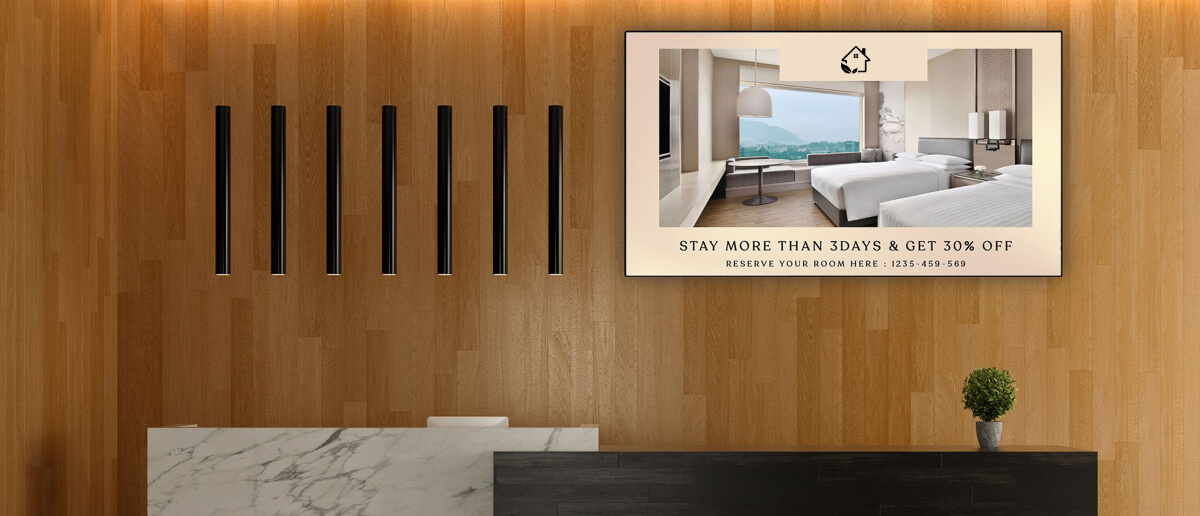
By 2026–27, capabilities like QR check-in, self-service kiosks, digital menus, and on-property wayfinding are no longer optional add-ons. They are core infrastructure in modern hotels, expected to work reliably across lobbies, elevators, restaurants, and large properties.
What’s changing now is how well these systems operate, how content updates without manual effort, how screens respond to real-world context, and how signage supports both guest flow and day-to-day hotel operations.
With a pandemic that has truly managed to dampen travel plans and spirits, all we want is contactless. That is when hotels decided to opt for all digital—be the QR-accessible menu cards, self-service kiosks, or even a virtual tour.
Digital signage now supports everyday hotel operations, from access and navigation to real-time information and service discovery, helping guests find what they need without relying on staff.
Let’s dive in and explore the top 8 hotel digital signage trends with a practical focus on what hotels are actually deploying to improve guest experience while keeping operations lean.
Who This Is For:
This article is for hotel operators, marketing teams, and IT leads planning or upgrading guest-facing digital signage, especially those focused on improving check-in flow, wayfinding, communication, and on-property engagement as hotels adapt to 2026–27 expectations.
Hotel digital signage refers to the installation and use of digital signage displays, such as dynamic screens or interactive kiosks, to convey information, promote services, and enhance the guest experience. These screens are strategically placed throughout the hotel lobbies, corridors, elevators, parking areas, restaurants, and conference rooms.

Guests can easily access relevant information, such as event schedules, amenities, promotions, and local attractions via hotel digital reader boards or touchscreens that facilitate interactivity. It engages all five senses of a user while delivering targeted messages, displaying captivating visuals, and providing real-time updates.
Check out: Best hospitality apps for your hotel business
Here are some of the most talked-about hotel signage ideas, reflecting the latest digital signage trends:
Personalization is a vital element in the realm of hotel digital signage. Imagine arriving at your hotel room and being greeted by a screen that displays a personalized message like “Welcome, Mr. and Mrs. Wang! We hope you enjoy your stay.” By leveraging data from guest profiles, hotels can tailor content ideas to provide custom experiences that leave an impression.
But, that is not all.
Depending on the travel purpose, hotels can utilize signage technology to offer special services and privileges. For example, if a guest has checked in for a business trip, the in-room signage screen can offer complimentary spa therapy on the last day of their stay.
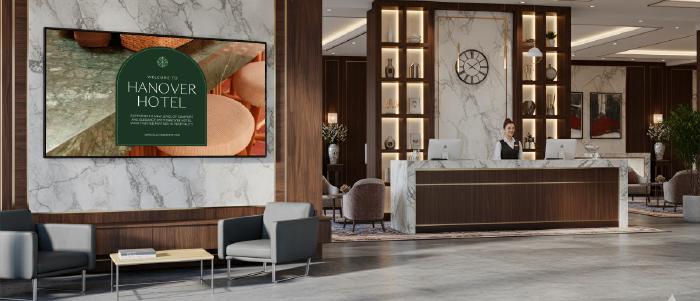
Aesthetic and visual experience add cutting-edge to hotel signage ideas. Say, all guest-facing signage displays showcase stunning visuals such as live images, videos, GIFs, artwork, and immersive content. From captivating video walls to infotainment screens inside elevators, hotels can leverage the power of great content to capture viewers’ attention.
Whether it’s showcasing breathtaking landscapes of where the hotel is located, highlighting must-visit hotspots, or displaying curated artwork, visual elements on digital signage platforms can evoke emotions and create a sense of luxury and elegance.
New York’s Marriott Marquis is making the most of the hotel’s digital signage screens across lobbies, lounges, and other common areas. Besides showcasing stunning visuals such as videos, and GIFs on each, the hotel has integrated real-time weather data to keep guests updated constantly! Besides, the hotel boasts several 50-foot wide, eight-foot-tall 1.8mm fine-pitch LED video walls adding to the hotel’s digital signage experience.
Check out: Incredible ways to leverage lobby digital signage hotels
Transform those short elevator rides into high-impact guest touchpoints. Elevator signage displays are becoming a powerful trend, especially in upscale hotels and USA malls. These compact infotainment screens inside elevator cabins can display real-time weather, local events, personalized greetings, or subtle promotions while guests move between floors.
It’s not just about filling blank space—elevator screens create brand moments. For example, a guest heading to the rooftop restaurant might see a flash promo or wine pairing suggestion just before stepping out. This kind of placement not only informs but also influences decisions in-the-moment, enhancing guest experience and opening new revenue streams.
Many modern properties are already using elevator digital signage as a silent ambassador—sharing brand stories, event teasers, or even live feeds without intruding on guest privacy.
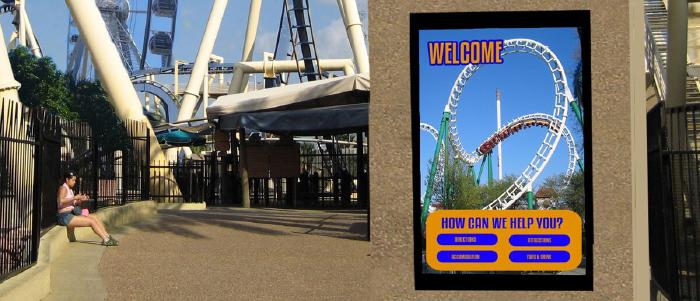
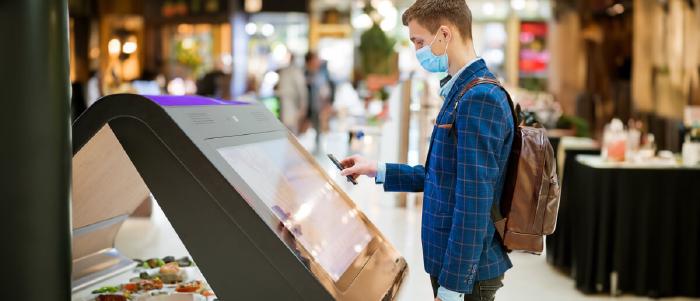
Interactive displays have helped hotels take the guest-engagement experience a step forward. With a few taps on a kiosk placed at the hotel reception or lounge area, guests can easily discover the hotel’s services, amenities, nearby attractions, the best time to visit, and so much more.
Singapore’s Marina Bay Sands is a prominent example of this hotel digital signage element. The luxury hospitality honcho has large interactive screens in several areas across the property such as at the hotel reception, outside elevators, rooftop dining spaces, etc. for guests to navigate through what they are looking for. Whether picking a room of their choice, exploring what’s nearby, or what the hotel offers in general, these screens make for a seamless guest experience.

Incorporating local events, weather updates, and real-time data such as flight or bus timings for nearby transport hubs is the most-prominent hotel digital signage trend for 2026.
Picture this, you walk into an inn lobby and instantly notice a vibrant display showcasing upcoming events, popular attractions, flight information display timings for the nearest airport, and even the current weather. This is a common and effective use of digital signage in hotels to enhance guest experience, transforming lobbies into dynamic information hubs. Wouldn’t that be a welcome change? It’s not just about providing generic details but offering timely and relevant insights that enhance the hotel digital signage guest experience.
Hotels can leverage technology to promote their exclusive membership plans and offer insider discounts. By integrating digital signage with mobile applications, hotels can enhance the guest experience by providing a seamless and personalized approach.
A compelling example is the implementation of QR-code-on digital signage for check-in options and e-room keys, which effectively eliminate queues and minimize the hassle for guests. And, boy is it simple.
Scan the QR code displayed on the digital kiosk at the hotel entrance, enter personal details such as name, contact number, and email id, and proceed to select the room. Upon completion, a unique code is generated, granting access to the desired accommodation by entering this code at the room door. No keys, queuing up at the reception, or time wasted! This convenient and streamlined process ensures a delightful stay for guests.
Digital signage can also showcase exclusive seasonal discounts, membership benefits, and renting-out discounts for special events.
Also read: Creative qr code display ideas

Technology can take guest experiences to new heights through the integration of AI based digital signage systems. Chains can now utilize AI-powered algorithms to guide guests seamlessly throughout the hotel premises. Interactive displays are a good example of signage technology providing real-time directions, highlighting points of interest, and offering personalized recommendations.
Additionally, hotel wayfinding signage can offer virtual tours that transport guests to different destinations within the hotel or showcase nearby attractions in a compelling and immersive manner. All guest-facing signage should be able to provide facilities to explore rooms, and amenities through real-time touch-interface and VR headsets, helping gain a sense of what to expect before physically experiencing it.
Digital menu boards have revolutionized the dining experience in hotel restaurants, combining aesthetics with functionality. With sleek, dynamic displays showcasing mouthwatering food and beverage offerings, these menu boards are the easiest way to get complete information about what’s on offer without having to browse or ask for a menu card.
Electronic menu boards are the greatest way to quickly update seasonal specials, day offers, and dietary information, thanks to the cloud-based signage technology it incorporates. This allows for remote updates, content scheduling, and updation, ensuring guests have all the relevant details at their fingertips.
A notable example can be seen at The Accor, Singapore where elegant digital displays are placed throughout the lounge and cafe area. These allow guests to browse through the menu, view dish images, and even access additional information about ingredients and allergens on-screen.
Check out: A complete guide for creating a digital menu board
Here are five things to keep in mind while putting hotel signage ideas into action:
To ensure the protection of guest information on digital signage displays, implementing security measures is essential. This may include encryption of data transmitted through the signage network and regular security audits. Secure digital signage networks involve measures such as using strong passwords, implementing firewalls, and restricting access to authorized personnel only.
Hotels must be aware of any legal or regulatory considerations related to user-generated content displayed on digital signage. This includes ensuring compliance with copyright laws of the state or country and obtaining guest consent for displaying user-generated content. This means they must ensure that any data collected or shown on digital signage aligns with privacy guidelines to prevent any unauthorized information leaks.
To gauge the effectiveness of hotel signage ideas, hotels can employ various strategies. This involves using digital signage analytics tools to measure guest engagement, tracking metrics such as dwell time and interaction rates, and conducting surveys or gathering feedback to assess the impact of the signage.
Optimization of content can be achieved by analyzing the collected data and making informed decisions on what content resonates best with guests. This iterative process helps improve the effectiveness of the signage over time.
Hotels should ensure that their digital signage is accessible to all guests, including those with unique abilities. This involves implementing text-to-speech capabilities, haptic-touch sensors appropriate color contrast, and easy-to-navigate interfaces.
Inclusivity challenges may arise when deploying hotel signage ideas in diverse environments. Factors such as language preferences, cultural sensitivities, and content readability for different guest demographics must be considered.
When hotels integrate their digital signage with mobile applications, it creates a more personalized and convenient experience for guests. This helps them enjoy features like self-check-in by scanning a QR code, receiving recommendations tailored to their preferences, and even controlling the digital signage through the app.
Hotel chains face numerous challenges while ensuring all their screens run real-time and updated content.
Challenge
Ensuring timely and synchronized updates across multiple locations and franchises can be complex. Coordinating changes and ensuring they are rolled out simultaneously requires error-free implementation of hotel signage ideas.
Solution:
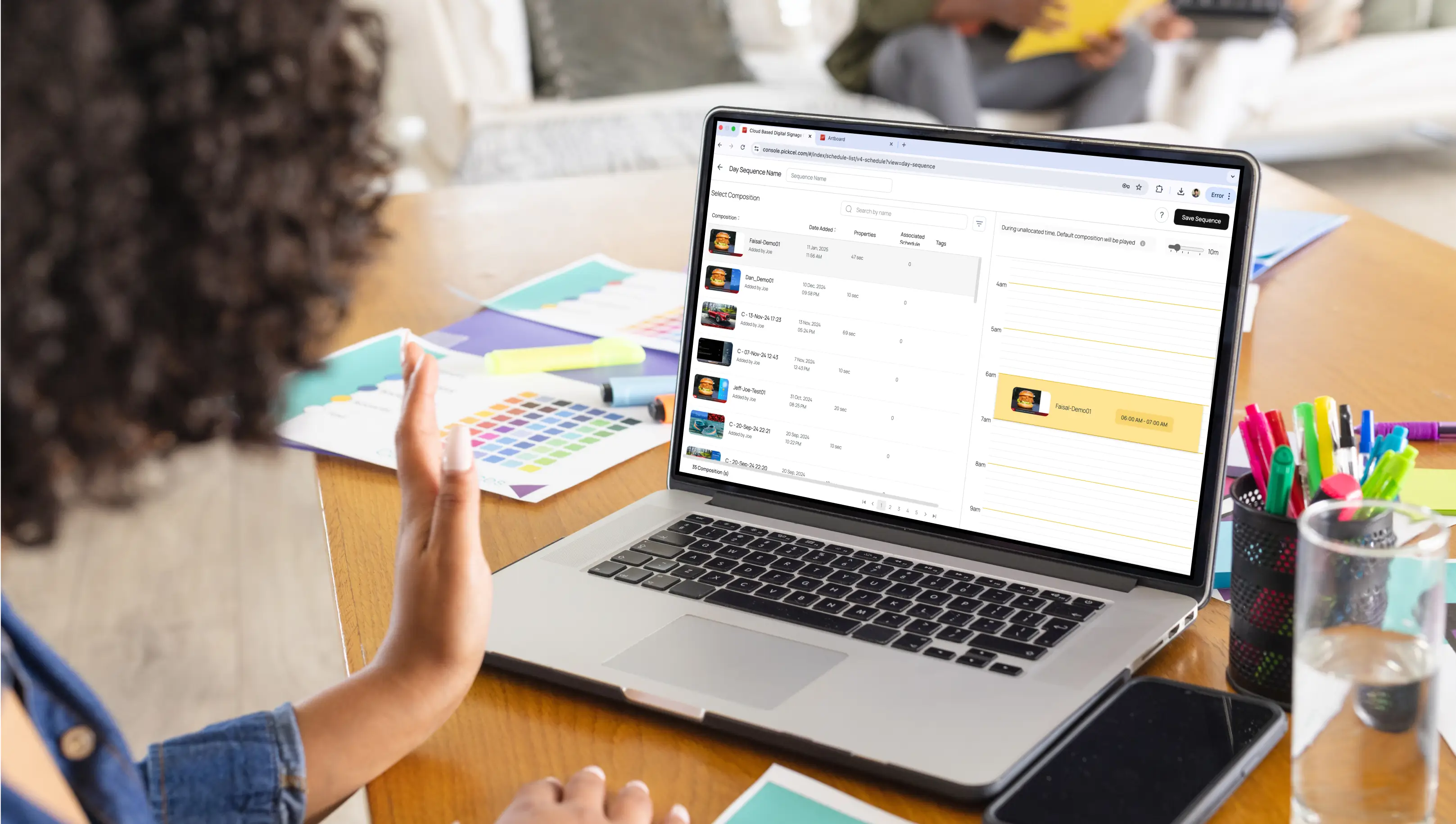
Managing and updating content on a network of digital signage displays across multiple hotel locations involves careful planning and challenges to overcome. One crucial aspect is using the right digital signage software that uses a cloud-based Content Management System (CMS), making content creation and distribution a breeze.
It allows staff members to assign custom user roles & access permissions, allowing easy scheduling of content, alongside bulk and selective content publishing. This ensures that the branding and messages remain consistent throughout the entire network of hotels.

Challenge
An important consideration is franchise-specific marketing customization for every hotel. All guest facing signage should have personalized offerings from a marketing perspective. Each of them may have unique offerings, promotions, or events, and tailoring the content to suit these specific needs adds an extra layer of complexity.
Solution
With a centralized CMS in place, hotel franchises can efficiently manage and tailor the content displayed on their digital signage to suit their specific needs. This eliminates the need for manual adjustments at each location, saving time and ensuring consistency across the franchise.
By addressing these, hotels can effectively manage and update their network of digital signage displays, ensuring a cohesive and engaging guest experience across multiple locations.
The hospitality industry has embraced numerous digital innovations to enhance guest experiences.
Now properties need systems that move guests efficiently, reduce front-desk dependency, and stay accurate across lobbies, elevators, restaurants, and large layouts without constant manual intervention.
What separates reliable deployments from fragile ones is whether signage can be governed centrally, updated locally within limits, and kept consistent as properties scale. Hotels that still rely on ad-hoc updates, shared access, or manual coordination end up trading guest experience gains for operational drag.
Pickcel has supported hospitality teams and multi-location brands for over a decade in running governed, scalable digital signage networks, where content stays current, roles remain predictable, and updates hold up under peak load and property growth.
Before expanding signage further, validate how your current system handles approvals, local updates, and peak-hour changes across properties.
Hotels are shifting from static displays to operational systems. Key trends include contactless self-service, context-triggered content, centralized cloud CMS, multilingual messaging, and energy-efficient deployments. Platforms like Pickcel help hotels manage these changes centrally without increasing on-site workload.
AI personalization focuses on relevance, not gimmicks. Screens adapt content based on time, location, events, or occupancy to surface timely offers and guidance. Using rule-based triggers and data feeds, tools like Pickcel enable personalization without storing sensitive guest identity data or complicating operations.
Interactive kiosks act as self-service hubs, handling check-in guidance, wayfinding, FAQs, and upsells. They reduce front-desk pressure during peak hours and keep guest journeys consistent. When managed from a centralized CMS, kiosk content stays aligned with lobby, elevator, and in-room screens.
Multilingual signage is critical for arrival, navigation, and safety communication. It reduces confusion, staff dependency, and service friction. The real requirement is scalable language control, templates, permissions, and scheduling, so hotels can deploy multiple languages without duplicating content workflows across properties.

Nov 9 2023
5 min read
Oct 1 2023
8 min read

Jun 22 2023
10 min read
Sep 10 2025
9 min read
Take complete control of what you show on your digital signage & how you show it.
Start Free Trial Schedule My Demo