
Oct 24 2025

10 min read
September 03, 2025
10 min read


ALL
RETAIL
Shopping plazas in the USA are going through one of the toughest transitions.
Hundreds of malls are projected to close in the next decade, and this decline doesn’t just affect retailers; it impacts local economies, jobs, and the role these spaces have long played as cultural and social hubs.

At the same time, consumer behavior has shifted dramatically.
What people want from physical retail today is different.
They aren’t just looking for convenience; they’re drawn to experiences, atmospheres, and destinations that feel alive with entertainment, interaction, and modernity as part of their shopping journey.
For plazas and malls, this means they need to evolve into vibrant, tech-enabled environments that can compete with both online retail and other physical attractions. This is where digital signage solutions for retail is already proving to be a game-changer.
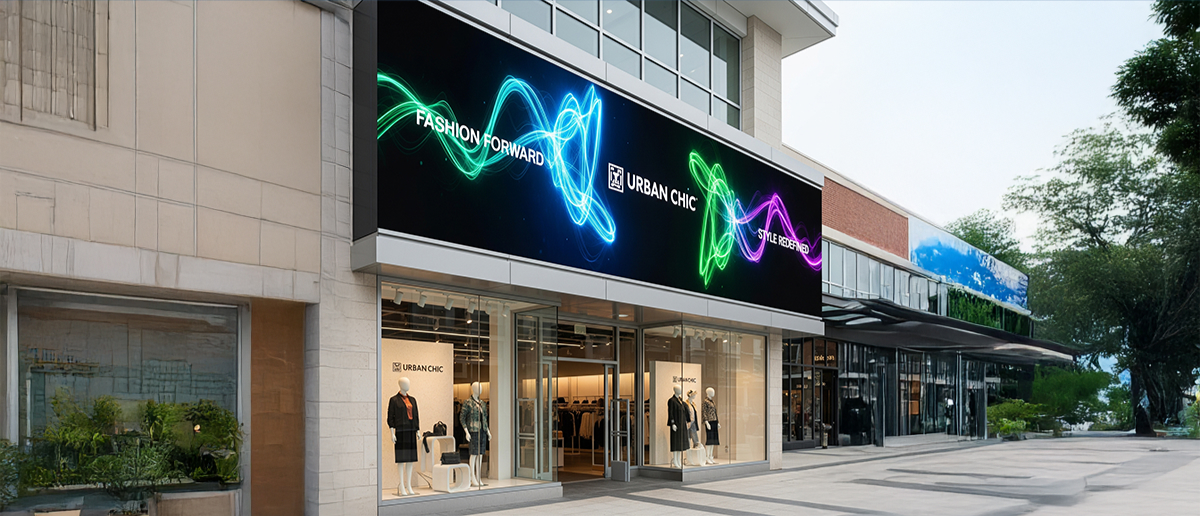
This is where fascia digital signage comes in. It’s more than just a screen above a storefront; it’s an asset with real potential, perfectly aligned with what shopping plazas need visibility, engagement, adaptability, and revenue generation.
Unlike static signs that fade into the background, storefront digital signage is designed to command attention.
It turns the storefront from a passive sign into an active tool that draws in customers, builds brand presence, and makes a plaza feel modern and relevant again.

For shopping plazas in the USA, fascia digital signage is a business tool with direct impact on visibility, revenue, and long-term relevance.
The fascia has always been the most prominent part of a storefront. Making it digital ensures that the plaza’s tenants are noticed first, cutting through visual noise.
Making fascia digital signage effective in this role also means treating it as part of a broader outdoor digital signage marketing strategy, where storefront visibility works hand in hand with wider promotional efforts to maximize impact.
Studies show that 8 out of 10 shoppers have entered a store after being drawn in by a digital sign, and retailers using them have reported sales uplifts of 20–30%.
Unlike traditional fascia, which only identifies, digital fascia actively markets; it highlights promotions, communicates urgency (flash sales, limited stock), and sparks impulse visits.
Motion, color, and storytelling let brands show their identity instantly. For plaza owners, it creates a unified digital look while still giving each tenant room to stand out.
This integration depends on understanding psychology for creating exceptional digital signage experiences, where design choices shape how customers connect with and remember a brand.
Plaza operators can instantly update content without physical replacements, scheduling messages by time of day, adjusting for different shopper demographics, or broadcasting urgent announcements across all storefronts at once.
Modern digital signage software in USA centralizes this entire process, letting managers maintain brand consistency while customizing content for individual tenants.
For plazas that want more control and tighter security, understanding cloud vs on-premise digital signage in USA is key to choosing the right system
Screens can double as advertising space for local businesses or larger campaigns. This creates a steady income that helps cover digital infrastructure costs while boosting overall plaza value. Many operators now treat their displays as a digital signage advertising network, turning facades into assets that generate recurring revenue beyond retail sales.
Also read: A complete guide on measuring digital signage roi

Shopping malls and retail plazas using digital signage in USA are finding new ways to make it work harder. From fresh content strategies to creative facade displays, these ideas show how signage can drive impact and ROI while keeping plazas relevant and engaging.
Contextual content keeps fascia signage from blending into the background. When messages shift with time of day, season, or weather, they feel more relevant and capture attention.
For example, a coffee shop can run breakfast specials in the morning, then pivot to iced drinks during a hot afternoon.
Fashion retailers can push back-to-school sales in late summer, then switch to holiday campaigns in December without lifting a finger.
Check out: A complete guide to restaurant digital menu dayparts
When fascia signage displays sync together, they move from individual screens to a collective experience that captures attention.
For example, a plaza can run a coordinated countdown to a Black Friday sale, with every screen flashing the same message in unison.
Holiday campaigns can spread across storefronts, creating one big visual greeting instead of fragmented signs.
Some malls even use cross-facade storytelling, where an animation flows from one store’s display to the next, turning the entire plaza into a stage.
Fascia digital signage doesn’t have to stay passive; it can become an interactive layer of the shopping experience.
For example, displays can shift content as people walk closer, showing product details or playful visuals that acknowledge them.
QR codes and NFC tags can connect the facade to mobile, opening coupons, AR product trials, or store apps in seconds.
Some plazas run games where shoppers use their phones as controllers, with live leader boards shown on the facade.
AR overlays let shoppers point their phone at a facade and see 3D effects like virtual models stepping off the screen or wayfinding arrows appearing over the plaza view.
Check out: Best QR code display ideas & strategies for 2026
Adjusts content to real-world conditions like weather, temperature, or local events so fascia signage stays dynamic and relevant, making the plaza feel alive and connected to its environment.
On hot afternoons, cafes can automatically promote iced drinks or display cooling messages like “Step inside to beat the heat.
During rainy weather, store fronts can switch to umbrella icons and warm beverage visuals, making content feel timely and empathetic.
Fascia signage is no longer limited to flat, rectangular screens. Today, displays can be directly integrated into the building itself, becoming part of the architecture.
This includes LED modules embedded into cladding panels, strips running along columns, curved panels wrapping around corners, or transparent LED films applied to glass facades.
The Miracle Mile Shops in Las Vegas use over 21,000 sq. ft. of curved LED fascia that wraps around the exterior, creating Times Square-level visibility.
Puerto Venecia in Spain embedded LED panels and synced lighting into its facade, producing immersive visual shows that went viral on social media.
The American Dream Mall in New Jersey features an 18,000 sq. ft. wraparound LED display with 180° visibility, turning the building itself into a massive advertising and branding platform.
Screens can run real-time feeds from Instagram, Twitter, or YouTube, displaying posts from shoppers using branded hashtags. This kind of social media digital signage creates instant excitement, drives user-generated content, and makes visitors feel part of the plaza experience.
Live feeds and social media integrations add engagement but also introduce content risks that could damage a plaza’s reputation.
Shopping centers must understand and follow digital signage security in USA best practices to automatically filter inappropriate posts and protect real-time content streams, ensuring displays stay engaging while maintaining
A mall campaign where shoppers post selfies with a branded hashtag and see them appear instantly on the facade, creating buzz and boosting social engagement.
Live sports updates or concert highlights are streamed on exterior signage to draw crowds and extend the event atmosphere beyond the venue itself.
Plazas can operate their displays to sell screen time to tenants, local businesses, or national brands. This model generates recurring income, offsets infrastructure costs, and gives retailers added visibility.
Synchronized event messaging, holiday campaigns, or sponsored takeovers turn facades into attractions that increase foot traffic and dwell time while strengthening the plaza’s reputation as a lively destination.
The American Dream Mall in New Jersey leverages its 18,000 sq. ft. wraparound display as both a revenue generator and a tourist draw.
Puerto Venecia in Spain integrates real-time content with dynamic facades, using live performances to boost engagement across the entire plaza.
Fascia digital signage is no longer just a design choice. It’s a business asset with immense potential.
But it requires more than just installing screens. From defining objectives and budgeting for ROI to navigating permits, designing architectural integration, piloting content, and ensuring security, the rollout of fascia signage demands a structured and strategic approach. It’s a step-by-step process where vision, technology, and content must align seamlessly.
With Pickcel, every stage of this process becomes easier. From content scheduling and plaza-wide synchronization to social media integrations and airtight digital signage security, all of it can be managed from one intuitive dashboard.
Reliable, scalable, and built for the USA market, Pickcel ensures shopping plazas can deploy, manage, and evolve their fascia signage networks with confidence.

Yes, modular LED panels allow fascia digital signage to curve around corners, wrap pillars, or conform to unique facades. This flexibility transforms building exteriors into seamless digital canvases, enhancing architectural design while maximizing visibility. Many shopping plazas use curved fascia to stand out and attract attention.
Routine maintenance ensures longevity. Screens should be dusted with microfiber cloths, inspected regularly for wear or dead pixels, and updated with the latest software. Outdoor displays require weatherproof checks and occasional calibration. Professional servicing and spare parts help prevent downtime, keeping content vibrant and systems performing reliably.
LED technology dominates due to its brightness, durability, and adaptability to outdoor conditions. LCDs work in smaller applications but lack scalability. Emerging options like OLED and MicroLED offer higher clarity and color precision, though adoption is still limited. LEDs remain the most practical and widely deployed solution for plazas.
Historic or older plazas face structural and regulatory challenges. Older facades may require reinforcement to handle display weight. Strict preservation rules often limit size, placement, and brightness. Upgrading power infrastructure and concealing cabling adds complexity. Careful planning ensures modern signage enhances, rather than disrupts, architectural character and compliance.


Oct 24 2025
10 min read
Apr 29 2025
8 min read
Mar 10 2025
8 min read

Jan 31 2025
7 min read
Take complete control of what you show on your digital signage & how you show it.
Start Free Trial Schedule My Demo