

Dec 24 2025

10 min read
September 05, 2025
9 min read


ALL
GENERAL
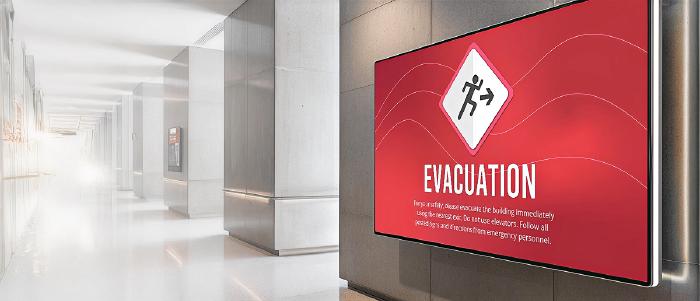
You’re driving with your family along the busy I-5 corridor when, without warning, a giant screen flashes an alert: “Storm incoming, take detour.” With seconds to spare, you change route and reach safe shelter, avoiding disaster, thanks to digital signage.
Without that display, you might have been stranded in flash floods for hours, with frightened kids and no safe way home. You just got saved from that nightwear by an intelligent digital signage in USA nexus.

Emergencies happen all the time, and most times we have little to no warning to save ourselves from the unfortunate.
According to FEMA, clear emergency communication can drastically reduce panic during disasters.
Storms and flash floods alone account for major emergencies in America. Heavy rain and snowfall make road accidents a common occurrence, especially in hilly mountains with sharp turns. With smart strategies, digital signage displays can mitigate most of these incidents and ensure road safety.
Emergencies don’t just stay on roads. They arrive unexpectedly in schools, colleges, stadiums, government places, offices, hospitals, malls, and many other places. A fire in a campus corridor can set off major panic among students who rush to find the nearest exit, and in the worst scenario, keep them all frozen in place.
Moments like these remind us that every second counts in an emergency and that fast and clear communication can bridge the barrier between safety and disaster.
In an emergency, timing is everything. A warning delivered in seconds can prevent chaos and save lives. Modern signage systems override regular content in under three seconds, ensuring alerts reach everyone without delay.
The content management system is the core of this process. It allows safety teams to schedule alerts, trigger them instantly, or connect signage with external systems like fire alarms or weather updates for automated responses.
A digital signage player in USA setups powers each screen, linking displays to the signage app so messages play instantly. To keep communication authentic and safe, digital signage security in USA networks includes encrypted networks, access control, and tamper-proof hardware.
Providers like Pickcel also offer the choice between cloud or on premise digital signage in USA systems. On-premise solutions give full control over infrastructure, while cloud models support remote management at scale.
With this setup, coordinators can send automated critical instructions to hundreds of screens at once.
When warning the public in a crisis, time matters most. Standard messaging options like PA systems, emails, or mobile alerts may not work during emergencies. Mobile networks can get jammed, and not everyone checks messages at once.
So, how do emergency alerts go through?
An advanced digital signage software in USA networks solves most of these problems. These bright and dynamic displays are hard to miss, and here’s why:
Instant visibility: LED displays are easier to spot from afar. When chaotic screaming and shouting noise can drown out announcements, these signage screens can act as immediate messengers, cut through the noise, and save lives.
Universal accessibility: A most important advantage of signage screens is for people with hearing impairments. In cases when voice announcements are not helpful, clear visual instructions can help people respond quickly and calmly.
Multi-language capability: Multilingual emergency messages in Airports, transit, and public spaces can reach out to a diverse crowd immediately and effectively.
ustomizable alerts: Signage softwares can showcase dynamic exit maps, safety icons, and step-by-step instructions.
Digital signage also helps educational institutions meet key safety requirements, aligning with standards set by organizations like the National Center for Education Statistics (NCES).
Digital emergency messaging touches every corner of our communities. As safety administrators and decision-makers, you’re not just investing in safety compliance; you’re building the communication backbone that your community depends on when everything goes wrong.
Each environment presents unique challenges. But smart emergency displays adapt to protect everyone, everywhere.
Schools, colleges, and universities face a wide range of emergencies that require fast alerts, like campus fires, medical emergencies, severe weather alerts, and even security threats.
Signages in educational institutions deliver real-time alerts to guide students and staff. With digital signage for education, evacuation routes can be tailored by area, CPR steps can appear during medical incidents, and instant lockdown instructions can help in active shooter situations.
Outside emergencies, the same screens handle daily needs like announcements, schedules, wellness tips, and drills, keeping campuses informed and prepared.
Most American corporations are high-rise buildings. And when a fire breaks out in one of the top floors, evacuation becomes a scary deal.
And most buildings are the hosts of multiple companies on different floors, and each with its unique evacuation protocols.
Corporate displays can connect with all the systems throughout the building and coordinate a safe evacuation. The signage screens can guide employees and workers to the nearest elevators and stairways on each floor.
Hotels try to provide the best possible experience for their guests as they can, and that includes ensuring safety and coming prepared for any unforeseen circumstances.
In situations like city-wide storms and hurricanes, ensuring hundreds of guests and staff is a top priority. People need immediate shelter guidance that ticks multiple boxes, like:
Smoke and motion sensors that can trigger alerts without staff input
AI and other modern tech can instantly translate safety instructions in other languages for diverse communities.
Visual maps and wayfinding that guide through corridors and basements
Real-time updates and coordination messages with clear timelines to calm anxiety
When hotels and resorts maximize their display investment, guests have better experiences and promote their business even more.
Managing tens of thousands of people in a stadium is a huge challenge during emergencies, all in real-time.
The importance of such alerts becomes clear when looking back at incidents like the 2014 lightning strike outside a Major League Soccer stadium in Ohio, where an off-duty firefighter was critically injured and the Columbus Crew vs. the Dallas match was postponed due to the storm.
In such moments, screens inside and outside the venue can direct crowd movement to safe zones, prevent stampedes, display evacuation procedures, or broadcast weather warnings before tragedy strikes.
Highways, airports, train stations, and bus depots greatly benefit from digital signage displays to alert passengers to emergencies, traffic updates, or broadcast breaking news and severe weather warnings.
Even weather services connect directly to highways and public displays, ensuring that people are informed before disaster strikes.
Leaders now see emergency digital signage as essential, like fire alarms or exit signs. These systems are powered by 5G, IoT, and AI, which connect smart buildings with sensors that detect smoke, motion, or severe weather, triggering instant alerts.
Emergencies and disasters shake up communities in more ways than we can imagine. But faster responses mean less panic and more lives saved.
The question isn’t whether your community can afford emergency digital signage– it’s whether you can afford not to. When that moment comes, you’ll want every advantage to protect those who matter most.
The right technology exists. So invest in an emergency digital signage solution today.

The US emergency alert system (EAS) is a national warning system that delivers urgent messages from authorities to the public. It broadcasts through TV, radio, wireless carriers, and increasingly, connected digital signage.
Emergency alerts can reach TVs, radios, smartphones, weather radios, highway signs, and digital signage screens. This ensures coverage whether people are at home, at work, or in public spaces.
The USA alert network uses multiple channels: EAS (TV/radio), Wireless emergency alerts (WEA), NOAA weather radios, PA systems, and public digital signage. Together, these technologies form a multi-layered safety net.
Emergency services include police, fire departments, paramedics, hospitals, FEMA, and local disaster-response teams. They coordinate with alert systems to act quickly during crises.
Dec 24 2025
10 min read

Dec 9 2025
14 min read

Nov 26 2025
7 min read

Nov 7 2025
11 min read
Take complete control of what you show on your digital signage & how you show it.
Start Free Trial Schedule My Demo