TL;DR
- PA systems and static exit signs leave critical communication gaps in emergencies.
- Pickcel overrides all screens simultaneously with a full-screen emergency alert in seconds.
- Pre-built alert templates allow a one-click broadcast during an active emergency.
A fire alarm activates on the third floor of a manufacturing plant. The PA announcement echoes through the main hall but doesn’t reach the press room, where two operators work alongside running machinery. The static evacuation sign on the wall points to a fire exit currently blocked by a forklift.
These are not edge cases. In facilities with high ambient noise, multiple languages, and geographically dispersed zones, conventional emergency communication leaves gaps. A PA system broadcasts audio. Static exit signage gives directions. Neither tells people what is happening, where to go, or what has changed in the last 90 seconds.
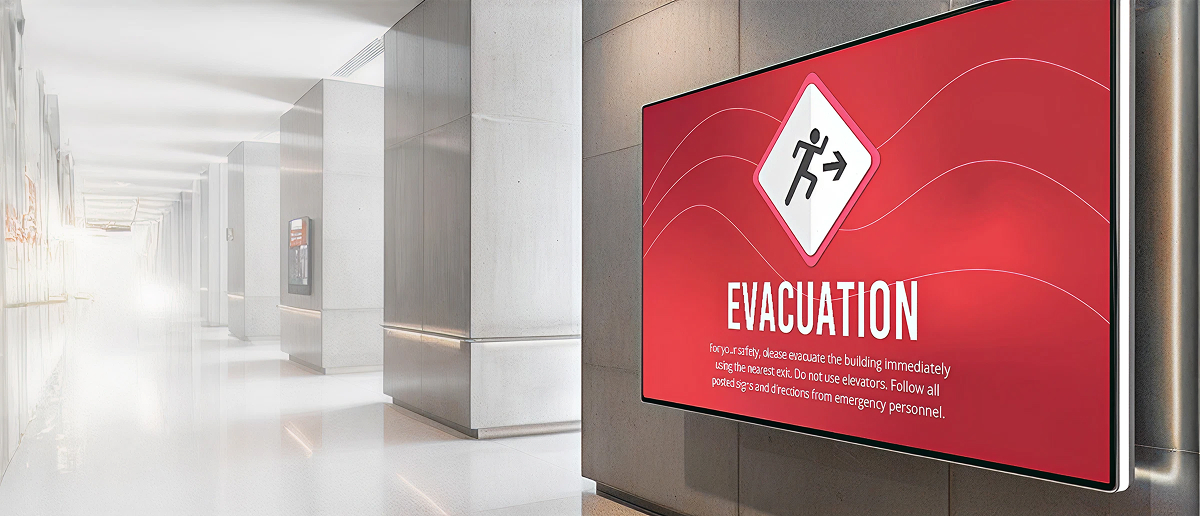
Digital signage fills that visual gap. Connected screens that run content schedules on an ordinary day can override to a full-screen emergency alert across an entire site, reaching every zone simultaneously, the moment an operator acts.
What Is an Emergency Notification System with Digital Signage?
An emergency notification system with digital signage is a visual broadcast layer that displays emergency alerts across all connected screens in a facility simultaneously, without requiring anyone to update each screen individually.
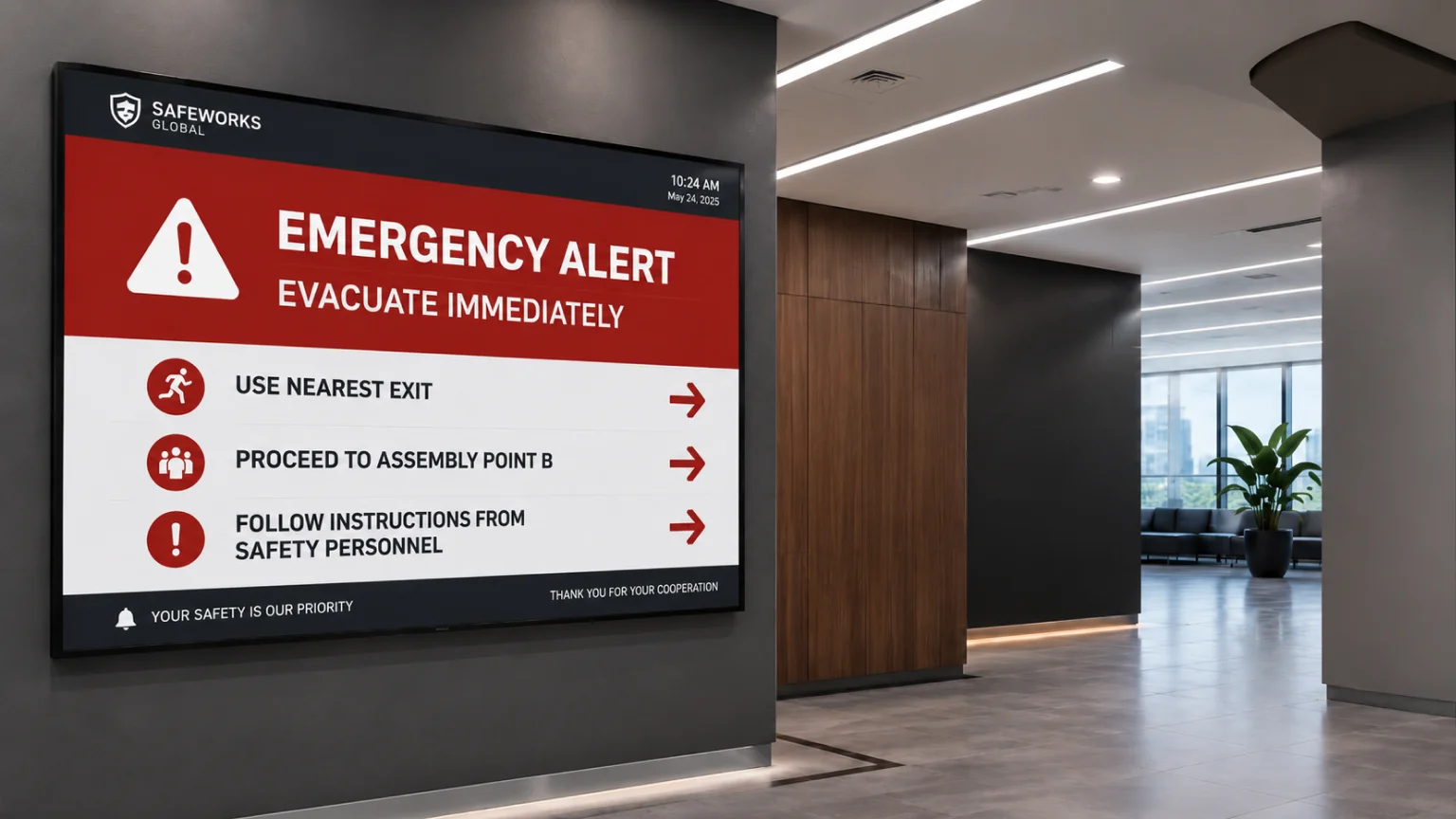
When an emergency occurs, a designated operator or an automated trigger from a fire panel or access control system activates the broadcast from a central dashboard. Every connected screen immediately overrides its active content with a full-screen alert. The alert can display the emergency type, the affected area, evacuation instructions, and a countdown.
This is a supplementary communication layer, not a standalone life-safety system. Digital signage cannot replace the certified emergency notification systems required by local fire codes, OSHA standards, or HSE regulations. It fills the visual communication gap that PA systems and static exit signage cannot address on their own. Facilities that deploy it correctly use it alongside their existing certified systems, not instead of them.
The Gap in Most Workplace Emergency Notification Systems
PA systems are the default emergency broadcast tool in most industrial, healthcare, and corporate facilities. They reach ears in corridors and common areas. They do not reach everyone.
In manufacturing environments, where emergency notification digital signage plays a critical role in reducing accidents, workers operating heavy machinery at high decibel levels cannot reliably hear a PA announcement, even when a speaker is nearby. OSHA’s occupational noise standard (29 CFR 1910.95) sets 85 dB as the action level at which hearing protection is required. Workers wearing that protection during an emergency may miss an audio-only broadcast entirely.
Language adds another layer of complexity. In multinational manufacturing sites and large hospital networks, a significant share of the workforce may have limited proficiency in the language the announcement is delivered in. A PA alert lasts 15 seconds. There is no visual reference. There is no way to replay it.
Email and instant messaging platforms are often cited as supplements to PA systems. They are the wrong tools for active emergencies. Employees in a manufacturing zone are not watching their inboxes. A notification ping cannot compete with the noise of a running press.
Static exit signage solves a different problem: it shows people where exits are under normal conditions. It cannot communicate changing conditions. It cannot say which exits are clear, which are blocked, which zones are affected, and what people in each zone should do right now.
Safety managers in large industrial and healthcare facilities consistently report that PA-only emergency systems leave significant communication gaps, particularly in high-noise zones and for workers who are non-native speakers. Visual alerts that update in real time close that gap.
How Digital Signage Works as an Emergency Notification Layer
Pickcel’s emergency broadcast function operates from a single action in the content management system. An authorised operator selects the emergency broadcast, chooses the alert type, and sends it. Every connected screen overrides its active playlist within seconds, displaying the full-screen alert.
Override speed and coverage
Pickcel’s cloud-based digital signage routes the broadcast command to all screens registered under the facility’s account. In a single-site deployment with reliable connectivity, the override reaches all screens in under 60 seconds. Multi-site deployments follow the same process: a national operator can trigger a site-specific broadcast or a global broadcast from the same dashboard without site-by-site action.
Pre-configured alert templates eliminate composition time during an active event. Operators prepare each template in advance, specifying the alert type, affected area, instructions, and colour coding, so that activation is a single click rather than a real-time writing task.
What appears on screen
The emergency alert can display:
- Alert type and colour coding (red for fire, amber for hazmat, blue for lockdown)
- Zone-specific instructions (Floor 2 evacuate via Stairwell B; Floor 3 shelter in place)
- Exit availability status
- A countdown timer for timed drills or phased evacuations
Integration with existing safety infrastructure
Pickcel supports integration with fire alarm panels, access control systems, and building management systems via API. When a fire alarm is triggered in Zone C, the system can automatically push a Zone C alert to affected screens without operator intervention.
Role-based access prevents unauthorised broadcasts. Operations managers can hold emergency broadcast rights while standard content managers cannot.
Hardware
Pickcel’s digital signage software is compatible with 50+ commercial display types, including screens already deployed in your facility. A dedicated media player connects to any HDMI display. If your facility already runs commercial displays, the emergency broadcast capability is an addition to existing infrastructure, not a replacement of it.
Emergency Notification by Sector: What It Looks Like in Practice
Manufacturing
A chemical plant deploys Pickcel across 42 screens in five production zones. On detection of a gas leak in Zone D, the system broadcasts a shelter-in-place alert to Zone D screens and an evacuation alert to adjacent zones. Workers see clear, colour-coded instructions without relying on hearing the PA system above machinery noise. See how manufacturing digital signage handles high-noise, multi-zone environments.
Healthcare
A regional hospital uses Pickcel across corridor screens, waiting room displays, and staff break room monitors. A Code Red alert in Ward 7 triggers a full-screen broadcast with ward-specific evacuation instructions. Patients in the waiting area receive a clear instruction to remain seated. Ward 7 staff see the evacuation route on their corridor screens. The broadcast reaches all three audiences from one action. Explore healthcare digital signage for hospital and clinic deployments.
Corporate campus
A multi-building corporate campus activates a lockdown alert following a security event at Building C. The Pickcel broadcast overrides all 110 screens across the campus. Building-specific instructions direct occupants to secured areas. Senior leadership, monitoring remotely, confirms that the broadcast has reached all screens via the dashboard.
Retail
A large retail outlet activates an emergency broadcast during a fire alarm. Staff-facing back-of-house screens display evacuation procedures for each department. Customer-facing floor screens display clear exit directions. Both audiences receive their respective instructions simultaneously from one broadcast action.
What Digital Signage Cannot Replace
Pickcel is a visual communication layer. It is not a certified life-safety system.
In most jurisdictions, commercial facilities are legally required to maintain certified emergency notification systems: fire alarm systems compliant with NFPA 72, PA systems meeting specified decibel thresholds, emergency exit lighting meeting IEC or OSHA standards, and documented emergency action plans. These are regulatory requirements. Digital signage does not satisfy them.
If your fire safety plan requires a certified fire alarm activation system, Pickcel does not fulfil that requirement. If local regulations mandate a specific audible alert system, digital signage screens do not substitute for it.
What Pickcel does: it adds a visual broadcast layer to an existing emergency communication framework. Used alongside a certified system, it closes the visual gap that PA and static signage leave open. It is a supplement, not a substitute.
Before implementing digital signage as part of your emergency communication plan, consult your building’s safety engineer, your local fire authority, and the regulatory requirements that apply to your facility type and jurisdiction. Compliance requirements vary by country, industry, and facility size.