

Dec 13 2024

5 min read
December 29, 2025
7 min read


ALL
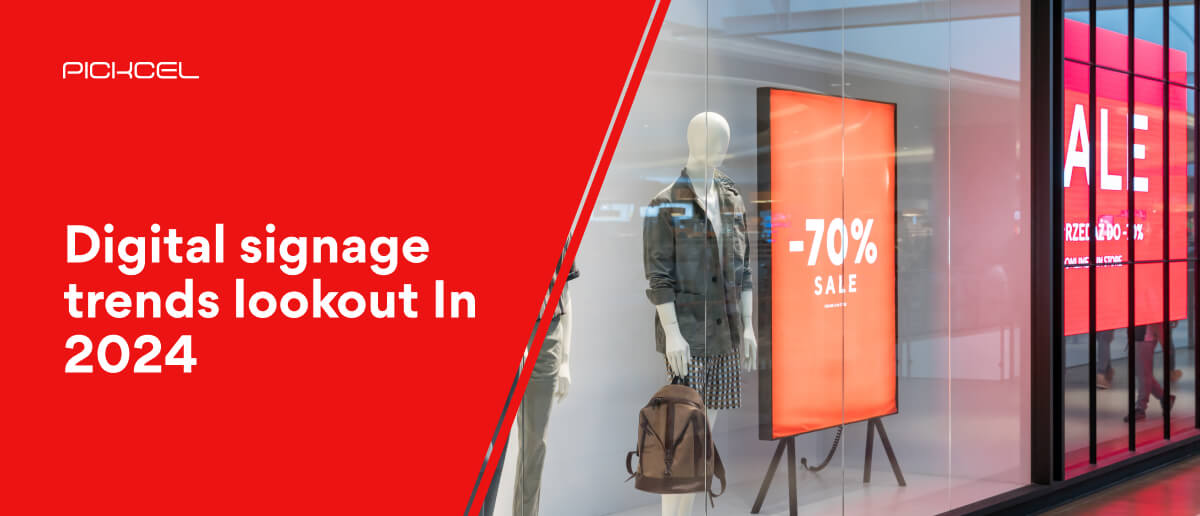
Digital signage trends heading into 2026 aren’t about bigger screens or new display formats. They’re about how signage systems create, adapt, and operate content under real-world constraints.
Cloud CMS, interactive screens, localization, and scheduling are already table stakes. What’s changing is how intelligence is distributed across the stack, how content responds to data, how digital signage automation replaces manual updates, how security and content governance become default requirements, and how hardware choices split between high-impact flagship installs and low-power, always-on deployments.
Businesses are no longer evaluating signage purely on display quality, but on how well the system adapts to changing content needs, operational pressure, and long-term growth.
The trends that matter in 2026 are the ones that reduce operational friction, scale cleanly across locations, and stay viable under rising bandwidth, energy, and compliance pressure.
Who This Is For:
This article is for IT, operations, and marketing teams responsible for planning, running, or modernizing digital signage across one or many locations. It’s relevant for decision-makers evaluating platforms, managers accountable for uptime and governance, and teams shaping how signage scales, adapts, and stays viable heading into 2026.

Digital signage uses screens like LED, LCD, or OLED to display various content, including text, graphics, and videos, managed through dedicated software. Commonly found in high-traffic areas for advertising with digital signage, such as shopping malls, these displays are also prevalent indoors, enriching customer experiences in retail stores, restaurants, corporate offices, hospitals, transportation stations, schools, etc.
Here are some of the most sought-after advancements that will revolutionize how technology will be viewed this year.
In 2026, digital signage is becoming more adaptable to different spaces and needs. For basic providers, this means offering digital screens that can easily adjust in size - like adding or removing screen panels to fit a specific space. Advanced providers can take this further by creating complex, multi-screen arrangements that work together for a more impactful digital signage display.
Emphasizing cross-platform compatibility is crucial for digital signage software providers, ensuring seamless operation across standard operating systems and devices. Furthermore, as technology advances, there is an opportunity to integrate with cutting-edge platforms like Augmented Reality and Virtual Reality, enhancing the user experience and expanding the capabilities.
Interactive content is a game-changer. Providers can offer a range of interactive solutions, starting from simple touch or gesture-controlled content for primary engagement. For more advanced applications, integrating sophisticated systems like AI-driven personalization and real-time data feeds can significantly enhance the interactivity and relevance of the signage content.
Cloud-based content management systems are becoming a standard offering. Providers can deliver digital signage solutions with varying levels of complexity, from user-friendly interfaces for straightforward content updates to more robust, scalable cloud solutions. These advanced systems can include detailed analytics and remote management capabilities to cater to diverse needs.
Localized content delivery is key to engaging specific audiences. Providers can offer geo targeting capabilities to customize content based on franchise location. Additionally, more sophisticated approaches include hyper-localized and moving content that adapts to factors such as community events, local weather, or specific viewer demographics, ensuring high relevance and impact.
Read more about how brands can get the best of moving digital signage
In response to escalating cybersecurity threats, bolstering security in digital signage is essential. Providers have prioritized secure data transmission and storage while implementing advanced measures like robust encryption and intrusion detection systems to safeguard against potential breaches and ensure data integrity.
Inclusivity in digital signage is a growing trend. Basic providers can incorporate fundamental accessibility features like readable fonts and high-contrast displays. Advanced systems, on the other hand, can implement voice recognition, sign language avatars, and audio descriptions to make signage universally accessible.
As the demand for outdoor screens such as 3D billboards grow, providers are adapting to innovative solutions. They are offering weather-resistant displays suitable for various climates and exploring rugged, vandal-proof designs. These enhancements ensure the signage remains functional and visually appealing, even in challenging outdoor environments.
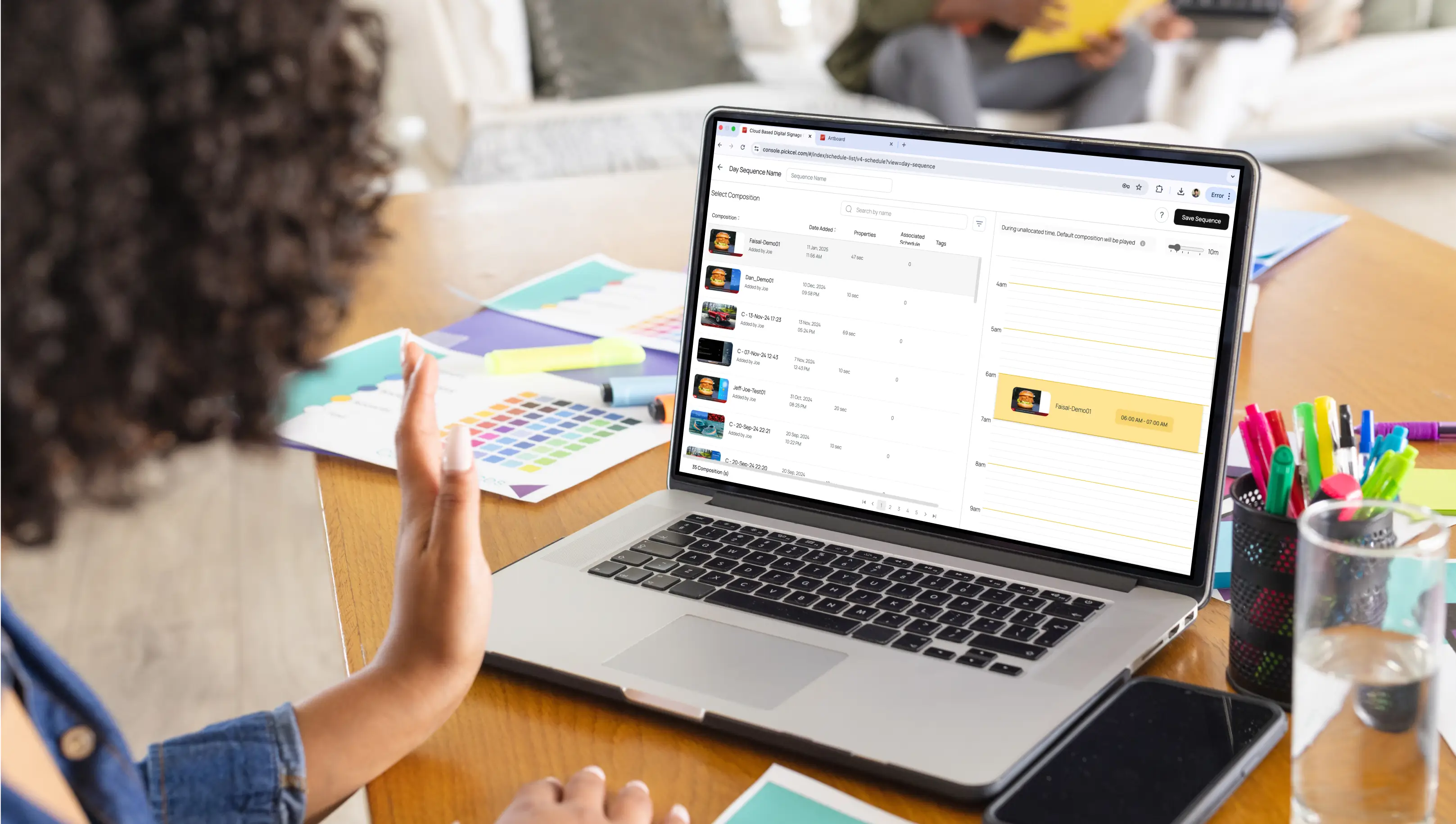
Dynamic content scheduling is rapidly evolving to support more targeted messaging, driven by increasing demand for efficient day-parting and the integration of algorithms that analyze viewer engagement. This sophisticated approach enhances the timing of content displays, ensuring messages reach the audience when most impactful and relevant.
Service providers now offer solutions ranging from dual-language support to real-time translation services, accommodating a broad spectrum of languages. This adaptability enhances openness and relevance across diverse audiences.
Check out: Best digital signage companies for your business needs
In 2026, signage systems are evaluated on measurable impact, operational control, and cost behavior at scale, not features or novelty.
| Focus area | What matters in practice |
|---|---|
| Measurement | Tie screens to outcomes teams already track: AOV and throughput for menu boards, time-to-destination for wayfinding, conversion lift or shrinkage reduction for retail media, and compliance or utilization recovery for internal comms. |
| When full attribution isn’t possible | Use defensible proxies instead of fragile precision: QR scans, time-boxed A/B sales windows, footfall deltas near screens, or simple feedback inputs. Credible correlation is enough to justify decisions. |
| What to standardize early | Lock down publishing permissions, approvals, and audit logs. Move from manual playlists to rule-based scheduling. Ensure centralized monitoring, self-healing behavior, and offline playback as baseline operational hygiene. |
| What to approach cautiously | Full personalization that introduces privacy or legal risk, immersive concepts without a sustainable content pipeline, and novelty interactivity that slows users instead of helping them. |
| How teams avoid budget drain | Avoid architectures that stream raw data just to trigger playback. Include energy, bandwidth, and maintenance in TCO, not just license or screen cost. Extend existing hardware before replacing it where possible. |
The 2026-27 digital signage landscape is a realm of innovation, seamlessly blending technology with creativity. Catering to an array of needs, from the straightforward to the complex, these trends showcase an industry dedicated to pushing boundaries. Each stride in user engagement, environmental mindfulness, and technological advancement paints a picture of a future where signage is experienced in extraordinary ways. Highlighting the growing benefits of digital signage, from dynamic content delivery to smarter, more sustainable communication.
In 2026, trends are defined by system behavior, not screen innovation. The focus shifts to automation, rule-based content delivery, operational governance, and cost control at scale. Teams evaluate how signage adapts to data, runs reliably, and stays compliant under bandwidth, energy, and security pressure.
AI is used to reduce manual work, not add complexity. It generates content variants, optimizes scheduling, reacts to data inputs, and monitors system health. Most deployments use AI within templates and rules, ensuring brand control while improving speed, relevance, and operational efficiency.
No, interactive signage is effective only in high-intent environments like ordering, wayfinding, or kiosks. In many cases, simple QR or mobile handoffs outperform complex touch or gesture systems. The deciding factor is whether interaction reduces friction or measurably improves outcomes.
Cloud CMS enables centralized control, remote updates, analytics, and multi-location governance. In 2026, it’s the coordination layer, not the playback dependency. Most systems rely on cloud orchestration with edge caching so screens continue operating even during network outages.
Evaluation centers on measurable impact, governance, offline resilience, and total cost of ownership. Teams prioritize systems that support rule-based automation, secure publishing controls, centralized monitoring, and predictable scaling. Feature depth matters less than how the platform behaves under real operational load.

Dec 13 2024
5 min read

Dec 13 2024
8 min read

Dec 4 2024
7 min read

Dec 4 2024
7 min read
Take complete control of what you show on your digital signage & how you show it.
Start Free Trial Schedule My Demo