
Sep 1 2025

8 min read
September 10, 2025
9 min read


ALL
HOSPITALITY
I’ve spent a good chunk of my life in hotels, mostly solo on business trips across U.S. cities like Atlanta, Seattle, and San Diego, and sometimes on vacation with family in places like Orlando or the California coast.
After a while, you start to notice patterns, not just in how hotels operate but in how guests behave.
Business travelers want speed. They expect check-in to take seconds, their meeting room displayed on a lobby screen, and directions without waiting at the desk. Leisure travellers, especially families, look for comfort and simplicity. They want clear activity schedules, dining hours, and wayfinding support without flipping through paper binders.
As someone who studies customer experience closely, I often turn to the hospitality industry for lessons. United States hotels are masters at anticipating needs and creating memorable stays, yet expectations here are especially high.
And in this country, expectations are high. Guests are used to digital experiences everywhere, from airports to coffee shops, and they expect that same clarity and convenience at their hotel. Even in well-run hotels, I’ve seen recurring gaps, crowded lobbies, outdated signs, poor navigation, and missed upselling. One technology consistently closes them.
The adoption of hotel digital signage in USA has transformed how properties address these challenges.
As signage in the USA continues to evolve and grow more sophisticated, understanding its fundamentals is essential for any hotelier serious about improving guest experience.
Over the past several years, I’ve been running one of the leading companies that develops digital signage software in USA markets, giving me a unique perspective on both guest frustrations and the technology solutions that actually work.
When I speak with hotel operators across the U.S., one thing is clear—we live in a visual-first culture. Guests arrive already tuned to screens, from airport kiosks to digital menus, and they expect the same clarity at their hotel. Research shows visuals are processed 60,000 times faster than text and increase retention by up to 50%. No wonder studies confirm that 80% of travellers value easy access to information on digital displays, with interactive signage boosting satisfaction by nearly 48%.
Yet, many decision makers still treat hotel signage as “a TV on the wall.” In reality, it’s a complete ecosystem. What guests see, lobby screens, in-room displays, or kiosks, is powered behind the scenes by digital signage players and software that schedule, update, and monitor content across the property.
The best-run hotels I’ve worked with now run entire guest communications through these networks, from concierge tips in the lobby to live menu boards in the cafe.
When you’ve spent as much time as I have working and traveling across the U.S., you start to see the difference. The best-run operations aren’t just using screens to replace signs, they’re using them to solve real business problems.
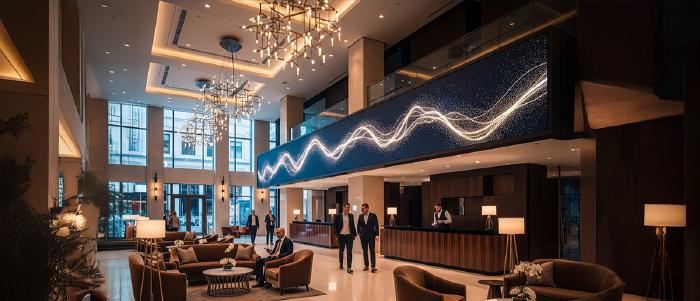
Guest experience is always the first frontier, especially in the U.S., where speed matters. I’ve seen hotels reduce lobby friction by:
Making check-in information visible the moment guests walk in.
Using queue displays to show estimated wait times, so guests know what to expect.
Installing kiosks that let guests skip the line if they’ve already checked in online.
Placing digital directories that guide them to elevators, lounges, or amenities without needing to ask.
That kind of clarity doesn’t replace the front desk but it does take pressure off it, especially during high-traffic check-in windows.
Some of the best properties I’ve worked with layer in dynamic content, local art, Instagram feeds, live dining menus, and it turns the entire lobby into a branded experience. 73% of guests are more likely to stay in a hotel with self-service tech. Honestly, I’ve just seen it play out in the field again and again.
Operationally, the impact is huge when it’s applied the right way. I’ve seen hotels cut lobby congestion by up to 40% with queue displays and self-check-in kiosks. I’ve seen back-of-house signage streamline staff coordination during high-traffic events by:
Showing exactly which rooms need servicing in real time.
Highlighting when VIPs are scheduled to arrive.
Directing teams on where resources should be deployed.
Then there’s the upside operators care most about, revenue. A well-placed sign drives action.
Upsells climb when offers are placed where American guests actually decide, like in-room TVs, elevator screens in New York business hotels, or lobby.
One Florida resort boosted spa bookings by 19% midweek just by promoting treatments on guestroom displays.
57% of U.S. hotels reported revenue growth in 2026 after digital upgrades, and it makes sense. American guests are already conditioned by Starbucks menu boards and airline upgrade prompts, so when hotels use digital signage, it feels natural and drives action without the hard sell.
Sustainability is another win I’ve seen U.S. hotels embrace quickly. Many properties have gone paperless in months, switching restaurant menus, event schedules, and even resort maps to digital. It cuts printing costs, reduces waste, and plays well with eco-conscious guests.
Moreover, modern LED and LCD displays use far less energy than the old screens many hotels are still running, and the savings become very real.
What I always tell GMs and owners is this, the signage itself isn’t the value. It’s the system. The data. The flexibility. The fact that you can track what guests engage with, in real time. Built-in analytics let you see what’s working and what’s not. That’s where the measurable ROI comes from.
I’ve seen properties invest in screens only to let them sit idle with outdated content or worse, roll out systems that never integrate with their operations. That’s the fastest way to waste money. In U.S. hotels, implementation is all about strategy, not just hardware.
Not every vendor “gets” the hotel environment. A strong partner should bring a clear support structure and tools that scale across properties.
Hotels handle sensitive guest data every day, so digital signage security in USA has become a top priority. Any solution you choose should include encrypted connections, role-based access, and compliance safeguards to protect both guests and the property.
Cloud-based platforms offer great flexibility and remote management, but sometimes hotels need more control. When you’re dealing with sensitive guest data or unreliable internet, on-premises digital signage in USA properties often makes more sense than cloud solutions.
Digital signage is most powerful when it connects with your PMS, POS, event scheduling tools, and mobile apps. In practice, that means guests see consistent, real-time information at every touchpoint.
The best solutions also work seamlessly with your existing systems, giving you the flexibility to adapt without overhauling your tech stack. Many leading providers of digital signage in the USA build these integrations in, so it pays to choose partners who can deliver them out of the box.
The hotels I’ve seen succeed are the ones that treat digital signage as an evolving part of the guest journey, not a one-off installation. Train staff to manage and update signage easily. Set clear KPIs from guest satisfaction scores to upsell revenue to track ROI. Use analytics to see what content resonates most and adjust strategy regularly.
After more than a decade in the digital signage space, I’ve had the unique vantage point of both working with businesses across the U.S. and spending countless nights in hotels myself, whether rushing through check-in on a New York business trip or navigating resort amenities with my family in Florida. Those experiences have shown me just how much hotel operations here depend on clarity, speed, and trust.
When I think about the challenges hotels face, crowded lobbies, confusing navigation, inconsistent branding, and missed upselling opportunities, it’s clear digital signage plays a far bigger role than aesthetics.
Done right, it reduces friction, builds trust, and creates moments of delight that guests remember long after checkout.
That’s also why working with the right partner matters. At Pickcel, we’ve built one of the leading platforms for digital signage in the USA, offering reliable, secure, and scalable solutions designed specifically for businesses that can’t afford to get it wrong.
And if you’re feeling unsure about where to start, our team of experts is here to guide you through every step of the journey.
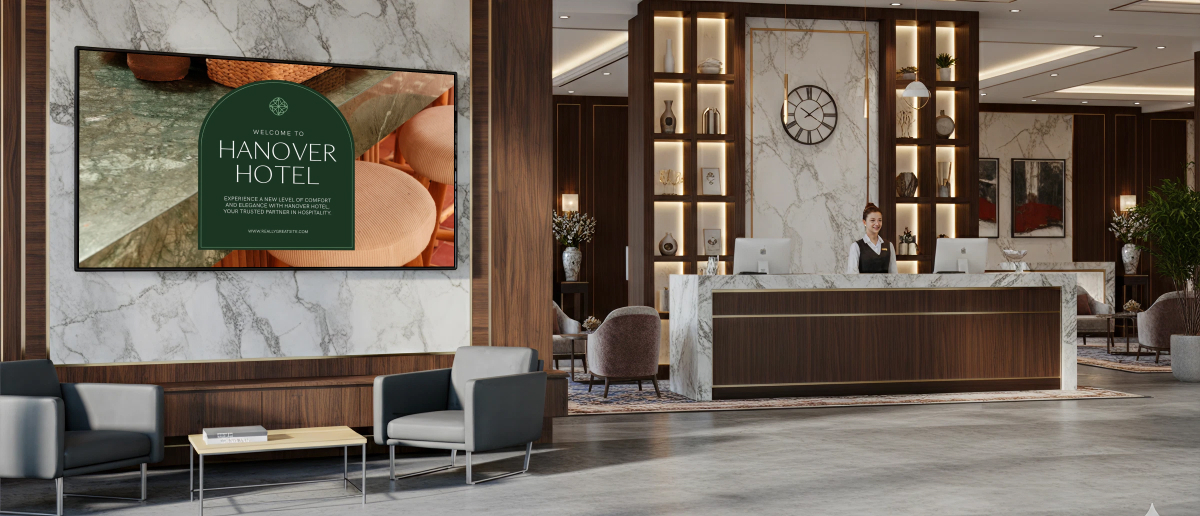
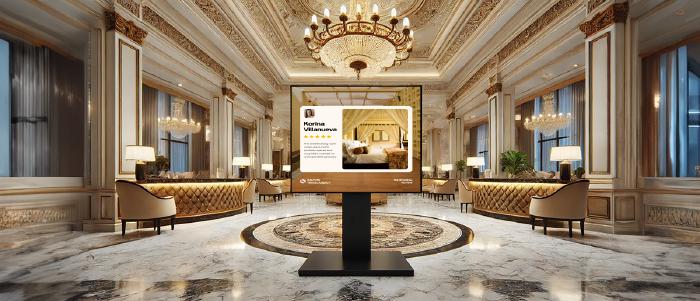
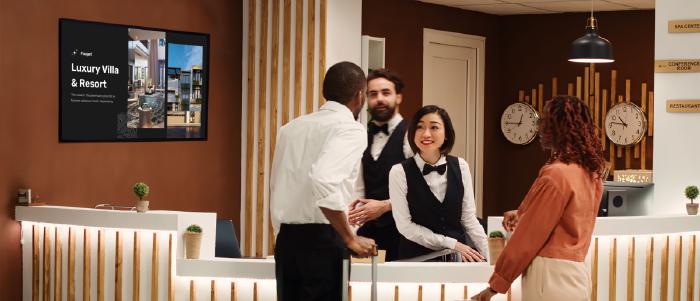
Hotel lobby digital signage sets the tone for the entire stay. With personalized greetings, real-time updates, and promotional highlights, it creates a welcoming atmosphere that immediately feels professional and guest-centric. It reduces confusion, keeps guests informed, and enhances the hotel’s brand image from the moment travelers walk in.
In-room signage allows hotels to create a more tailored stay. Guests see customized welcome messages, loyalty rewards, and relevant service options like dining menus or spa bookings. It also serves as a digital concierge for local guides and activities, making the room itself an extension of the hotel’s hospitality.
For business travelers, time and clarity are critical. Digital event signage provides schedules, speaker details, and room locations instantly, reducing delays and confusion. Real-time updates handle last-minute changes without disrupting attendees. By streamlining communication, these displays help hotels deliver smoother, more professional conference and event experiences.
Concierge kiosks give guests easy, 24/7 access to information and services. They allow self-service for bookings, local recommendations, and directions, reducing the need to wait at the front desk. By combining convenience with discovery, kiosks empower guests to shape their stay independently, enriching the experience while easing staff workloads.

Sep 1 2025
8 min read
Jul 29 2024
5 min read
Apr 19 2024
7 min read
Nov 9 2023
5 min read
Take complete control of what you show on your digital signage & how you show it.
Start Free Trial Schedule My Demo