
Sep 19 2025

8 min read
August 01, 2025
9 min read


ALL
CORPORATE

One would think that in 2026 USA local councils and government services have all the fancy upgrades. But that wasn’t the case for the people working at Meadowbrook City Hall until very recently.
The city council building was always busy, but not in a good way. There were too many updates, but not enough clear messages. Staff would just pin new notices over old ones. Emergency alerts got lost in email inboxes. Residents often missed community events. Even inside departments, people weren’t really sure what others were working on.
They needed something better.
Things started shifting when public works officer Mark Jenkins suggested using digital signage in USA displays in all the public serving areas and internal staff locations. At first, there were questions. How much would it cost? And…how much of an additional work would it be for them?
But over time, more people started to see the benefits. Councilwoman Elena Rodrigo worried if everyone would be able to understand and operate the platform. Mark explained how these smart displays could show content in many languages and use pictures to help people understand. Even the IT department even confirmed it could be set up safely on their own systems, helping the city protect its data.
Local government digital signage in USA is fast becoming the communication backbone of local governments in the U.S., allowing cities to:
Streamline internal workflows
Enhance public transparency
Speed up emergency responses
Reduce manual, repetitive tasks
Improve accessibility for all residents
And the technology behind it? A combination of scalable digital signage solutions.
Choosing the right display was the key for smooth signage experience and the Meadowbrook City Hall ensured just that. They invested in both indoor and outdoor screens for different needs across all their centres.
Indoor Screens
For lobbies, corridors, staff rooms, and council chambers, they used commercial-grade LED/LCD screens. These are built to run reliably for long hours, unlike home TVs. They picked high display LCD screens, good for natural light, and set them up as wall-mounted, ceiling-mounted, or even interactive kiosks.
Each was paired with a high-functioning digital signage player in USA options.
Outdoor Screens
For transit stops, parks, and building exteriors, they needed tougher screens. They got high-contrast, extra-tough LED screens that were weatherproof and tamper-resistant, protecting against rain, snow, dust, and vandalism. These were sunlight-readable (1500+ nits or higher) for clear viewing even in direct sun.

When a sudden storm shut the Meadowbrook city roads closed, the IT team was able to initiate the evacuation instructions and detour directions in real-time through all the public locations. The digital display in the City Hall lobby, DMV, and public parks took a few minutes to transition to emergency messages.
This was a game-changer for the local USA council.
The DMV was surprisingly calm. Interactive kiosks transform busy public areas into self-service hubs. These kiosks let citizens:
Pay local fees or fines
Download or print forms
Track permit or license status
Check queue status at the DMV
Sarah, one of the DMV employees, now stayed noticeably less annoyed than usual and loves the change in efficiency. The combination of self-service functionality and smart digital signage software in USA options, had virtually eliminated lines and made it easier to process everyone.

Town halls typically experience a lot of traffic and it is challenging for new visitors to navigate. The SOC screens assisted visitors in finding their way to licensing, housing, or planning offices. These digital navigation systems limited staff interruptions, while visitors moved through the building more efficiently.
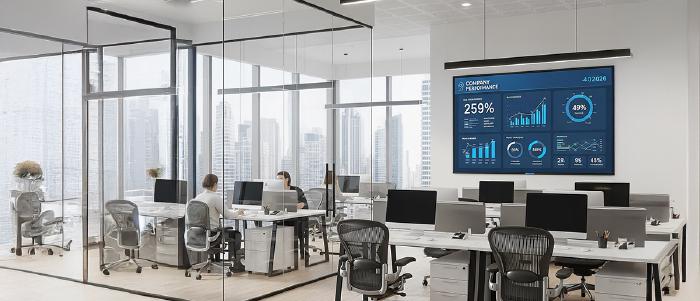
The benefits weren’t just for the public. Internal teams felt the shift immediately. Before, staff relied on scattered emails for news like promotions or new rules. With digital signage in breakrooms and meeting rooms, everyone saw the same updates. This included “Employee of the Month” recognition celebrations and progress on city projects, which boosted morale.
Screens also updated new construction permits or daily garbage routes, making meetings shorter and more productive.
HR and management used digital signage for short training videos for new employee experience and reminders. New safety policies or expense updates could be scheduled to display often throughout the week. This sped up educating staff without flooding inboxes or stopping work for mandatory sessions. The IT department even used the same displays for cybersecurity tips and update reminders for computers.
Security was always a concern. Meadowbrook worked with a company that supported digital signage security in USA systems like:
Role-based access control
Encrypted data transfers
Regular updates
Secure logins or SSO
ISO or similar grade certified
This meant their system had things like controlled access, local storage and secured data transfers. For highly sensitive internal messaging, they deployed on premise digital signage in USA solutions. This provided them scope for custom integrations and allowed complete autonomy and secured access to the city’s internal network.
Digital signage works best when the network is managed smartly. Advanced digital signage solutions allowed the team for efficient content management by being:
Centralized: Manage all screens from one dashboard, no matter how many locations.
Automated: Schedule content to appear and disappear at specific times, days, or based on triggers like weather.
Segmented: Target specific screens with relevant information like HR updates for staff areas and event listings for public lobbies.
Multilingual: Easily provide content in different languages to reach diverse communities.
Accessible: ADA-compliant features like text-to-speech or large, clear fonts ensure everyone can understand the messages.
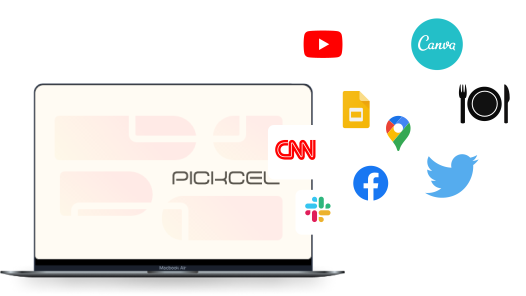
Many software solutions like Pickcel offer pre-built templates, widgets, and media libraries. Added features like this let the staff quickly create engaging content, even without design experience.
| Problem | Traditional Method | With Digital Signage |
|---|---|---|
| Delays in announcements | Flyers, phone calls, newspaper notices | Real-time screen updates everywhere |
| Accessibility limitations | English-only flyers, small fonts | Multilingual, adjustable text, visual aids |
| Navigation issues | Static signs, asking for directions | Interactive maps and wayfinding screens |
| Budget constraints | High printing costs, outdated materials | One-time setup, zero waste |
| Low civic engagement | Poor visibility, unengaging communication | Visual content, QR codes, live updates |
Digital signage might have seemed like a corporate tool before, but local governments like Meadowbrook are proving its value. It helps by:
Saving money on printing and manual updates
Reducing staff workload by automating routine tasks
Reaching more people faster, with crucial information
Keeping residents informed, engaged, and safe
Adapting easily to different department needs
The success of signage applications is now visible in city halls, police departments, public libraries, and even in district schools.
Here’s what worked best for the US local council:
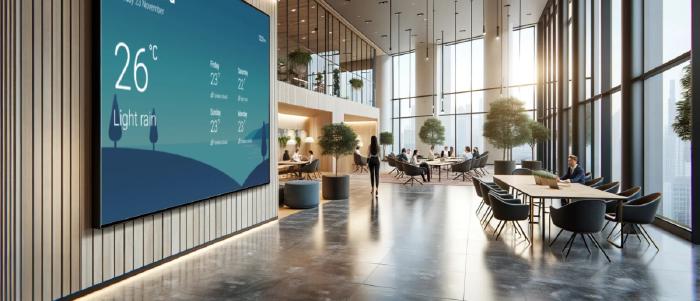
Town Hall Entrances & Lobbies – Great locations to have digital signage screens for visitor interfaces with directional information, news and RSS feeds, meeting schedules, emergency information and more.
Council Chambers – Local councils can use them to present real-time content like voting data (super transparent), or just keep legislative calendars in view.
Staff Corridors & Break Rooms – These smart screens are perfect for showing internal memos, HR reminders, or even just celebrating employee milestones. This is where your system might be especially important for private internal info, giving users more control.
Public Parks & Transit Stops – Great spots to share safety protocols, upcoming event info, or push out those critical disaster alerts. A good digital signage platform can handle the outdoor elements.
The goal remains the same: to help people stay informed.
US local council services need communication tips and tools that are fast, reliable, and flexible. Digital signage does all three.
Meadowbrook’s story may be simple, but it’s not unique. Towns and cities everywhere are dealing with the same communication gaps. And slowly, they’re finding that digital signage isn’t just about tech – it’s about giving better service to their communities.
Local councils need three main things: Display screens, a digital signage hardware (for non-SOC screens) and advanced digital signage software to manage content. An internet connection helps send updates to all screens from one place.
Not at all. Most digital signage software in USA based organizations are easy to use. If staff can use a basic computer or tablet, they can learn to update content, schedule messages, or add images. Training is usually provided during setup.
Yes. With digital signage solutions, councils can use screens as kiosks. Citizens can check info, fill out forms, or pay fees, reducing wait times and staff workload.
Yes, but outdoor showcasing needs weather-proof digital signage displays. These setups work well in parks, bus stops, or open areas where durable displays are needed.


Sep 19 2025
8 min read
Sep 16 2025
10 min read

Sep 15 2025
8 min read

Sep 8 2025
9 min read
Take complete control of what you show on your digital signage & how you show it.
Start Free Trial Schedule My Demo