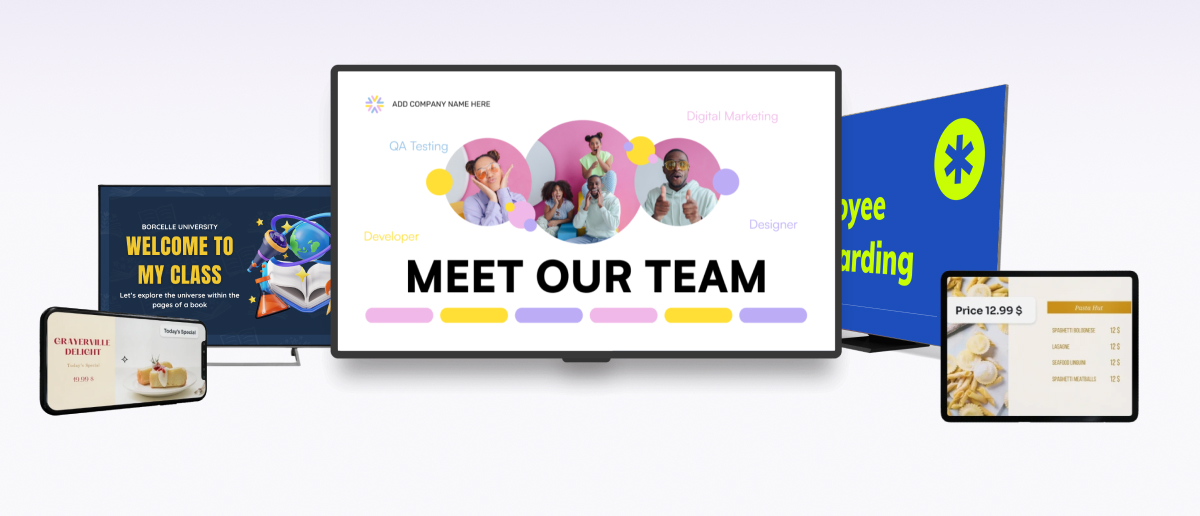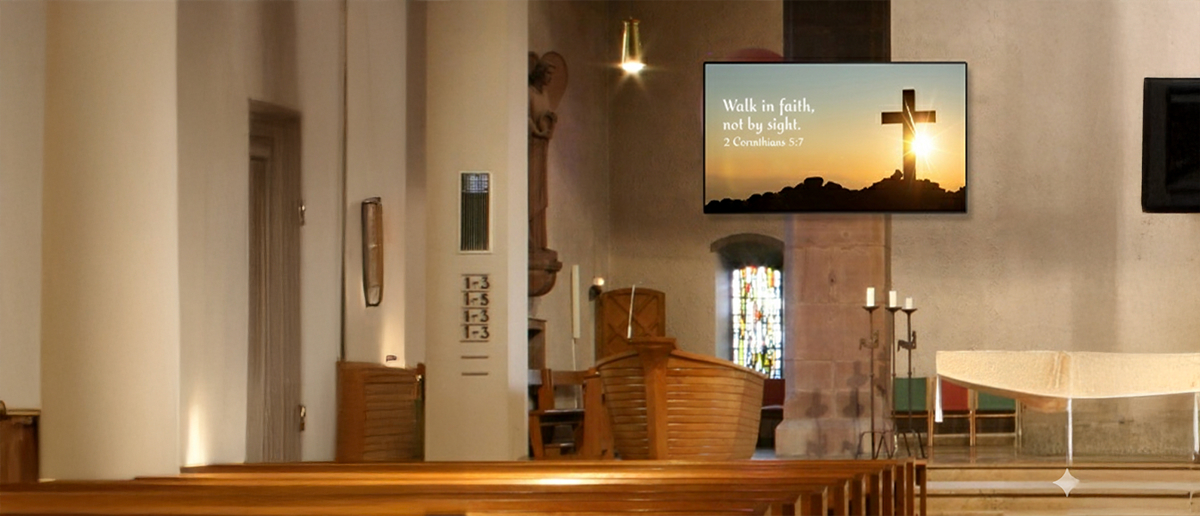
I’ve noticed something interesting across disparate spaces; whether it’s a church, a community centre, or even a business, the need is the same: effective communication at the right time.
When information is late, unclear, or missing altogether, the impact can be felt immediately. Attendance drops, events don’t run smoothly, and resources are wasted.
For churches, this challenge is even more pronounced. Service times may shift, holiday schedules need to be announced, youth events and outreach programs require promotion, and urgent updates like parking closures or weather warnings must reach people quickly.
Traditional methods like flyers or felt boards, while familiar, often fall short. They’re costly to produce, slow to update, and too easy to overlook.
That’s why digital signage in USA churches is changing the communication scene and becoming more popular.
It’s a comprehensive system where software, hardware, and content come together to ensure clear and consistent communication.
One of the biggest misconceptions I hear is that this kind of setup requires hiring IT staff or leaning on “tech people” every time something changes. Today, digital signage tools are built with simplicity in mind, making it easy for pastors, staff, or volunteers to update screens.
At the heart of it, the software is what makes everything work smoothly.
A good platform allows churches to schedule messages, update them instantly, and manage multiple screens from one place. What most people don’t see is the digital signage player in USA churches that runs the content behind the scenes, making sure visuals stay sharp and reliable whether in the sanctuary, lobby, or outside on a marquee.
What Exactly Digital Signage Does for Churches
Signage in churches is about solving three real problems:
Worship participation
Community connection
Operational strain, get those right, and everything else falls into place.
Worship is participation, not just listening. When scripture, lyrics, and translations are on screen, people stay included, engaged, and connected; no one is left behind.
It’s no surprise that digital signage has become common in worship, with 52.9% of religious organizations now using screens for scripture, lyrics, and translations to keep people engaged.
Community is about visibility. Events, milestones, and recognition need to be seen to be felt. Screens make belonging tangible, and that visibility builds a stronger culture. Churches using digital signage report a 30% increase in event participation and improved orientation for newcomers.
Printing wastes money, time, and energy. Digital signage flips that: instant updates, lower costs, and fewer missed messages.On average, churches adopting digital signage report a 76% reduction in printing costs.
Implementation: A Practical, No-Drama Roadmap for Churches
If the benefits convinced you, here’s the playbook I recommend clear steps, simple roles, and guardrails to keep screens effective, not overwhelming.
1. Define clear outcomes before deploying screens
Pick 3–5 outcomes you’ll measure in 90 days: fewer missed announcements, higher event sign-ups, faster Sunday setup, more digital giving, and better newcomer follow-through. Tie each to a metric.
2. Align screen placement with high-impact moments
Notice the key moments: finding parking, entering the lobby, checking in kids, finding a seat. Place screens where people make decisions and where they spend time waiting.
3. Select software and player as an integrated system
Choose a CMS that pastors, staff, or volunteers can manage easily, with features like scheduling, templates, emergency override, and remote updates. Pair it with a reliable digital signage player to ensure screens run smoothly during services and events.
4. Decide between cloud or on-prem based on your infrastructure
Cloud systems shine for multi-campus control, remote updates, and simple scaling and 90%+ of churches now run hybrid/online workflows anyway. Still, in cases of patchy connectivity or stricter data policies, on-premise digital signage in USA churches can be the smarter choice.
5. Embed security into the core, not as an add-on
Security is something churches can’t afford to treat lightly. When it comes to digital signage security in US congregations, the best approach is building safeguards right into the system. Login approvals, encrypted connections, and emergency alerts.
6. Integrate with existing church management and planning tools
Keep everything in sync. Link your church management tools, worship plans, livestreams, calendars, alerts, and giving options. Update once, and it all stays current.
7. Equip teams with practical training for real use
A short hands-on session is usually enough; just walk through how to create, schedule, override, and revert. Keep a simple one-page guide handy, and pair a tech-savvy teen with a seasoned leader for the first few weeks. Cross-mentoring makes the transition easier for everyone.
8. Set measurable KPIs and review progress regularly
Track digital signage impact with clear KPIs, communication reach (QR scans, page visits), engagement (sign-ups, volunteer registrations), operations (time saved, fewer prints), and generosity (digital giving lift). Review them quarterly to prove value and keep screens aligned with the mission.
Conclusion
At the end of the day, digital signage isn’t about adding more screens. It’s about using technology wisely to serve a higher purpose. For churches, that means strengthening worship, building community, and making communication simple and reliable.
The real key is consistency. Regularly gathering feedback, checking how messages land, and keeping content fresh ensures that digital signage remains a tool for connection, not clutter.
In a world where everyone is surrounded by screens, churches now have the opportunity to use them with the intention to inspire, inform, and invite people into something deeper.
That’s where a trusted partner makes the difference. Pickcel is a leading player in digital signage software in USA and offers solutions that are scalable, secure, and easy to use.
The platform works smoothly with your existing hardware and comes with expert support, so whether it’s one campus or many, you’re never on your own.
Ready to see how digital signage can serve your church?
Transform Church Communication with Digital Signage
Frequently Asked Questions (FAQs)
What are the main features to look for in digital signage solutions for churches?
Can church members submit prayer requests using digital signage?
Is digital signage a viable solution for small or rural churches?
How does digital signage enhance worship experiences?